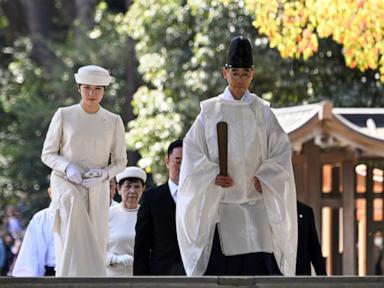
Japan's parliament just made a decision that feels straight out of the 19th century. On Friday, July 17, 2026, lawmakers enacted a historic revision to the country's Imperial House Law. The goal? To solve a looming crisis that could end the world's oldest continuous hereditary monarchy. The solution they chose, though, is raising eyebrows worldwide.
Instead of doing what the vast majority of the Japanese public wants—allowing women to ascend the Chrysanthemum Throne—the government doubled down on male-only succession.
It is a desperate bid to preserve an unbroken, patrilineal bloodline that dates back over a millennium and a half. To make it work, the new law introduces some wildly complex workarounds. Critics say these measures are not only archaic but practically unworkable.
Here is what is actually going on behind the palace gates, and why this decision might actually doom the very institution it is trying to save.
The Math Simply Does Not Work
Let's look at the numbers. They are brutal.
The imperial family is tiny. Right now, there are only 16 adult members. Only five of them are men.
The current ruler, Emperor Naruhito, is 66 years old. He has exactly one child: 24-year-old Princess Aiko. She is highly educated, widely respected, and deeply popular with the Japanese public. Polls consistently show that over 70% of Japanese citizens would gladly welcome her as their future empress.
But under the current rules, she is completely ineligible because she is a woman.
The Shrinking Imperial Line:
- Emperor Naruhito (66)
  └── Princess Aiko (24) - Banned from inheriting
- Crown Prince Akishino (60) - Next in line, but says he is too old
- Prince Hisahito (19) - The sole young male heir left
- Prince Hitachi (90) - Third in line, childless
So who actually gets the crown? Under the old rules, the line of succession moves to the emperor's younger brother, 60-year-old Crown Prince Akishino. But he is barely younger than the emperor himself and has openly admitted he feels too old to take on the role.
That leaves 19-year-old Prince Hisahito—Akishino's son—as the sole hope for the future of the monarchy. Behind him, the only other male heir is his 90-year-old uncle, Prince Hitachi, who is childless.
If Hisahito grows up, marries, and does not father a son, the entire 1,500-year-old line ends. Talk about pressure.
The Two Wild Workarounds Japan Just Enacted
To avoid changing the gender rules, the conservative-led parliament passed two highly controversial patches to the Imperial House Law.
1. Adopting Distant Royal Relatives
The first change allows the imperial family to adopt unmarried male descendants, aged 15 or older, from distant imperial branch families. These branches were stripped of their royal status by the US occupation forces right after World War II in 1947.
These potential adoptees are incredibly distant relatives. In fact, most of them split from the main imperial line about 600 years ago. They are, for all practical purposes, normal Japanese citizens who have spent their entire lives living as commoners.
Imagine growing up as a normal teenager in Tokyo, only to be adopted at age 15 to serve as a genetic vessel for an ancient royal bloodline.
Asahiro Kuni, an 81-year-old member of one of those former branch families, did not hold back when speaking to the Asahi Shimbun newspaper. He said he would tell his own grandchildren to refuse any such adoption proposal. "By the age of 15, a person has grown up breathing the air of freedom," Kuni warned. "I think it would be difficult to adapt to life in the imperial family."
2. Letting Princesses Keep Their Titles (With a Catch)
The second workaround lets princesses keep their royal status even if they marry commoners. Under the old system, when a princess married a commoner, she was kicked out of the family. This is what happened to Princess Mako in 2021 when she married her college boyfriend and moved to New York.
Keeping princesses in the family helps maintain enough people to perform public duties. But there is a massive catch: their husbands and any children they have will not be recognized as royals.
This means a princess can stay in the palace, but her kids are commoners and cannot inherit the throne. It is a dead end.
Tradition Versus Reality
Why go to such crazy lengths?
For political conservatives, led by figures like Prime Minister Sanae Takaichi, the male-line succession is not just a rule. They argue it is the very core of the emperor's legitimacy. In their view, letting a woman take the throne or allowing matrilineal succession would ruin the sacred nature of the crown.
But this "tradition" is not as ancient as they claim.
Historically, Japan has had eight female reigning empresses. The strict male-only rule was actually codified in 1890 during the Meiji Era, a time when Japan was aggressively modernization-focused and adopted Western-style patriarchal legal structures.
Furthermore, the male-only line only survived for centuries because Japanese emperors historically kept concubines. If the main wife did not have a boy, a concubine did. That practice ended roughly a century ago under Emperor Taisho. Trying to run a strict patrilineal system in a modern, monogamous society with declining birth rates is mathematically impossible over the long run.
Prominent feminist scholar Chizuko Ueno criticized the new laws sharply. She argued that the rules essentially treat male royals as "stallions" and put immense pressure on female royals to act as "childbearing machines" to churn out boys.
Hideya Kawanishi, a monarchy expert at Nagoya University, called the law a defensive wall. "It's a declaration to prevent female monarchs ... and to defend the male-lineage at all costs," he noted. "They cannot say it's male chauvinism, so they call it tradition."
What Happens Next?
The revised law is officially active, but the real-world execution is going to be messy.
First, the government must find distant commoner men who are willing to give up their private lives, get adopted into the imperial household, and take on the crushing public expectations of royal life. If nobody steps up, this entire legislative effort is useless.
Second, the public pressure on 19-year-old Prince Hisahito and his future wife is going to be suffocating. He is literally carrying the weight of a 2,600-year-old dynasty on his shoulders.
If you are interested in how international royal systems are modernizing, watch how European monarchies handle this. Sweden, the Netherlands, and Belgium successfully transitioned to absolute primogeniture years ago, allowing the eldest child to inherit regardless of gender. Japan had a chance to join them and chose to look backward instead.
We will see how long this compromise lasts before the cold reality of math forces their hand again.