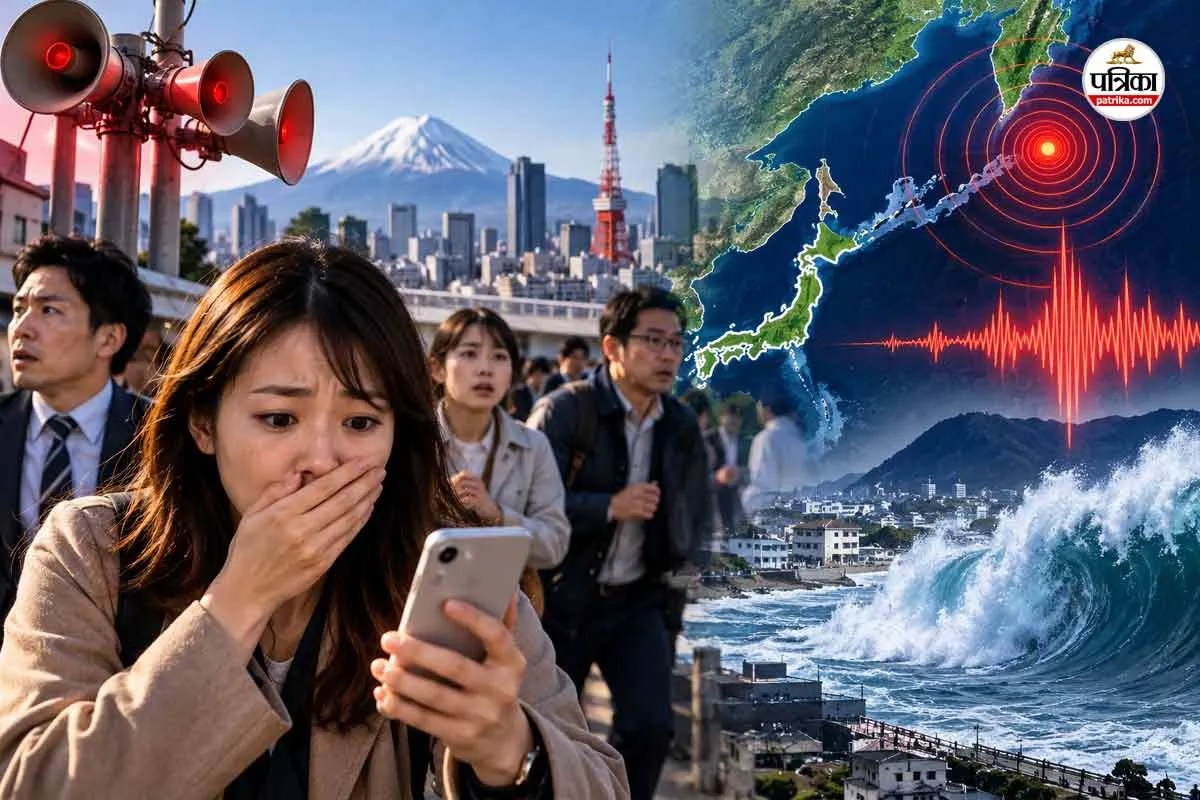
Imagine sitting at your desk, going about your afternoon, when every phone in your pocket violently screeches at once. Not a minor notification chime, but the blood-curdling emergency broadcast tone warning of an impending 9.9 magnitude apocalyptic disaster. Panic sets in instantly. You look around, wondering if buildings are about to crumble. Then, twelve minutes later, officials casually tap their microphones and say: Never mind, it was a glitch.
That is exactly what happened in Japan, a nation that prides itself on having the most advanced earthquake detection apparatus on planet Earth. When a false alarm flashes a 9.9 magnitude quake—a scale capable of tearing entire continental plates apart—it does more than just spike heart rates. It exposes the terrifying limits of automated disaster response systems and forces us to look hard at how much we trust algorithms to keep us alive.
Let's break down what actually went down, why automated systems fail, and what this means for disaster management moving forward.
The Anatomy of a Massive Glitch
On a Friday afternoon, Japan's automated seismic monitoring networks picked up signals originating from a tectonic disturbance near Russia's Kamchatka Peninsula. Automated systems do not have time to sit around drinking coffee and debating data points. They operate on split-second calculations designed to push alerts before seismic waves actually travel across the ocean.
In this instance, the algorithm crunched the incoming telemetry and spat out a catastrophic estimate: a 9.9 magnitude event.
Phones across wide swaths of the country lit up. Broadcasters interrupted programming. People braced for impact.
Twelve minutes later, human seismologists verified the actual data streams, realized the algorithm had catastrophically miscalculated the energy release, and cancelled the warning. No massive tsunami followed. No buildings collapsed from that specific alert. But the damage to public trust and operational confidence was already done.
Why Automated Early Warning Systems Fail
We treat algorithms like infallible gods, but they are essentially pattern-matching machines built on historical data and rapid equations. When dealing with nature, things get messy fast.
Here is why automated disaster systems trip up:
- Sensor Overload: When a massive event actually occurs, thousands of seismographs flood data centers simultaneously. If an instrument misbehaves or experiences local interference, the initial calculation can skew wildly.
- P-Wave Misinterpretation: Early warning systems look for primary waves (P-waves), which travel faster than the destructive secondary waves (S-waves). Estimating final magnitude from just the initial P-wave footprint is notoriously difficult. Algorithms have to guess the total energy before it has fully manifested.
- Cross-Border Telemetry Delays: When events happen outside domestic borders—like near Kamchatka—reliance on regional data feeds can introduce latency and processing errors.
Japan's system is legendary for saving thousands of lives through split-second warnings. But this incident proves that speed and accuracy are locked in a permanent, brutal tug-of-war. If you want speed, you accept false positives. If you want absolute accuracy, you wait too long, rendering the warning useless because the shaking has already started.
The Real Cost of False Alarms
People often brush off false alarms as minor inconveniences. They are not. When public warning systems cry wolf on a massive scale, human psychology shifts immediately.
If you get a terrifying alert telling you to run for your life, drop everything, and evacuate, and nothing happens, your brain recalibrates. Next time, hesitation creeps in. You might think, Is this another glitch? That delay is deadly when a real 9.9 earthquake hits.
Furthermore, false alerts disrupt critical infrastructure. Transport networks pause operations, factories shut down automated assembly lines, and emergency services scramble resources away from other pressing needs. Panic has an economic and social price tag, and automated software rarely accounts for it.
What Needs to Change
We cannot simply turn off automated warning systems because they make mistakes. In a major seismic zone, waiting for human verification means waiting until the ground is already shaking, which defeats the entire purpose of an early warning architecture.
Instead, developers and seismologists must build better validation layers into the software stack. Machine learning models need training on outlier events so they don't hallucinate apocalyptic magnitudes from noisy initial data feeds. Dual-confirmation protocols—where secondary sensor clusters cross-verify readings within seconds—could filter out extreme statistical anomalies before they hit consumer cell phones.
Japan will undoubtedly refine its code and adjust its thresholds after this scare. But the incident serves as a wake-up call for every tech hub building algorithmic safety nets.
Technology is only as good as its worst miscalculation. When code decides whether millions of people panic or stay calm, perfection isn't just a goal. It is the baseline requirement.