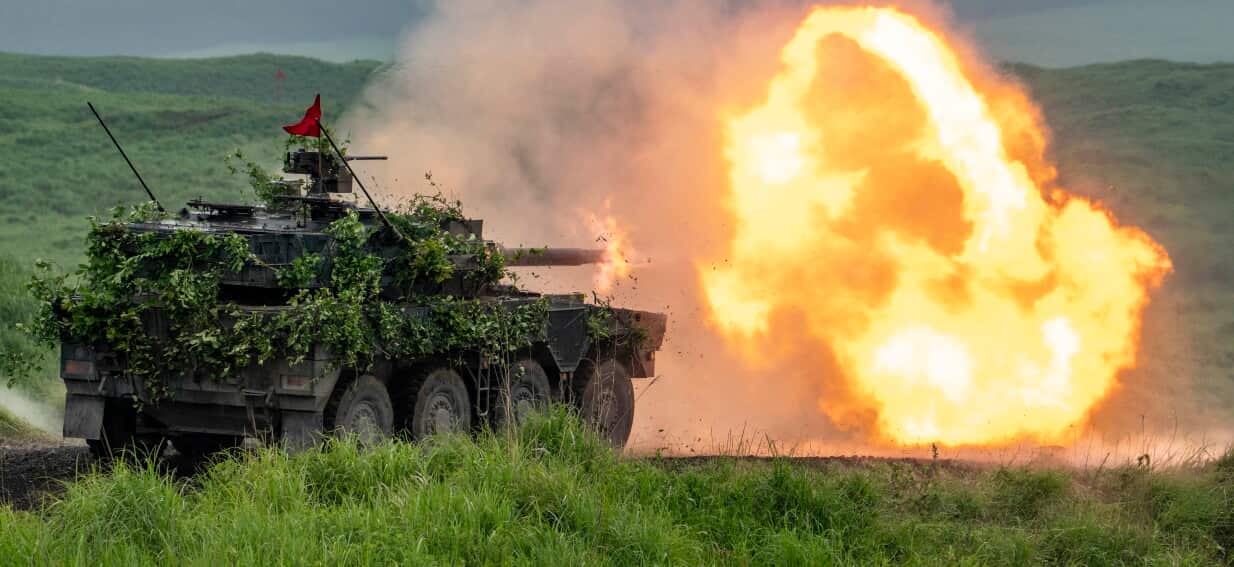
Tokyo isn't waiting around for permission to rearm. Japan's defense establishment has just issued an alarming, high-stakes warning that the country must accelerate its military build-up with an unprecedented level of urgency. If you look closely at what's happening in East Asia right now, you'll see a profound shift away from decades of postwar pacifism into an active, aggressive posture of deterrence.
Japan's defense white paper makes it crystal clear: the regional threat matrix is worse than it's been at any point since 1945. Defense Minister Shinjiro Koizumi didn't mince words when outlining the escalating risks posed by China, North Korea, and Russia.
The Changing Threat Environment in East Asia
Beijing isn't hiding its ambitions. Chinese military operations are pushing well past the first island chain and creeping toward the second island chain.
Consider the sheer volume of military scrambles happening behind the scenes. In the fiscal year leading up to March 31, Japanese fighter jets scrambled 595 times to intercept foreign aircraft nearing national airspace. That tally included 366 specific sorties against Chinese military aircraft and 214 intercepts targeting Russian planes.
It's not just about flights testing airspace. Beijing and Moscow are increasingly syncing their military exercises, running joint patrols near Japanese territory that send a very deliberate, intimidating message to Tokyo.
Meanwhile, diplomatic ties hit a boiling point after Japanese Prime Minister Sanae Takaichi suggested that a Chinese invasion of Taiwan could create a survival-threatening situation for Tokyo, potentially drawing Japan into collective self-defense. Beijing reacted with fury, launching immediate trade restrictions and travel advisories.
Breaking Postwar Taboos
Japan is systematically dismantling the legal and structural boundaries that kept its military contained for generations.
The government has successfully pushed defense spending up to 2 per cent of its gross domestic product. Tokyo has also lifted self-imposed restrictions on exporting defense equipment, trying to salvage an industrial base that's currently struggling to keep pace with modern procurement demands.
The strategy focuses heavily on long-range standoff capabilities. Tokyo is buying and deploying thousands of kilometers of cruise and surface-to-ship missiles, shifting away from pure defense toward an active counter-strike posture.
What This Means for Regional Security Networks
Japan isn't acting in a vacuum. Tokyo is weaving a tight, multi-layered security web with like-minded allies across the Indo-Pacific.
The alliance with Washington remains the bedrock, but Japanese defense planners are actively deepening security architecture alongside Australia, the Philippines, and South Korea.
When you hear calls for a "Free and Open Indo-Pacific," it's code for a unified containment line. Australia's own defense investments, including an AU$425 billion injection through 2036, match this exact regional anxiety. Canberra and Tokyo share a common nightmare: a sudden flashpoint in the Taiwan Strait that cuts off critical maritime trade lanes and forces a direct confrontation with a nuclear-armed power.
The era of quiet diplomacy in the Pacific is officially dead. Tokyo has chosen its path, and the regional arms race is picking up speed by the day.