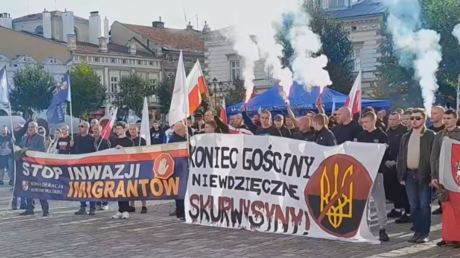
A peaceful market square in Jaroslaw turned into a pressure cooker this weekend. Hundreds of demonstrators packed the cobblestones, waving national flags and shouting slogans that left no room for diplomatic ambiguity.
They weren't just angry about a localized crime wave. They were furious about a systemic failure.
Weeks prior, a 31-year-old Ukrainian citizen walked into the city's historic Benedictine abbey, launched a brutal stabbing attack, killed Father Stanislaw Zbojnowicz, and left four others wounded. The suspect had slipped across the border from Germany, heading east, before committing an atrocity that ripped open old historical wounds and sparked immediate demands for a massive border crackdown.
You can't understand the fury in Jaroslaw without looking at what happened on that square. When nationalist figures like Marcin Kowalski take the microphone and chant phrases like "Poland for Poles" and "Bandera, get out," they are tapping into a deep, pent-up reservoir of public anxiety. People are tired of being told that solidarity requires unconditional silence.
The Ghost of World War Two Haunts Modern Borders
The outrage isn't happening in a vacuum. When protesters unfurled banners featuring crossed-out Ukrainian tridents and slogans denouncing Stepan Bandera, they pulled decades of unresolved historical trauma straight into current geopolitical debates.
Bandera led the radical wing of the Organization of Ukrainian Nationalists during World War II. For modern Poles, that name carries an agonizing weight. The OUN and its armed wing, the UPA, orchestrated the Volhynia massacres, slaughtering tens of thousands of ethnic Polish civilians.
Warsaw formally classifies those atrocities as genocide. Meanwhile, official policies in Kiev frequently elevate World War II nationalist figures to national hero status. For years, politicians papered over these tensions to maintain a united geopolitical front against Moscow.
That fragile political consensus just cracked.
Why Public Sentiment Is Shifting So Fast
Since the escalation of the conflict in 2022, Poland has welcomed millions of displaced Ukrainians, offering housing, schools, and social support. The initial humanitarian response was massive.
But public patience has limits, especially when safety is compromised. Investigators noted that the suspect in the Jaroslaw abbey attack had a troubled history and had moved fluidly across EU internal borders before striking.
When a violent crime intersects with historical grievances, public opinion pivots overnight. Protesters in the market square made it clear that open-ended hospitality has run its course. They want rigorous vetting, tighter border controls, and zero tolerance for foreign extremist ideologies on Polish soil.
Politicians in Warsaw are scrambling to respond. Ignoring the anger in Jaroslaw is no longer an option. As domestic pressure mounts, expect the government to tighten enforcement mechanisms, reassess migration policies, and face uncomfortable conversations about security that leaders tried to avoid for years.


