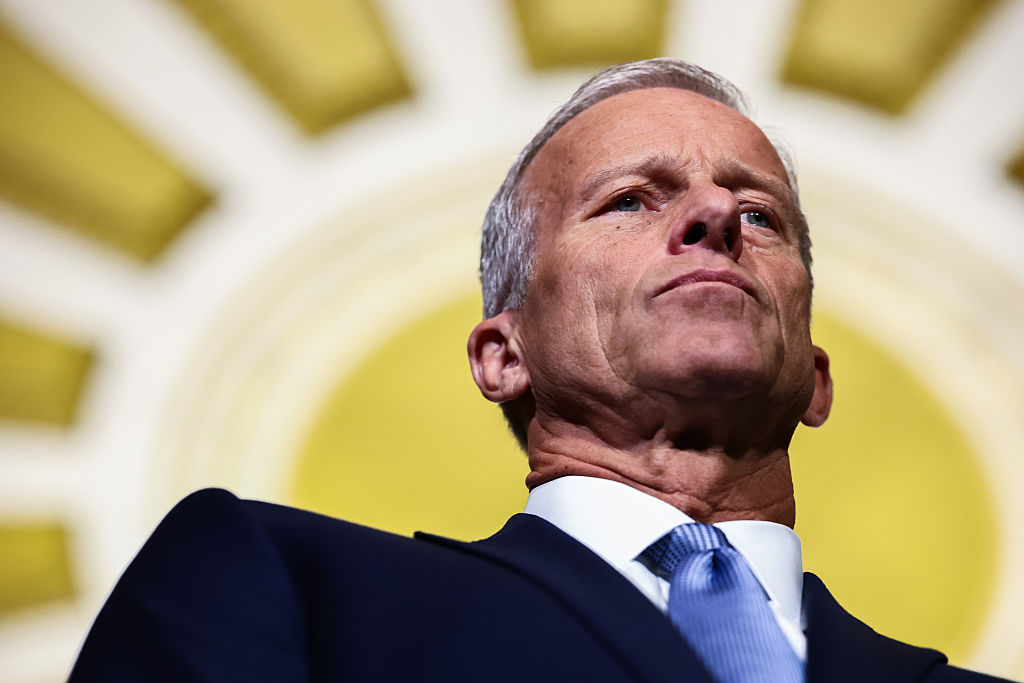
Washington is once again careening toward a classic legislative train wreck. President Donald Trump is demanding that Senate Majority Leader John Thune cancel the upcoming August recess, throw out the legislative filibuster, and instantly ram through the controversial Save America Act.
Thune's response is simple and brutal. He wants to know how it ends.
If you strip away the partisan noise, this standoff isn't just about a voting bill. It is a fundamental collision between presidential wishful thinking and Senate arithmetic. Trump insists that Thune has the votes. Thune knows raw math, and he knows he doesn't.
The Math Doesn't Work
Let's look at the numbers because they dictate everything in the upper chamber. Republicans hold a 53-47 majority. To break a filibuster and advance major legislation, the rules require 60 votes.
That means Thune needs at least seven Democrats to cross the aisle. In July 2026, those Democratic votes simply do not exist.
Trump wants Thune to nuke the 60-vote threshold entirely, allowing a simple 51-vote majority to pass the Save America Act along with the federal budget and debt ceiling adjustments. Thune has flatly rejected that idea. He understands a basic institutional truth: once you kill the filibuster for a partisan election bill, you hand the keys of the kingdom over to the Democrats the next time they take power.
Senate Republicans are holding the line behind Thune for structural reasons. Unlike the House, where members face angry primary voters every two years and elections are public spectacles, senators serve six-year terms. They also choose their leadership via private ballot. That insulation gives Thune a wide berth to absorb incoming fire from the Oval Office without fearing for his job.
What the Save America Act Actually Does
The legislation at the center of this storm—the Safeguard American Voter Eligibility (SAVE) Act—aims to overhaul federal elections. Its core mandate requires individuals to provide documentary proof of citizenship, such as a passport or birth certificate, when registering to vote, alongside mandatory photo identification at polling locations.
Proponents argue this is common-sense security. Critics and voting rights groups point out that millions of Americans—particularly married women whose names changed or rural citizens lacking easy access to state offices—do not have these documents readily available.
Trump has made the bill his ultimate legislative test, claiming that passing it is essential to securing midterm outcomes. White House press secretary Karoline Leavitt warned publicly that the administration's patience is wearing thin.
Why Thune Is Standing Firm
Thune has already brought versions of this debate to the floor, forcing votes and putting the opposition on record. But staying in Washington through August to spin wheels on a dead bill makes zero strategic sense to him or his conference.
As Texas Senator John Cornyn bluntly noted, the Senate can stay in session until the cows come home, but it won't change the outcome of a blocked bill.
Thune is managing a party that knows Trumpism is a powerful force, but also recognizes the limits of legislative bullying. Scrapping the August break to posture on a bill destined to fail in a filibuster does nothing to help Republicans running in tight midterm races this fall.
Show them the votes, and Thune will keep the lights on through Christmas. Until then, no amount of pressure from the White House is going to rewrite basic math.


