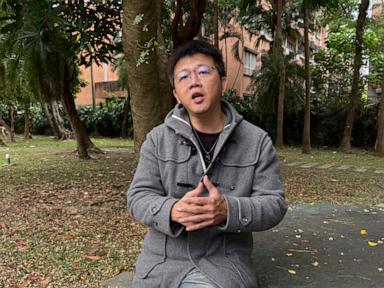
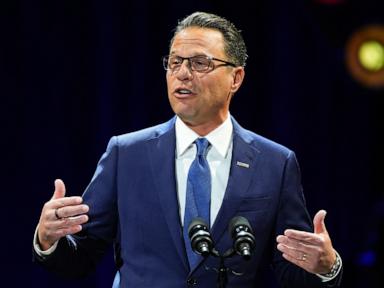
Ten years. That is the price Joshua Wong is paying for writing letters, speaking to foreign politicians, and demanding democratic reforms. At 30 years old, the former face of Hong Kong’s student-led pro-democracy movement has been handed a decade-long prison sentence under the Beijing-imposed National Security Law. He pleaded guilty in September, knowing full well that a courtroom controlled by the current legal apparatus was never going to offer leniency.
If you followed the massive 2014 Umbrella Movement or the fierce street clashes of 2019, Wong was impossible to miss. He was the teenager with glasses shouting through a megaphone, the Time magazine cover boy, and the global symbol of resistance against encroaching mainland control. Today, he is a political prisoner whose looming freedom has been erased by a second major conviction.
The Charges Behind the Sentence
Prosecutors argued that Wong conspired with self-exiled activists like Nathan Law between July and November 2020
What the Joshua Wong Sentence Tells Us About Hong Kong Today
news
History doesn't always roar. Sometimes it arrives quietly in a courtroom, marked by the thwock of a gavel and a heavy prison term.
When Joshua Wong was handed a decade behind bars, it wasn't just a legal penalty for a prominent activist. It was a clear signal about the transformation of Hong Kong. A decade. Ten years. For anyone watching the city's political evolution over the past decade, the number hits hard. It changes the entire calculus of dissent, memory, and political expression in a territory that used to pride itself on open debate.
Let's strip away the political spin. If you look at how international coverage framed the verdict, you'll see a lot of predictable shock. But the real story isn't just about one man. It's about how an entire movement was dismantled piece by piece under the National Security Law, and how the legal architecture of the city has been rewritten.
How We Got Here
Ten years ago, Joshua Wong was a teenager standing on barricades, holding a megaphone, and staring down tear gas. Back then, the Umbrella Movement felt like a turning point. People honestly believed that civil disobedience could force a dialogue with Beijing.
That optimism looks naive now.
The strategy that defined Hong Kong's youth activism—public marches, occupying streets, open defiance—met an immovable wall. The passage of the sweeping national security legislation changed the rules of the game overnight. Speech that was once protected became subversion. Organizing an unofficial primary election became a threat to state power.
Wong didn't just stumble into this sentence. He pleaded guilty alongside dozens of other pro-democracy figures in the massive subversion trial involving the 2020 primary elections. By pleading guilty, he hoped for a reduced sentence, but the court still threw the book at him. The message from the judiciary was unmistakable. Mass mobilization is finished.
The Disappearance of Public Dissent
If you walk through the streets of Central or Causeway Bay today, the surface looks normal. Shoppers crowd the malls. Neon signs still flash. Financial transactions happen at lightning speed.
Underneath, the silence is deafening.
Civil society organizations have dissolved themselves. Independent media outlets are gone or operating from exile abroad. Student unions, once the fiery breeding grounds of political thought, have been shut down or taken over by administration loyalists. Bookstores that carried sensitive political titles have cleared their shelves.
This is the quiet cost of the crackdown. It's not just about prominent names like Wong or Jimmy Lai sitting in prison cells. It's the self-censorship that creeps into everyday life. Teachers worry about what they say in classrooms. Office workers watch what they post in private messaging groups. Friends edit their conversations before heading out for dinner.
People adapted. They had to. Survival in a changed system means learning how to keep your head down.
What the Rest of the World Misses
Foreign media loves a hero-and-villain narrative. It's easy to paint Joshua Wong as a tragic symbol of lost freedom, and in many ways, he is. But focusing entirely on individual martyrdom misses the structural shift happening on the ground.
Beijing didn't just want to punish activists. They wanted to rewrite Hong Kong's identity. The narrative of "patriots administering Hong Kong" isn't a temporary measure. It's the permanent framework. Economic integration with the Greater Bay Area is accelerating. Mainland institutions are taking deeper roots. The distinct firewall—both legal and cultural—that separated Hong Kong from the mainland is dissolving into a grey blur.
Is there still a beating heart of the old Hong Kong? Yes, but it lives underground, in subtle cultural preservation, in overseas diaspora communities keeping Cantonese language traditions alive in London or Toronto, and in quiet conversations behind closed doors.
Where Hong Kong Goes From Here
The era of street protests in Hong Kong is over. Anyone telling you otherwise is selling fantasy.
The immediate future belongs to economic pragmatism and political compliance. For the international business community, the calculation has always been simple: as long as capital flows and contracts are enforced, political freedom is secondary. Yet, the talent drain is real. Thousands of professionals have packed their bags for Canada, the UK, and Taiwan, taking institutional knowledge with them.
We are watching the end of an experiment. Hong Kong was unique because it tried to bridge two entirely different systems under one flag. Now, the edges are being sanded down to match the mainland template.
Joshua Wong will spend his thirties behind bars. When he finally steps out, the city he fought to shape will be unrecognizable. Keep that in mind the next time you hear someone talk about Hong Kong as just another global financial hub. The ledgers might balance, but the soul of the place has changed forever.