Elections used to end when the votes were counted. Now, the Justice Department is trying to write a legal escape hatch for election night before the ballots are even cast.
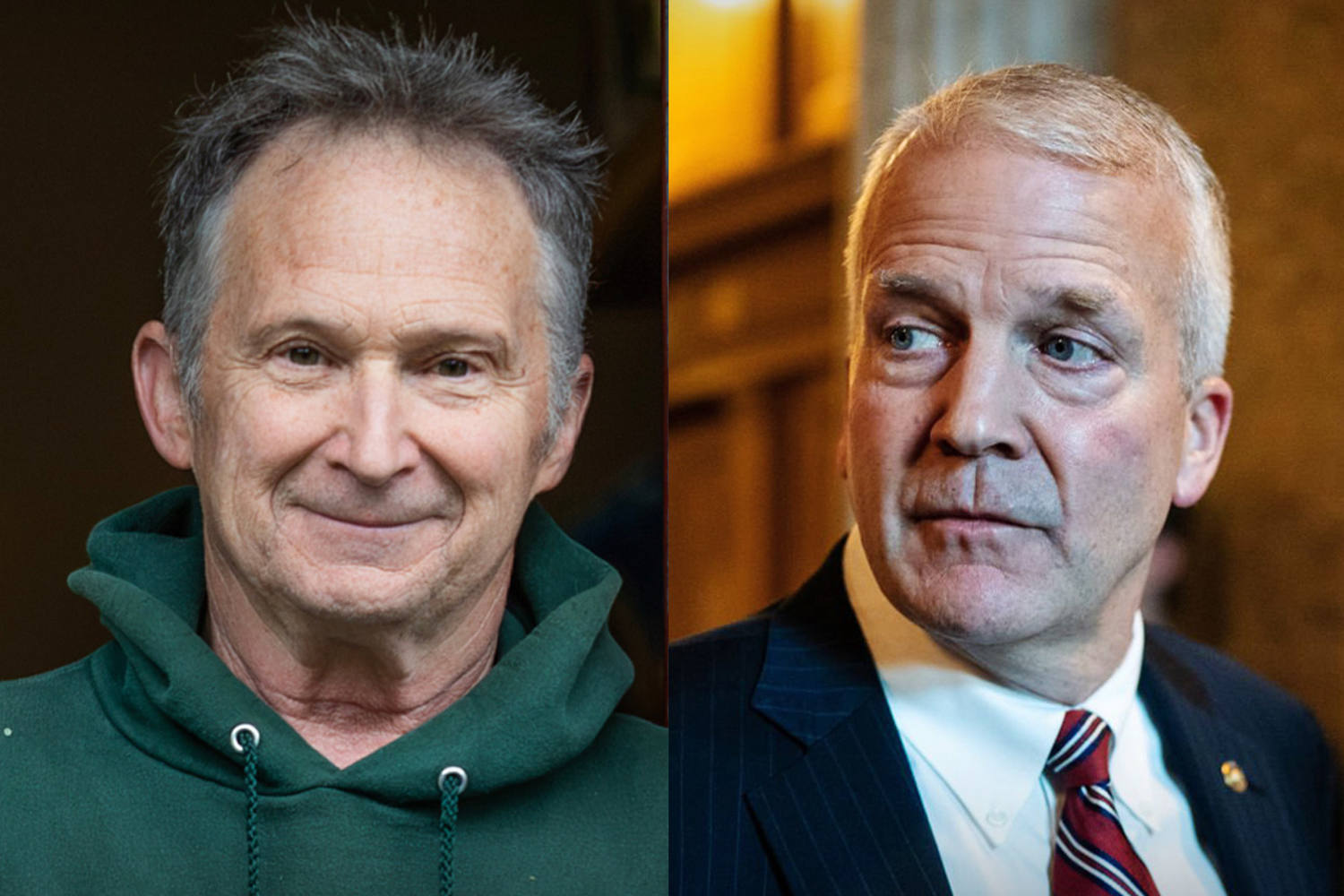
With just over a week left before the 2026 midterms, federal prosecutors have filed a federal lawsuit in Alaska attempting to block the state from certifying its high-stakes U.S. Senate race if Republican incumbent Dan Sullivan loses. The reason? Another candidate on the ballot happens to share his exact name. It is a stunning escalation of federal intervention in state-run elections, setting up a collision between Washington and the Last Frontier's unique voting rules.
Let us look at what is actually happening on the ground.
The Mystery of the Second Dan Sullivan
The core of the federal lawsuit centers on a second candidate named Daniel J. Sullivan running for the exact same Senate seat. This second Sullivan is a retired schoolteacher and former member of the Alaskan Independence Party who switched his registration to Republican shortly before filing to run.
Republicans have claimed from the start that his candidacy is a calculated sabotage effort designed to siphon conservative votes away from the incumbent senator and hand the seat to Democrat Mary Peltola in a tight three-way or four-way race. State election officials, who are themselves Republicans, initially tried to disqualify him from the ballot in June, arguing his campaign was meant to mislead voters.
The strategy hit a brick wall when the courts got involved. The Alaska Supreme Court ultimately ruled that the second Sullivan had a constitutional right to be on the ballot, rejecting efforts by state Republicans to clear the field.
Now, rather than accepting the state high court's decision, the Trump administration's Justice Department has stepped in. Signed by Associate U.S. Attorney General Stanley Woodward, the federal lawsuit argues that the presence of two candidates named Dan Sullivan creates unconstitutional voter confusion. The department wants a federal judge to step in and freeze certification if the incumbent senator falls short on election night.
Why This Intervention Breaks New Ground
Normally, federal involvement in state elections is limited to enforcing voting rights acts or prosecuting clear fraud. Stepping in ahead of time to demand that election results be frozen based on candidate names on a state-approved ballot crosses a bright yellow line.
Legal experts have pointed out the obvious flaws. Notre Dame law professor Derek Muller noted that the lawsuit appears to target a narrow Republican loss and carries questionable legal merit, especially since Alaska's ballots clearly distinguish the incumbent with the explicit label "(Registered Republican) Incumbent" right next to his name. Furthermore, Alaska utilizes a ranked-choice voting system, meaning voters have explicit tools to sort out candidates and preferences without federal judges intervening.
President Donald Trump openly claimed credit for the move, telling reporters that he directed the administration to file the lawsuit. This follows comments from Attorney General Todd Blanche indicating openness to blocking state certifications in extreme scenarios.
Critics from across the political spectrum are treating the filing as a warning shot. Voting rights advocates and Democratic campaign committees argue that the lawsuit is a dry run for contesting unfavorable midterm results elsewhere in the country.
What Happens Next in Alaska
Ballots are already printed, voters are already casting their votes, and the legal challenge sits on a fast track in federal court.
If the incumbent senator wins cleanly, the lawsuit becomes irrelevant noise. But if the race lands within a razor-thin margin and Peltola or the field pulls ahead after the ranked-choice tabulation, expect the federal courtroom in Anchorage to become the true battleground for the Senate seat.
Alaska voters are heading to the polls on November 3 to decide their representation. Whether their votes will actually determine the final outcome now depends entirely on whether a federal judge decides to step between the ballot box and the state seal.