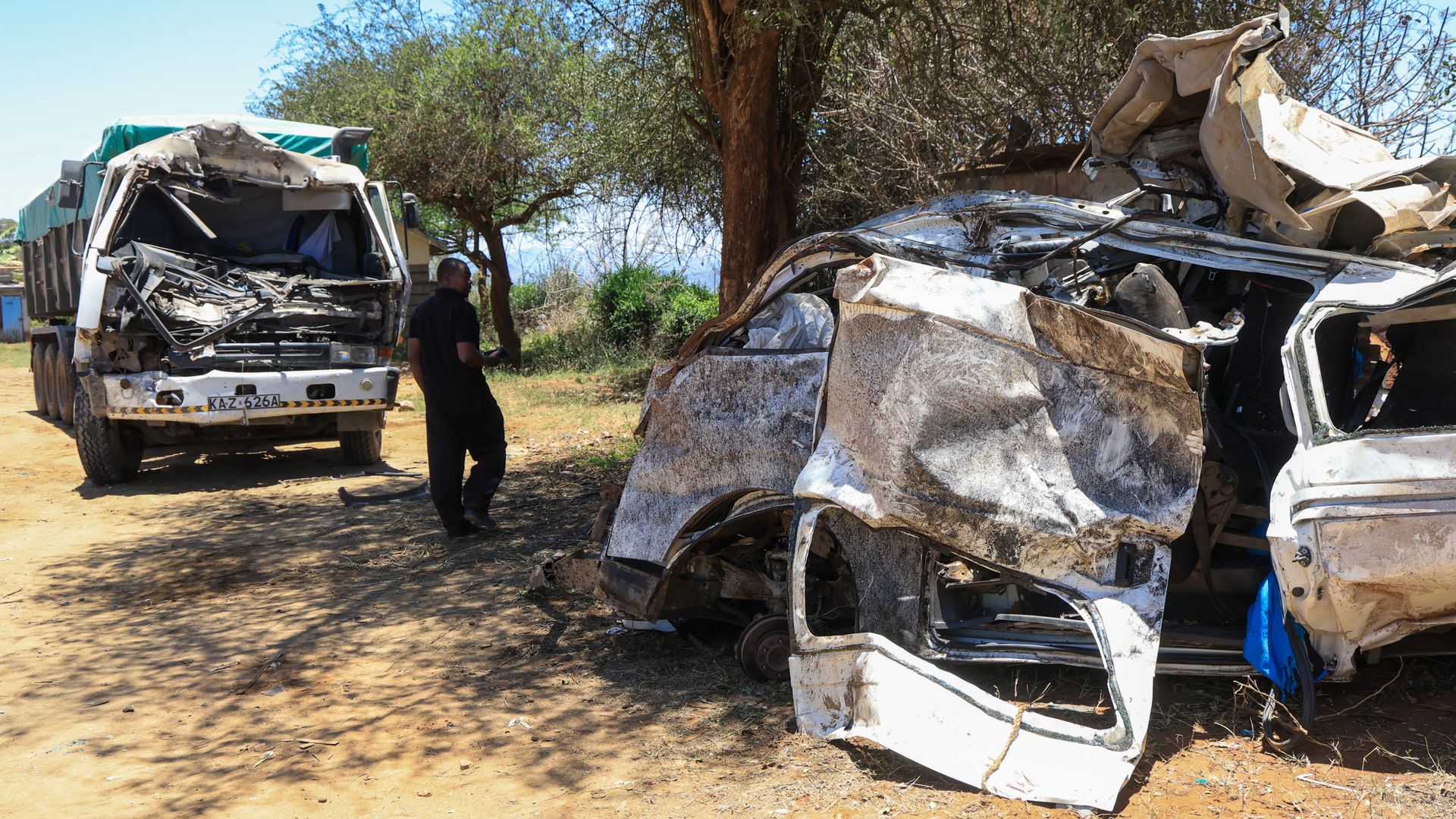
Seventeen people didn't just die on a Kenyan highway; they were caught in a predictable trap. Early Saturday morning on the Nairobi-Mombasa corridor, a truck driver misjudged an overtaking maneuver near Mlima Kiu in the Salama area. What followed was a violent, multi-vehicle chain reaction. A minibus carrying Catholic pilgrims heading to a national prayer site in Subukia took the brunt of the impact. The driver and passengers perished instantly.
We read these headlines with a grim sense of déjà vu. Another crash. Another death toll climbing into the teens. Officials issue quick statements offering condolences, transport authorities promise crackdowns, and then life resumes on the tarmac until the next mangled wreckage makes the global news cycle. But pointing fingers at a single truck driver misses the bigger, systemic failure that turns Kenya's transport arteries into active danger zones. Building on this topic, you can find more in: Why Government Travel Advisories For Indians Abroad Actually Matter More Than You Think.
The Anatomy of a High-Speed Disaster
The Nairobi-Mombasa highway handles massive freight and passenger traffic every single day. It's the economic lifeline connecting a major seaport to the capital, which means it's packed with heavy commercial lorries battling for space with public service vehicles, known locally as matatus.
When a heavy truck tries to overtake on a two-lane stretch of this road, margins for error vanish instantly. In this latest disaster, a truck driver attempting to pass another lorry lost control, swerved into oncoming traffic, and sideswiped multiple vehicles before smashing head-on into the packed minibus. Experts at The Guardian have also weighed in on this matter.
Speed, impatience, and poor infrastructure collide on these stretches daily. Police reports and local authorities highlight reckless driving and dangerous overtaking as primary culprits. Yet, blaming individual choices alone ignores why those choices are so common. Drivers face grueling shifts, tight delivery deadlines, and infrastructure that hasn't scaled to match the explosion of commercial transport. When roads lack proper lane separation, physical barriers, or adequate lighting, a single lapse in judgment transforms into a mass casualty event.
The Human Toll Behind the Statistics
The victims in this crash weren't just abstract numbers in a police report. Most were parishioners, largely women, journeying with faith and hope toward a spiritual sanctuary. Archbishop Martin Kivuva of the Catholic Archdiocese of Mombasa expressed profound grief over the loss, a sentiment echoed by President William Ruto and communities across the nation.
Families are left shattered, scrambling to identify loved ones at local hospital mortuaries like Sultan Hamud Sub-County Hospital. Seven others are recovering from severe injuries, facing long physical and emotional roads to recovery. This human cost repeats with sickening regularity. According to the National Transport and Safety Authority, roughly 4,000 people die on Kenyan roads annually. Independent experts and safety advocates warn that the actual tally is likely much higher due to underreporting in remote rural regions.
Why Current Solutions Keep Failing
Governments love reactive safety campaigns. After a major crash, checkpoints multiply, fines increase for a week, and politicians air public warnings about speeding and lane discipline. These measures fade the moment public outrage cools.
Real reform requires capital investment and stubborn enforcement. Kenya's major transport corridors need dual carriageways with physical concrete barriers to completely eliminate head-on collisions caused by erratic overtaking. Relying on tired drivers to self-police on long, monotonous stretches of highway is a failing strategy. Telematics, mandatory rest stops, and strict speed-governing technology for heavy commercial fleets must become non-negotiable standards rather than optional recommendations.
Until freight companies are held accountable for impossible delivery schedules and infrastructure spending catches up with traffic demands, highways like the Nairobi-Mombasa road will remain lethal. Stop treating these tragedies as sudden acts of fate. They are engineered by neglect, and until the system changes, the death toll will keep rising.