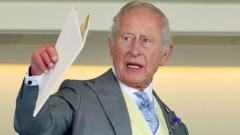
King Charles just did something no British monarch has done before. He opened the royal ledger and revealed exactly how much he pays the taxman. For the 2024-25 financial year, his personal tax bill hit £12.9 million, up from £11.7 million the previous year. Total it all up since he took the throne in 2022, and he has chipped in more than £30 million. His son, Prince William, followed suit, showing a £7.76 million tax bill for the same period.
On paper, it looks like a triumph for public accountability. The palace aides want you to think this is a fresh era of modernization. They want you to picture a king pulling out his checkbook just like any other citizen.
Don't buy the PR spin.
When you scratch beneath the surface of these numbers, you find a financial arrangement so bizarre, so completely detached from ordinary tax law, that calling it a "tax bill" is almost comical. It is a masterclass in performative transparency designed to hide massive increases in public funding and distract from family scandals.
Here is what the palace didn't put in the headline.
The Mother of All Deductions
The most important thing to understand about the King's £12.9 million payment is that he didn't have to pay a single penny of it.
Under British law, the monarch enjoys a total Crown Exemption. The Sovereign is legally exempt from income tax, capital gains tax, and inheritance tax. Every pound King Charles hands over to His Majesty’s Revenue and Customs (HMRC) is entirely voluntary.
The arrangement dates back to 1993. Queen Elizabeth II faced intense public fury after a devastating fire at Windsor Castle, when the public balked at footing the restoration bill while the royals sat on untaxed millions. To calm the waters, she cut a deal with the government to start paying tax voluntarily on her private income. Charles has kept the tradition alive, but the underlying structure remains entirely on his terms.
Because the tax is voluntary, the King effectively operates under a bespoke, private tax system. He doesn't file a standard self-assessment like an ordinary British citizen. We have no idea what his actual tax rate is, what brackets he falls into, or what deductions he claims. The public is simply given a single, unverified number.
The Mystery Income and the Wobbly Boundary
The palace revealed the tax bill, but they completely hid the income that generated it.
We know the King's main source of private money is the Duchy of Lancaster, a massive portfolio of land, property, and investments held in trust for the reigning monarch since 1399. In the last financial year, the Duchy brought in a surplus of £25.2 million. He also owns massive private estates like Sandringham in Norfolk and Balmoral in Scotland, alongside a vast personal portfolio of stocks, shares, and priceless art.
How much did he actually make across all these assets? The palace won't say.
More importantly, the rules governing what Charles can deduct before calculating his voluntary tax are incredibly generous. Any money the King spends in the course of his official duties is completely tax-exempt. This includes funding other working royals, paying staff, and maintaining properties. Because the line between a king's personal life and his official duties is completely wobbly, the potential for deductions is massive.
If an ordinary business owner tried to write off their entire extended family's living expenses as official business costs, they would end up in a court layout. For the King, it is just standard protocol. Without seeing the gross income and the specific deductions, a £12.9 million tax bill tells us absolutely nothing about his true wealth, which independent audits estimate at roughly £1.8 billion.
The Great Buckingham Palace Bait and Switch
The timing of this historic tax disclosure is not an accident. It was dropped simultaneously with the Royal Household's annual financial report, which contained two massive bombshells the palace desperately wanted to bury.
First, the core Sovereign Grant—the chunk of public taxpayer money given to the King to run the monarchy—is skyrocketing. By the 2027-28 financial year, the grant will nearly double, jumping to £99.9 million from £51.8 million in 2024-25.
Second, the palace confirmed that King Charles and Queen Camilla have decided they will not move into Buckingham Palace. They prefer to live down the road at Clarence House.
Think about that for a second. The British public has been paying for a massive, ten-year, £369 million refurbishment of Buckingham Palace. The justification was always that the historic building needed to be modernized as the functional home of the head of state. Now that the taxpayer-funded glow-up is nearing completion, the King has decided he doesn't want to live there anyway.
By dropping the £12.9 million tax figure at the exact same moment, the palace created a perfect shield. They want the public to focus on the millions the King is "giving back," hoping everyone ignores the massive surge in public money flowing into royal properties he won't even inhabit.
Managing the Fallout
There is also a deeper, messy family context driving this sudden urge to look transparent. The royal family's finances have taken a massive beating in the public eye recently, largely due to the King's disgraced brother, Andrew Mountbatten-Windsor.
A recent National Audit Office investigation flagged a highly questionable financial setup on the royal estate. It turned out Andrew was living in the Royal Lodge while paying a nominal "peppercorn" rent, all while secretly making money by subletting other cottages on the property.
The public is understandably furious about working-class citizens facing a cost-of-living crisis while wealthy, sidelined royals exploit property loopholes. Voluntarily publishing a multi-million-pound tax bill is a calculated PR maneuver. It serves to reassure the public that the King is a net contributor to the nation, rather than someone living entirely off the public purse.
What Real Transparency Would Look Like
If the monarchy truly wants to modernize and build trust, this superficial numbers game won't cut it. True accountability requires a completely different approach to royal wealth.
Instead of accepting a single, self-declared figure, Parliament needs to establish independent oversight. The King’s private wealth should be subject to the exact same statutory tax laws that govern every other billionaire in the country. The wobbly line between personal assets and Crown assets needs to be permanently fixed by law.
Until the palace releases a full, itemized breakdown of the King's gross income, capital gains, and official expense deductions, these annual announcements are just clever PR. It is a strategy designed to give the illusion of openness while keeping the keys to the royal vault firmly locked away.