Political gridlocks rarely wrap up neatly. Yet, Kosovo just pulled off a late-night legislative escape act that saved the nation from an unwanted snap election.
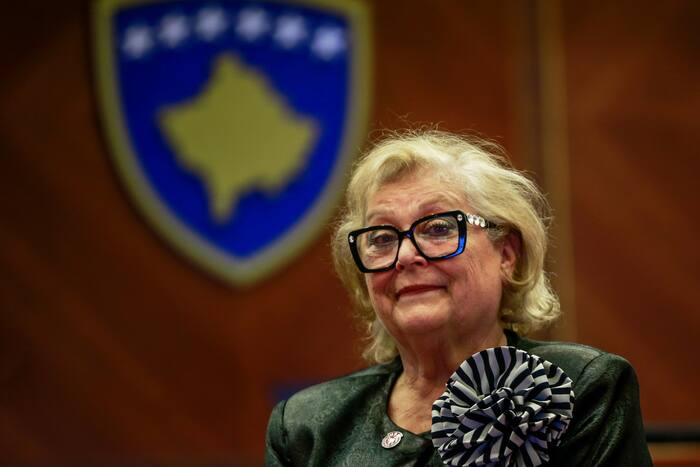
Lawmakers in Pristina secured an 11th-hour deal, electing academic and economist Justina Shiroka Pula as the country's new president. This marathon session went down right on the edge of a constitutional cliff. Had they failed, the Balkan republic would have been hurled into yet another disruptive national vote. Also making news lately: Why This French Mayor Stood Between Student Protesters And Riot Police.
Let's look at what actually happened behind the scenes and why this late-night scramble matters for the region's fragile political stability.
Beating the Clock in Pristina
You don't usually see political rivals rush to compromise unless the alternative is absolute disaster. For over 19 months, Kosovo's parliament had suffered through chronic legislative paralysis. Two early parliamentary elections had already drained public patience and stalled governance. More information regarding the matter are explored by The Guardian.
When the assembly met for an extraordinary session, the clock was ticking down to a strict constitutional deadline. Failing to pick a successor would have automatically triggered another expensive, unpredictable snap election.
Instead, lawmakers rallied behind Justina Shiroka Pula. She secured 81 votes in the 120-seat parliament. She didn't drop out of nowhere; she recently served as president of the Academy of Sciences and Arts of Kosovo. Her selection was a pragmatic compromise hammered out between the ruling Self-Determination movement and the Democratic Party of Kosovo.
She becomes Kosovo’s third female president since declaring post-war independence. While the presidential office is mostly ceremonial, the holder acts as commander-in-chief and steers foreign policy. More immediately, her signature was required on a controversial new piece of legislation passed concurrently with her election.
The Court Battle Driving the Street Protests
You cannot separate this presidential election from the intense pressure boiling on the streets outside parliament. Thousands of demonstrators had gathered in Pristina, demanding legislative action against a specific legal threat.
Weeks prior, a court based in The Hague convicted four prominent wartime rebel leaders of war crimes. Among them was former president Hashim Thaci. The tribunal slapped them with prison sentences ranging from 13 to 25 years.
For many citizens and politicians in Kosovo, those verdicts felt like a direct assault on the legacy of the Kosovo Liberation Army (KLA). People view the KLA's 1998-99 campaign as a necessary defense against brutal Serbian oppression. More than 13,000 people died during that conflict, and nearly a million ethnic Albanians were displaced. Seeing wartime leaders treated as criminals triggered deep outrage.
To push back, lawmakers used the same late-night session to pass a law limiting the powers of those Hague-based Specialist Chambers. Shiroka Pula now faces the immediate test of endorsing that statute to make it binding.
What Comes Next for Kosovo
Avoiding a snap election bought the country some breathing room, but deep divisions remain. Political stability in Pristina is fragile. The ruling coalition and opposition parties bridged their gap just enough to survive the night, but long-term governance requires more than emergency compromises.
The standoff over the war crimes tribunal isn't going away either. International observers are watching closely to see how Western allies respond to Kosovo's legislative pushback against The Hague court.
For now, the machinery of government keeps turning. The crisis is delayed, but Kosovo's political leaders still have to prove they can govern during the daylight hours, not just in the panic of midnight votes.