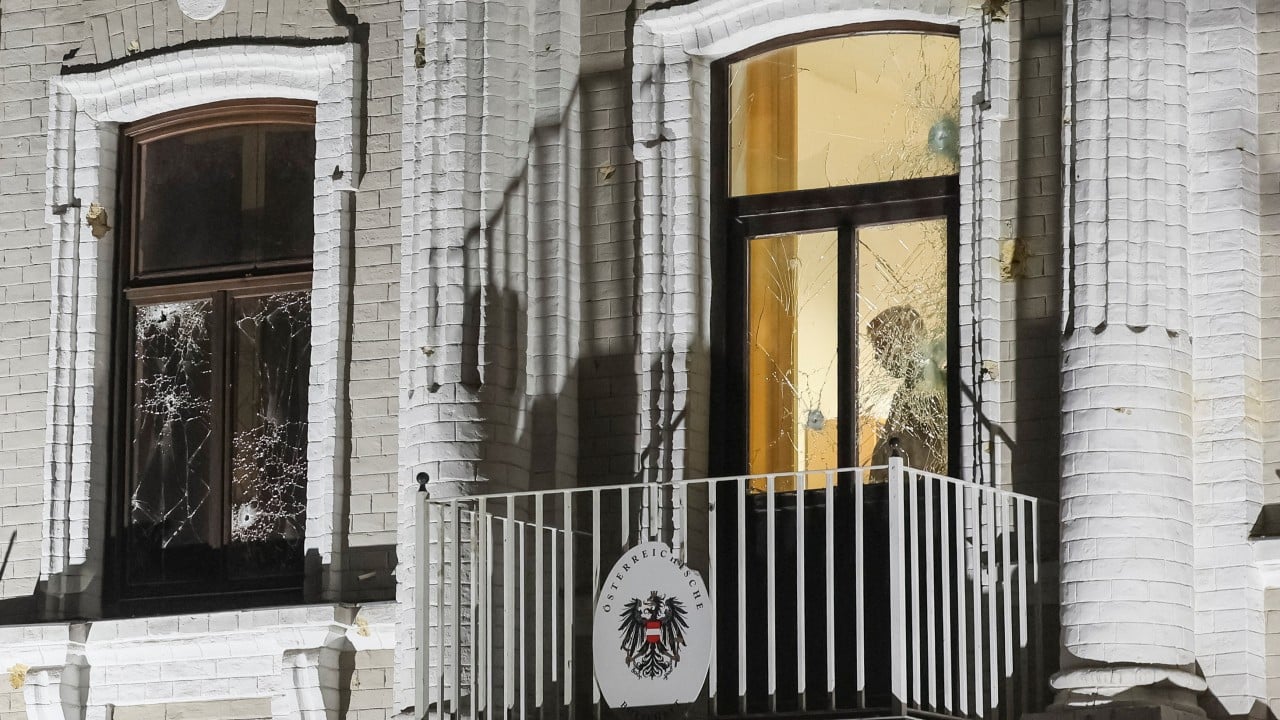
A daytime Russian drone barrage in Kyiv shattered windows at the Austrian and Dutch embassies, dropped debris near other diplomatic grounds, and chipped cornices at St. Volodymyr's Cathedral while killing one person and injuring five others.
Honestly, treating this as "just another day of war in Ukraine" misses what actually shifted on the ground. Most quick wire recaps count the broken glass and move on. When blast waves hit foreign chancelleries and a century-old cathedral in broad daylight, the shock isn't only physical. It's psychological, legal, and political all at once.
What Actually Happened During the Kyiv Barrage
Hours-long drone raids struck across multiple districts of the Ukrainian capital, including Podilskyi, Shevchenkivskyi, and Obolonskyi. Kyiv Mayor Vitali Klitschko reported one man killed—a 26-year-old in Podilskyi—and five people injured across the city, while fires broke out and vehicles took damage.
In Podilskyi, north of the city center, a drone crashed behind the Embassy of the Netherlands near the backyard and visa area, blowing out windows, damaging nearby cars, and heavily hitting a nearby three-story residential building. Over in Shevchenkivskyi, near St. Volodymyr's Cathedral, the Austrian Embassy sustained damage. Drone debris also landed on the grounds of Ukraine's Ministry of Foreign Affairs and near the Brazilian embassy, according to Ukrainian Foreign Minister Andrii Sybiha.
Austrian Foreign Minister Beate Meinl-Reisinger confirmed embassy damage while stressing that her team on the ground was safe, ordering tighter protective measures for staff. Meanwhile, EU Ambassador to Ukraine Katarina Mathernova wrote that a drone exploded right above her head as she exited her car before her security officer rushed her inside.
One detail worth clarifying right away. Early chatter and partial reports sometimes blur deliberate strikes with debris from intercepted drones or near-misses. Officials haven't publicly confirmed whether every drone was aimed directly at a diplomatic compound or knocked off course by air defenses. Either way, when drones fly low over central Kyiv during daytime hours, "collateral" stops feeling accidental to the people standing beneath them.
Why Diplomatic Missions and St. Volodymyr's Cathedral Matter
Foreign embassies aren't just office buildings with flags outside. Under the Vienna Convention on Diplomatic Relations, host states have a special duty to protect diplomatic premises from intrusion or damage, and diplomatic missions enjoy inviolability. Even in an active war zone where air defense interceptors roar overhead, damage to European and other foreign missions forces capitals in Brussels, Vienna, The Hague, and Stockholm into uncomfortable territory.
Swedish Foreign Minister Maria Malmer Stenergard moved to summon the Russian ambassador over an explosion near Sweden's embassy, and EU officials summoned Moscow's envoy in response to the strikes on diplomatic premises. Former Dutch ambassador to Ukraine Ron Keller called the incident near the Dutch mission shocking and surreal, noting it could only read as a signal from Moscow.
St. Volodymyr's Cathedral carries a completely different weight. Built in the second half of the nineteenth century in honor of Prince Volodymyr the Great, it's an architectural monument of national significance famous for monumental murals shaped by artists like Viktor Vasnetsov, Mikhail Nesterov, and Mikhail Vrubel. Culture Minister Tetiana Berezhna reported damaged cornices, while preliminary assessments indicated the murals and core structure escaped major harm—and noted that nearly 2,700 cultural institutions across Ukraine have suffered damage during the war.
When an embassy window shatters or a cathedral cornice cracks, the damage targets memory and presence—not just brick and mortar.
Here's a misconception I see all the time when people read about heritage damage in Kyiv. People assume a cracked cornice or blown-out glass means the building is ruined forever. In reality, preservationists worry most about secondary threats: rain seeping through compromised roofs or trim, vibration stress on older masonry, and the sheer exhaustion of emergency crews working through ongoing alerts.
Timing, Retaliation, and Mixed Signals in Diplomacy
Timing makes this barrage hard to separate from wider geopolitical friction. The strikes landed right as major diplomatic summits and retaliatory rhetoric dominated headlines—including Russian President Vladimir Putin's warnings after strikes on the Crimean Bridge and high-level meetings in Shenzhen.
Some commentary linked tensions around the Dutch embassy to earlier reports involving a Netherlands-based company's systems in bridge strikes, though no direct link to the Kyiv drone incident was confirmed. Russian diplomats in the Netherlands accused The Hague of deepening involvement in the conflict, while Dutch leaders pushed back.
What strikes me as an analyst is the gap between summit talk and street-level reality. Leaders can hold big meetings, trade talking points, and debate ceasefires on paper. Yet inside Kyiv, a librarian living near the Dutch embassy told reporters she had assumed her neighborhood felt safer because of the diplomatic presence nearby—until drone debris tore into residential apartments. That gap between perceived safety and actual risk is where civilian morale takes its hardest hit.
What People Often Get Wrong About Embassy Risk in Kyiv
- Assumption: Being near an embassy makes an apartment or street a safe zone. Reality: Air defense corridors, falling debris, and wide drone swarms don't respect diplomatic buffers.
- Assumption: Diplomatic damage automatically triggers military escalation by NATO states. Reality: Governments usually respond first through summonses, sanctions or aid debates, and tighter security protocols rather than direct military intervention.
- Assumption: "Minor damage" means zero operational impact. Reality: Blown-out glass, damaged vehicles, and security lockdowns disrupt consular work, staff routines, and local businesses immediately.
Practical Next Steps for Following and Assessing Developing Strikes
If you're tracking fast-moving news out of Kyiv—whether for research, policy work, business continuity, or personal awareness—don't rely on the first headline you see. Early hours after a barrage are messy.
- Cross-check municipal and ministry updates. Compare statements from Kyiv city officials (such as Mayor Vitali Klitschko) with Ukraine's foreign and culture ministries to separate confirmed damage from unverified rumors.
- Verify foreign ministry statements directly. Check official announcements from affected countries like Austria, the Netherlands, or Sweden to see what they confirm about staff safety, building damage, and diplomatic steps.
- Separate intent from impact. Watch carefully whether official sources state a facility was struck, hit by debris, or affected by nearby blasts—and treat unconfirmed motives as hypotheses until evidence backs them up.
- Track heritage and infrastructure reports over days, not minutes. Initial assessments of landmarks like St. Volodymyr's Cathedral often focus on immediate safety, while structural and conservation checks take longer to finalize.