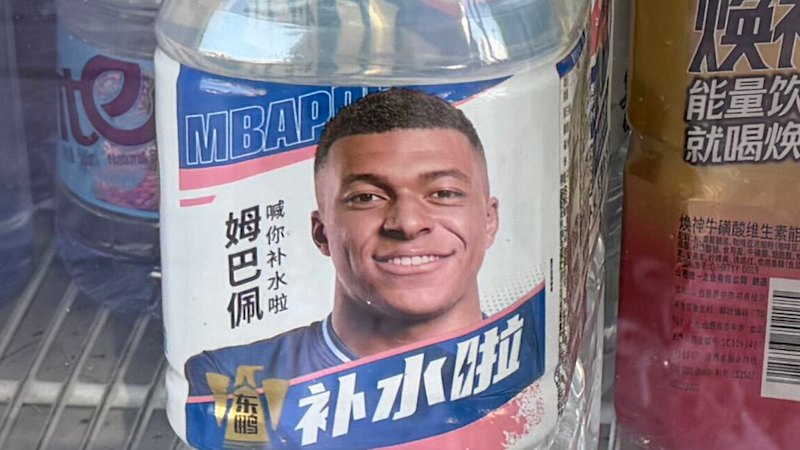
Walk down any busy street in Beijing's Chaoyang district right now, and you'll run straight into Kylian Mbappé. His smiling face gazes out from chilled glass doors at local kiosks and neighborhood supermarkets, plastered across bottles of sports drinks that promise instant hydration.
Yet, turn on a television inside those same Beijing apartments, and you will find complete emptiness where Spanish LaLiga football matches used to be. State broadcaster CCTV yanked matches off the air following a fierce backlash over a viral internet meme. The French superstar laughed at a joke depicting him as Mao Zedong, triggering a wave of corporate cancelations and broadcast bans that caught local shopkeepers entirely by surprise.
Street vendors are still restocking the athlete's endorsed beverages simply because supply chains move faster than state outrage. Store managers juggling daily profits don't spend hours tracking geopolitical controversies. They care about foot traffic and inventory turnover.
The Disconnect Between Corporate Boardrooms and Corner Shops
The contrast highlights a fascinating quirk of modern sports marketing in authoritarian markets. When Dongpeng and other Chinese brands sever commercial ties with an athlete, corporate headquarters act overnight. They scrub promotional posters, pull digital ads, and issue press statements condemning offensive remarks.
Corner kiosks operate on a totally different timeline.
Managers like 56-year-old Shi, who runs a China Post-owned newsstand in Beijing, received no official directives to yank stock off the shelves. She kept reordering sports drinks featuring Mbappé because local customers kept buying them. Most ordinary shoppers remain completely unaware of the specific interview or the exact punchline that sparked the diplomatic headache.
Censorship systems create a bizarre informational vacuum. The government-owned China Media Group condemned Mbappé’s remarks as crossing a line and harming the Chinese people, but state firewalls blocked citizens from viewing the actual offending footage. Anyone curious enough to find out what happened must resort to virtual private networks to jump the Great Firewall.
Why the Mao Legacy Still Commands Deep Reverence
To understand the severity of the backlash, you have to look past the football pitch and examine historical memory in China. Mao Zedong remains deeply revered across generations for founding the People's Republic in 1949 and ending a century of foreign imperial domination.
For older citizens who grew up memorizing revolutionary songs and studying historical texts, respect for Mao is foundational. It isn't just a political stance; it is deeply embedded cultural identity. When a foreign athlete treats a likeness of Mao as a punchline to an internet joke, it strikes a raw nerve among millions who view the historical leader through an entirely different lens.
At the same time, younger internet users navigate a complex maze of digital subcultures where western viral memes often cross cultural boundaries without context. The original meme photoshopped Mbappé’s face onto various historical dictators to mock his commanding, dominant personality inside football dressing rooms. In global meme culture, it was a joke about ego. In Beijing, it landed as a direct insult to national history.
The Real Cost for Real Madrid and Broadcasters
The fallout extends far beyond convenience store refrigerators. LaLiga president Javier Tebas and Real Madrid issued formal apologies after the old interview resurfaced, desperate to protect lucrative Asian broadcasting rights and commercial partnerships.
Sport is big business in China, but political sensitivity always trumps athletic entertainment. When state media brands a player's behavior as unacceptable, broadcasters pull the plug instantly, leaving fans high and dry on match days.
Ultimately, the Kylian Mbappé controversy proves that global stardom offers no immunity against local political sensitivities. While convenience store fridges in Chaoyang will eventually cycle through their current inventory and phase out the disputed bottles, the episode serves as a stark reminder of how fast global brand value can evaporate when cultural lines get crossed.