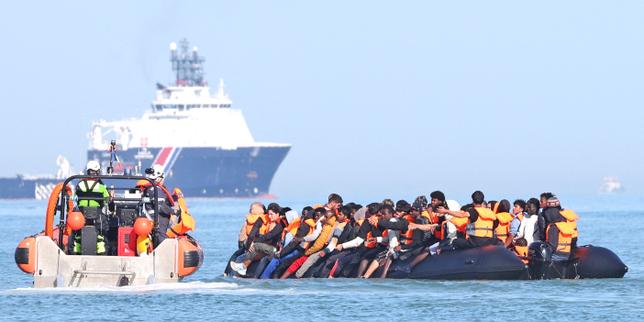
Another day, another grim headline from the northern coast of France. 157 people pulled from the freezing waters of the Channel after their makeshift boat caught fire off Boulogne-sur-Mer.
Let's look past the sterile bureaucratic updates issued by the prefecture. This isn't just a routine rescue log. It's a snapshot of a recurring humanitarian crisis playing out daily in one of the busiest maritime shipping lanes on Earth. When an overcrowded rubber craft catches fire in open water, safety margins shrink to zero. French and British vessels managed to scoop these individuals out of danger just in time, but the underlying pressure driving these crossings remains entirely unchanged.
The Grim Statistics Behind the Crossings
Numbers tell a sobering story. Since January, more than 14,000 people have risked their lives trying to slip past border patrols into Great Britain on fragile, overloaded skiffs. Wind the clock back to 2018 when this specific wave of small-boat crossings accelerated, and you're looking at roughly 200,000 individuals who have attempted this perilous maritime route.
Why do they keep coming? The answer involves closed land borders, stringent visa controls, and ruthless smuggling networks that cash in on absolute desperation. Smugglers pack dozens of people into rubber dinghies that lack basic navigation gear, life jackets, or reliable engines. When a motor dies or fuel spills and ignites—as it did recently off the Pas-de-Calais coast—passengers face an immediate fight for survival.
What Rescue Authorities Actually Face
Operating a rescue mission in the Dover Strait or the broader English Channel is a logistical nightmare. You have giant container ships passing every few minutes, unpredictable tides, and freezing water temperatures year-round.
The Centre Régional Opérationnel de Surveillance et de Sauvetage, commonly known as CROSS, coordinates these complex interventions between French maritime authorities and British counterparts. When a boat gets into trouble, minutes matter. If rescue boats arrive even ten minutes too late, hypothermia or drowning seals the fate of everyone on board.
Yet, intercepting and rescuing these boats only addresses the symptom, not the root cause. Border enforcement on both sides of the Channel has swallowed billions of euros over the past decade. Governments buy more patrol boats, deploy advanced radar systems, and crack down on supply chains selling cheap outboard motors and dinghies. Smugglers simply adapt. They shift launch points further down the coast, use smaller batches of boats, or force migrants onto vessels at gunpoint regardless of weather conditions.
The Human Toll Nobody Talks About
Politicians love to argue over deterrence policies, deportation flights, and asylum caps. But out on the water, it's just human beings clinging to deflating rubber tubes in the dark.
Most people don't realize how flimsy these vessels actually are. They aren't professional marine craft; they're pool toys bought in bulk and patched together with cheap glue. A single sharp object, a discarded cigarette, or an overloaded hull can trigger a catastrophic failure in seconds.
Until European and British leadership find a realistic framework to process asylum claims before people hit the beaches, or dismantle the financial infrastructure fueling the trafficking rings, these rescue operations will repeat week after week.
Stay alert to how policy changes shape these migration patterns, because the status quo guarantees more tragedies in the Channel.