Diplomacy often looks like a well-choreographed dance, but right now, it’s closer to a stalemate. Jared Kushner is back in the region, tasked by President Trump to breathe life into a Gaza peace plan that seems to have more critics than fans. If you have been following the headlines this August, you know the atmosphere in Israel is tense. The central issue isn't just the plan itself, but the lack of concrete security guarantees that Prime Minister Benjamin Netanyahu demands before he’ll even consider moving an inch.
Basically, the administration is trying to push a vision for Gaza that centers on total demilitarization and a transition toward a new governing framework. It sounds clean on paper, but the reality on the ground is messy. You’re looking at a region exhausted by two years of intense conflict and decades of instability. Kushner is playing the role of the ultimate dealmaker, yet he is finding that the "Board of Peace" initiative, which aims to act as a neutral technocratic body, is facing a massive trust deficit. Recently making headlines in related news: Why Jd Vance Just Refused To Back Netanyahu And What It Means For Washington.
The core conflict
The biggest hurdle here is timing and trust. Washington wants to see a phased withdrawal of Israeli forces paired with a definitive disarmament of Hamas. Netanyahu, however, hasn't been shy about his skepticism. He’s explicitly stated he opposes the current proposal, specifically refusing any troop withdrawal until Hamas is completely disarmed. He doesn't want promises; he wants ironclad security.
Think about the leverage involved. Trump is banking on the idea that regional pressure, combined with the promise of reconstruction aid and economic opportunity, will force the parties to the table. The administration points to the successful hostage releases earlier this year as evidence that their backchannel negotiations work. But regional actors and even domestic Israeli critics are questioning whether these agreements are built to last or if they’re just temporary patches on a structural disaster. Further details on this are explored by BBC News.
Why this isn't a repeat of 2020
People keep comparing this to the Abraham Accords. Don't do that. The context is entirely different. Back then, it was about normalization between states that weren't actively at war. This is about ending an active, high-intensity conflict. You cannot treat a war-torn territory like Gaza, where the governing structure is shattered, the same way you’d treat a diplomatic opening with the UAE or Bahrain.
The "Board of Peace" is trying to move past politics to focus on rebuilding infrastructure and workforce development. It’s a noble, technocratic goal. Yet, you cannot separate the humanitarian crisis from the political reality. Without a political horizon that the Israelis trust and the Palestinians can accept, any economic aid is just throwing fuel onto a smoldering fire. The administration insists this plan is different from anything proposed in 2025 because it’s backed by a broader coalition of regional powers, including Saudi Arabia and Egypt. Whether that coalition can actually force a breakthrough remains the multi-billion-dollar question.
What happens next
Kushner’s visit to Israel this week is meant to determine, in concrete terms, the next steps for implementation. If he can’t secure the security guarantees Netanyahu is shouting for, the plan risks being declared "dead on arrival" by the Israeli cabinet.
If you’re looking at this objectively, you have to realize that neither side is operating from a position of absolute strength. Netanyahu is under domestic pressure with elections approaching in October, making any concession look like political suicide. Meanwhile, the administration is running out of runway before the domestic political cycle in the U.S. completely shifts focus.
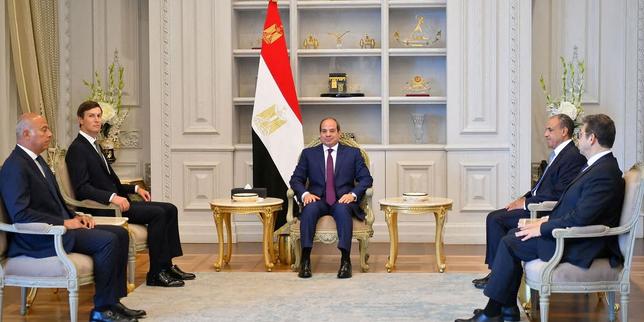
The most likely outcome isn't a sudden, miraculous peace treaty. It’s going to be a slow, grinding process of adjustments. Expect more "clarifications," more envoys traveling between Cairo and Jerusalem, and a lot of public posturing. If you are tracking this, watch for the shift in rhetoric from the regional Arab powers. If they start signaling that they’re willing to take a larger role in the "Board of Peace" administration, that is your real sign of movement. Everything else is just noise.
We aren't at the end of this. We are barely past the first phase of an incredibly long, fragile road. Keep your eyes on the security benchmarks. If those move, the peace process might actually have a pulse. If they don't, we are looking at another long autumn of stagnation.
Kushner in Israel for peace talks
This video provides important context on the initial vision of the Board of Peace initiative that Kushner is currently struggling to implement in the face of ongoing regional resistance.