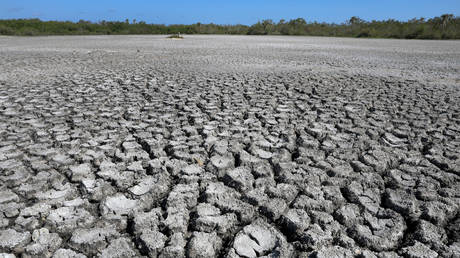
We've officially entered climate territory that human civilization has never witnessed. August smashed global temperature records, averaging 16.96 degrees Celsius worldwide according to data from the European Union's Copernicus Climate Change Service. That is not just a dry number on a chart. It is part of a relentless streak that has scientists looking backward through paleoclimatic evidence and realizing we are experiencing a global heat record not seen for the last 100,000 years.
Let's break down what that actually means.
When Copernicus researchers like Samantha Burgess look at the numbers, they aren't just comparing modern data against 1940, which is when continuous instrument records begin. By looking at ice cores, tree rings, and coral reefs, scientists reconstruct historical temperatures across millennia. The conclusion is stark. Modern humanity hasn't dealt with planetary warmth like this since before the last ice age. August was 1.65 degrees Celsius hotter than the pre-industrial benchmark of 1850 to 1900. It effectively tied July 2023 for the hottest monthly average ever measured, with less than a hundredth of a degree separating them.
You're probably wondering how we got here so fast. The answer is pretty straightforward, even if our policy responses aren't. Greenhouse gas emissions keep rising. UN climate chief Simon Stiell called these milestones the spiraling price of fossil fuel addiction. Every barrel of oil and ton of coal burned adds another layer to an invisible thermal blanket trapping heat around the globe.
Western Europe just lived through the ugly reality of this math. France, the UK, and Belgium recorded their hottest summers ever. France alone endured 53 straight heatwave days while receiving nearly 40 percent less rainfall than normal. That kind of drought turns ecosystems into tinderboxes.
The human toll follows quickly behind the weather reports. Santé publique France registered thousands of excess deaths during the severe heatwave windows, spiking up to 36 percent above normal expected levels in affected zones. Heat is an invisible killer. It strains cardiovascular systems, stresses vulnerable populations, and exposes the brutal fragility of urban infrastructure that wasn't built for persistent tropical-level temperatures in temperate zones.
Agriculture feels the squeeze immediately too. Germany reported a 7.3 percent drop in its grain harvest due to the punishing combination of heat and lack of moisture. Major commercial waterways like the Rhine saw water levels plummet, making cargo shipping difficult and expensive. When the rivers get too shallow, barges can't carry full loads. Supply chains stutter. Food prices climb.
Governments are scrambling to patch the holes. France rolled out over a billion euros in emergency financial aid for tens of thousands of struggling farms. Meanwhile, dry vegetation fed ferocious wildfires across the European Union, burning more than 647,000 hectares by early September—nearly double the twenty-year average for that time of year.
Oceans are taking a massive hit as well. Sea-surface temperatures outside the polar regions reached their joint-highest monthly levels yet, continuing a multi-month run of abnormal marine heat. Warm water expands, drives sea level rise, and destroys marine ecosystems like coral reefs that cannot adapt quickly enough to thermal shock.
People love to point to natural cycles like El Niño as the sole culprit for these spikes. But natural cycles only add short-term volatility to a baseline driven relentlessly upward by human activity. Long-term global warming sits roughly 1.4 degrees Celsius above pre-industrial levels and keeps climbing.
If you want to understand where we are headed, look past the daily weather forecasts and watch the energy policies. Until emissions curve downward globally, these once-in-a-lifetime heat records are simply going to become the new normal summer experience.