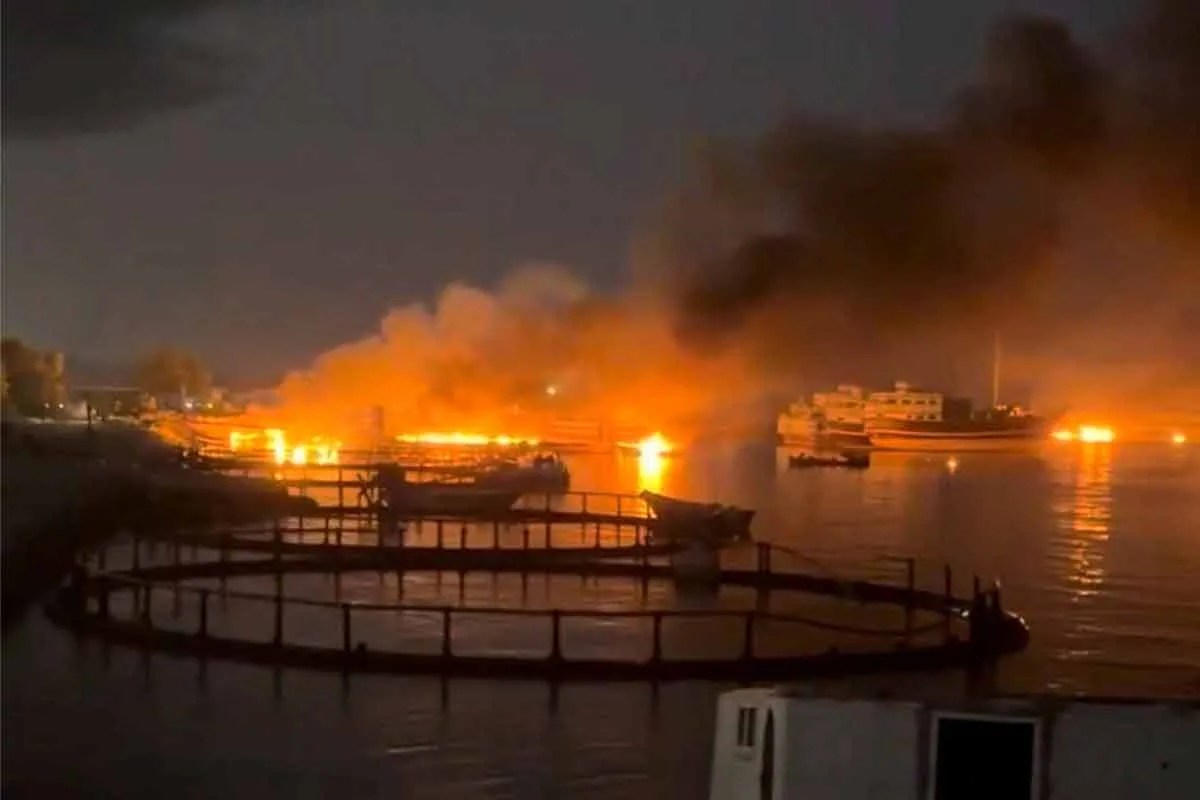
The fragile ceasefire signed just weeks ago in June is gone. If you woke up looking for answers about the massive explosions shaking Iran's coastal cities, here is the brutal reality. The Middle East has plunged right back into a dangerous cycle of tit-for-tat military actions. Late Thursday night, powerful blasts ripped through Iran's southern provinces, specifically targeting areas around the critical port city of Bushehr and Sistan and Baluchestan.
Almost immediately, lines of communication went red hot between Washington and Jerusalem. US President Donald Trump and Israeli Prime Minister Benjamin Netanyahu held an urgent phone call to map out their next strategy in the Gulf. This happens right as Iran is burying its late Supreme Leader, Ali Khamenei. Learn more on a connected subject: this related article.
If you are trying to understand whether we are on the brink of an all-out regional war, you need to look past the official press releases. The situation on the ground is moving fast, and the narrative from both sides shows a complete breakdown in diplomacy.
Untangling the Chaos in Bushehr
Local reports from the semi-official Mehr news agency confirmed that at least two major explosions shook Bushehr, while three more blasts occurred in Sistan and Baluchestan. Bushehr holds immense strategic value because it houses Iran's only commercial nuclear power plant. It sits right next to Kharg Island, which happens to be the main hub for Iranian oil exports. Additional journalism by NPR explores similar perspectives on the subject.
Iranian state news agency IRNA quoted the deputy governor of Bushehr, Ehsan Jahanian, stating that a military headquarters on the city's outskirts was hit directly. Iranian authorities claims point directly at a "US-Israeli projectile" striking the perimeter of the nuclear facility. Air defense batteries along the coast were seen lighting up the night sky, firing aggressively at what local officials called enemy drones.
Then came the twist from Washington.
US military officials flatly denied conducting any fresh airstrikes during that specific window. A spokesperson from Central Command made it clear that American forces were not operating offensive missions at the exact hour of the reported Bushehr blasts. This leaves two distinct possibilities. Either Israel acted completely alone without direct American assistance, or Iran's internal security is failing during a highly sensitive leadership transition.
Inside the Trump and Netanyahu Phone Call
As smoke rose from the coastal targets, Donald Trump called Benjamin Netanyahu from his flight back from the NATO conference. The White House and the Israeli Prime Minister’s Office both confirmed the conversation, but their individual readouts reveal a lot about where this conflict is heading.
Trump used the call to brief Netanyahu on recent American operations in the Gulf. Just a day prior, CENTCOM slammed nearly 90 Iranian military targets along the coastline to stop Iran from harassing commercial oil tankers in the Strait of Hormuz. Trump has publicly declared that the mid-June truce is over. He noted that while Iranian representatives have been calling him to salvage a deal, he remains skeptical about their intentions.
Netanyahu used the call to push for a much harder line. According to the statement from his office, the Israeli Prime Minister stressed the need for permanent security zones along Israel's borders. He also brought up the growing hostility from Turkish President Recep Tayyip Erdogan. Netanyahu made his position clear at a public ceremony earlier that day, stating that while previous military campaigns have significantly weakened the Iranian axis, the job is not done.
The two leaders ultimately agreed to maintain tight coordination across multiple fronts. This means any hope for a diplomatic freeze is essentially off the table.
The Broader Escalation and the Battle for the Strait
You cannot look at the Bushehr explosions in isolation. This entire week has been a masterclass in military escalation. The current spark started when Iran targeted three commercial tankers passing through the Strait of Hormuz. Trump viewed those maritime strikes as clear acts of terrorism and ordered immediate retaliation.
The Islamic Revolutionary Guard Corps did not sit back. They launched waves of combat drones and ballistic missiles at US military facilities in Kuwait and Bahrain, explicitly targeting the Arifjan and Ali Al Salem bases. The IRGC navy claims that US presence in the Gulf is preventing the strategic waterway from safely reopening, while Washington firmly counters that Iran does not, and will never, control the Strait of Hormuz.
The human cost is already mounting. Iran’s health ministry has reported 14 deaths and dozens of injuries from the initial waves of American coast strikes. Now, with the mysterious night explosions in Bushehr, those numbers are bound to shift.
What This Means for Global Stability
The timing of this escalation could not be worse for Tehran. The country is in the middle of a delicate transition as funeral processions for Ali Khamenei wind through cities like Mashhad. Reports indicate that the new supreme leader was even advised by the IRGC to avoid public appearances due to security threats.
For the rest of the world, this means energy markets are about to get incredibly volatile. The Strait of Hormuz handles a massive chunk of the world's daily petroleum transit. Even though the IRGC claims shipping capacity has recovered to about half of its normal pre-war levels, any sustained fighting near Bushehr or Kharg Island will send oil prices through the roof.
Do not expect either side to back down over the coming days. Trump has threatened to hit Iranian positions even harder if commercial shipping is disrupted again. Netanyahu is actively preparing his military for prolonged engagements. Iran feels backed into a corner during a period of national mourning and will likely rely on its regional proxies to strike back indirectly.
Immediate Steps to Watch Now
If you are tracking this crisis for business, security, or global market implications, you need to monitor specific triggers over the next 48 hours.
- Watch the official shipping advisories for the Persian Gulf and the Strait of Hormuz to see if commercial vessels begin rerouting around the Cape of Good Hope.
- Monitor tracking data out of Kharg Island to assess if Iranian oil export infrastructure suffered secondary damage from the Bushehr outskirts strike.
- Keep an eye on statements from Turkey and regional Gulf states like Kuwait and Bahrain, as their involvement could easily widen the geographic scope of this war.