Age comes for everyone. It doesn't care about your brand, your ego, or how many rallies you can fill on a Saturday night.
For nearly a decade, Donald Trump built a political empire by weaponizing the perceived frailty of his opponents. He turned nicknames like "Sleepy Joe" into devastating rhetorical tools. But at 80 years old, serving his second term as the oldest sitting president in American history, the tables have completely turned.
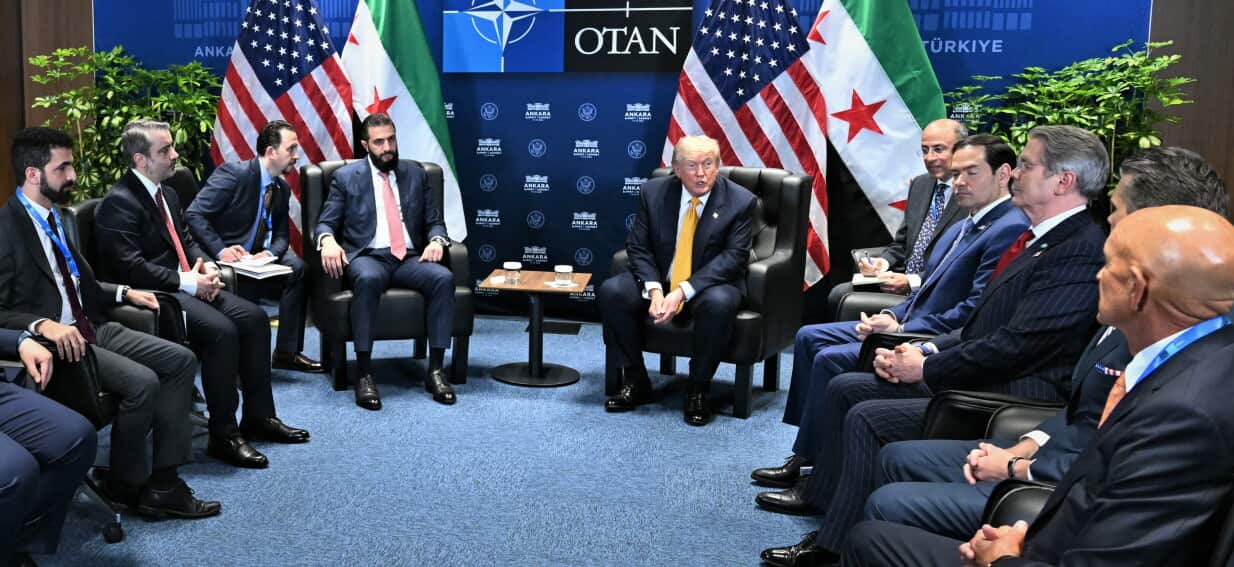
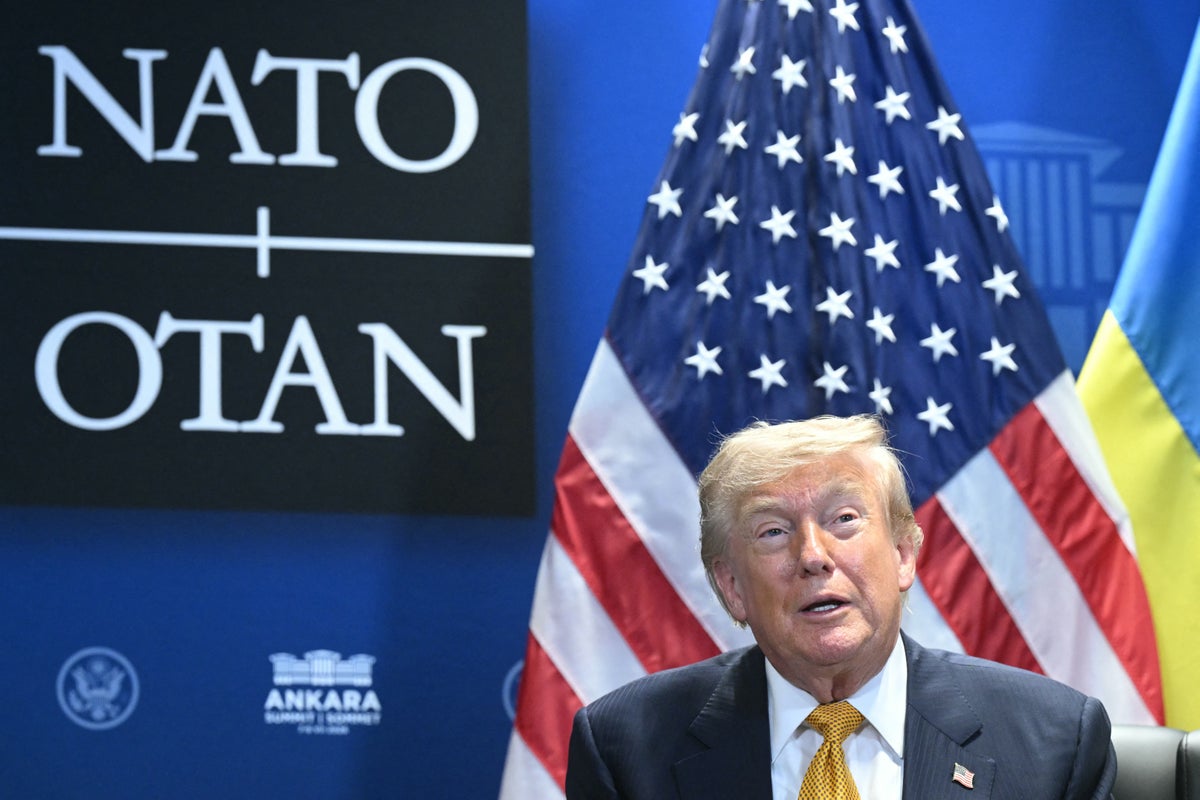
The internet erupted this week after a series of staggering verbal stumbles at the NATO summit in Washington. Critics quickly weaponized the moments, claiming his "brain is mush," but looking closely at the actual transcripts reveals a dynamic that's far more complicated than internet memes suggest. This isn't just about a senior citizen mixing up his words; it's about a highly transactional leader struggling to manage deep geopolitical shifts while his own internal library of facts goes haywire.
The Islamic Republic of Japan and Other Realities
The most jarring moment occurred during a joint press conference where Trump attempted to praise American defensive capabilities. While boasting about the effectiveness of Patriot missile systems, he recounted an incident involving the USS Abraham Lincoln aircraft carrier.
"We have an aircraft carrier, which is one of the most beautiful in the world. It's one of the biggest, the Abraham Lincoln," Trump said. "And a few months ago... we had 111 missiles shot by the Islamic Republic of Japan."
Japan, a staunch constitutional monarchy and one of America's closest democratic allies in the Pacific, obviously has no Islamic credentials. Trump clearly meant Iran, which had claimed responsibility for targeting the vessel during a period of high regional friction—a claim the US Central Command (CENTCOM) flatly denied at the time.
Trump didn't catch the mistake. He kept rolling. He launched into a aggressive warning against Tehran, threatening to take out their electric plants and boasting about a recent strike on Kharg Island.
But the damage was done. The phrase "Islamic Republic of Japan" instantly trended globally.
Expected Enemy: Islamic Republic of Iran
Trump's Reference: Islamic Republic of Japan
Security Framework: Constitutional Monarchy / Key US Ally
Mixing Up Friends and Dictators
If the Japan slip-up was a geographical bizarre-o-moment, his next blunder cut straight into the heart of modern global anxieties. Standing near Ukrainian President Volodymyr Zelenskyy, Trump managed to morph his guest into the very man trying to conquer him.
He referred to Zelenskyy as "Vladimir Putin."
He caught himself quickly this time, attempting to laugh it off by joking that he would "take questions" to Putin instead, but the room froze. It was an agonizingly awkward beat. For a president who has frequently faced intense scrutiny over his relationship with Moscow, calling the leader of Ukraine by the Russian autocrat's name was worst-case scenario territory for his communications team.
This isn't the first time Trump has mangled fundamental family or historical details with absolute confidence. He has previously claimed multiple times that his father was born in Germany, despite public records clearly showing he was born in New York. He routinely tosses out fabricated statistics, like claiming his administration cut certain drug prices by 600% to 700%—a mathematical impossibility.
It Is Not Just the Gaffes, It Is the Strategy
To his loyal base, these moments are just classic Trump. They see a freewheeling, unscripted leader who refuses to read teleprompters like a standard, boring politician. Every modern president has stumbled over words. Joe Biden famously made the exact same Zelenskyy-Putin mix-up at a NATO summit two years prior.
The real issue isn't the occasional tongue-tie. It's that Trump’s underlying worldview remains fiercely hostile to the very alliance he is currently leading.
During the same summit meetings, Trump openly called NATO a "paper tiger." He complained bitterly that the alliance went out of its way to avoid helping the United States in past conflicts, specifically naming Japan, Australia, and South Korea as unhelpful partners. He then revived his bizarre, long-standing fixation on purchasing Greenland from Denmark, telling the audience that because they refused to sell it, he told them "bye-bye."
This transactional approach to global security creates genuine panic among diplomats. When a president routinely labels historic allies as freeloaders while simultaneously confusing them with Islamic engineering states or adversarial dictators, it ceases to be a funny internet meme. It becomes a foreign policy liability.
What Happens Next
The political fallout from this summit is already hardening into predictable battle lines.
Democratic opponents and a growing group of late-night commentators are openly discussing the theoretical mechanics of the 25th Amendment. Realistically, there is zero chance of that happening. Trump maintains a vice-grip on his cabinet and his party.
Instead, expect to see the White House double down on high-visibility, tightly controlled events to project strength. If you want to understand how this impacts global stability, watch how allied nations respond in their own defense spending. They aren't waiting around for Washington to sort out its rhetorical confusion. Countries across Europe and Asia are quietly accelerating their independent military capabilities, realizing that America's defensive umbrella is now tethered to a very unpredictable 80-year-old commander-in-chief.
The era of ridiculing opponents for their age is officially over for the MAGA brand. Time remains completely undefeated, and the world is watching the results in real-time.