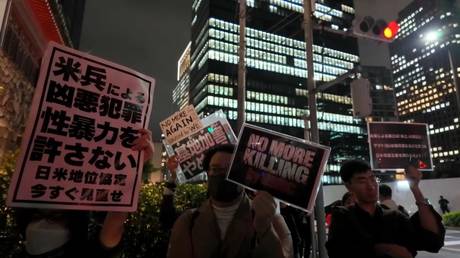
Anger outside the American Embassy in Tokyo doesn't just flare up over night. It builds for decades. When protesters marched on diplomatic gates this week following the arrest of a 20-year-old US Marine accused of killing a Japanese woman in Okinawa, they weren't reacting to an isolated tragedy. They were voicing a long-standing grievance that Tokyo and Washington have tried to sweep under the rug for generations.
Lance Corporal Devin Jacob Ballard sits behind bars facing accusations of strangling 39-year-old Anna Yagi at an island hotel and stealing her belongings. Ballard denies the charges, but the damage to bilateral trust is already done. Prime Minister Sanae Takaichi called the crime heinous and demanded stricter discipline. Yet words from leadership ring hollow to Okinawans who live the reality of the bases every single day. You might also find this related article useful: Why School Shootings In France Are Sending Shockwaves Through Europe.
The Math Behind the Rage
Look at the geography. It tells the whole story. Okinawa accounts for a tiny fraction of Japan's total landmass—just 0.6 percent. Yet it hosts roughly 70 percent of all exclusive US military facilities in the country.
That massive concentration creates an unavoidable friction between foreign soldiers and local residents. You can't cram tens of thousands of armed service members into a densely populated island chain without friction. When crimes happen, the outrage is immediate and ferocious. As discussed in latest coverage by Al Jazeera, the results are significant.
This isn't a new script. If you followed the news in 1995, you remember the mass protests triggered by the abduction and rape of a 12-year-old girl by three US servicemen. You probably remember 2016 too, when a former Marine and base worker named Kenneth Franklin Gadson raped and murdered 20-year-old Rina Shimabukuro, sparking similar fury and drawing life imprisonment.
Washington always issues statements of deep regret. The Pentagon rolls out new rules. They restrict off-base drinking. They mandate extra patrols. But then another crime happens. Another family shatters. Another protest erupts in Tokyo.
Why the Status Quo Fails
The Status of Forces Agreement (SOFA) between the US and Japan has long been a lightning rod for criticism. Critics argue the agreement shields American personnel from Japanese jurisdiction during the early stages of criminal investigations, creating a perceived double standard of justice.
When a heinous act occurs on local soil, citizens expect immediate, transparent accountability under local laws. Instead, they get bureaucratic delays and diplomatic tightropes.
Protesters outside the embassy this week carried placards demanding complete withdrawal. They're tired of curfews that don't work. They're tired of promises that ring hollow.
If you're wondering how this affects US-Japan defense ties, the answer is simple. It creates a massive political vulnerability for any Japanese leader trying to justify hosting foreign troops. Security pacts signed in Washington look very different when you're an Okinawan parent watching military helicopters fly overhead near your children's school.
The alliance needs a serious reality check. Unless Washington and Tokyo address the root causes of base concentration and legal accountability, every single crime committed by service members will continue to threaten the entire geopolitical framework in the Indo-Pacific.
Take a close look at how local communities organize after these tragedies. They aren't going away. The anger is systemic, and until real structural changes happen, Tokyo will keep seeing crowds at its gates.