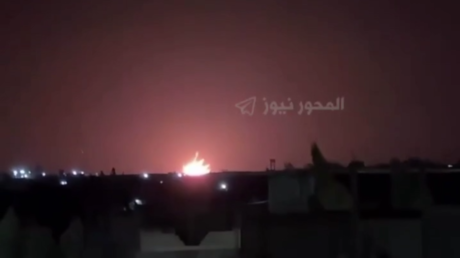
The illusion of a diplomatic breakthrough in West Asia has officially evaporated. If you believed the June 2026 Memorandum of Understanding would hold, the events of the past week have delivered a brutal reality check. Washington just wrapped up its seventh consecutive night of airstrikes against Iranian targets. But this isn't just a rerun of the 40-day air campaign we saw earlier this spring. The tactical choices playing out right now reveal a massive, high-stakes shift in American military strategy.
We aren't just looking at the destruction of isolated missile silos or clandestine drone warehouses anymore. The Pentagon has crossed a definitive line, moving from purely tactical containment to an aggressive attempt at economic and logistical strangulation.
Moving the Goalposts from Night to Day
For months, the military blueprint looked predictable. US Central Command (CENTCOM) favored night operations to minimize visibility and use maximum technological leverage. That playbook is gone. The transition to daylight airstrikes marks a deliberate escalation meant to signal absolute dominance over regional airspace.
When the US military sends waves of strike aircraft and drones into Iranian territory under the glare of the morning sun, it sends a psychological message. It tells Tehran that the US is no longer worried about playing a stealthy game of cat-and-mouse. CENTCOM chief Admiral Brad Cooper has coordinated operations that directly target the logistics network keeping the Islamic Revolutionary Guard Corps (IRGC) supplied.
The geographic focus is hyper-concentrated along the southern coast—places like Bandar Abbas, Sirik, and Bushehr. By hitting these hubs, the US intends to physically separate Iran's command structures from the very waterways they've locked down.
The Logistics Stranglehold Along the Coast
Look closely at the actual targets hit over the last 48 hours. The damage isn't confined to strictly military installations. Iranian Foreign Minister Abbas Araghchi confirmed that overnight strikes flattened a vital transit bridge in Bandar Khamir. Simultaneously, local officials in southern provinces report heavy damage to local airports, power facilities, and even a railway station.
The US strategy has pivoted toward tearing down dual-use civilian infrastructure. If you destroy the bridges and regional transport links connecting mainland Iran to its major ports, you do two things simultaneously:
- You stop the land-based transport of anti-ship cruise missiles and loitering munitions toward the coast.
- You crippled the domestic economy, raising the internal cost of continuing this war.
Predictably, the political rhetoric matches the violence on the ground. President Donald Trump has been vocal, warning via Fox News that if negotiations don't resume immediately, power grids and remaining transport bridges are next on the target list. "You better make a deal, or you're not going to have anything left," Trump stated bluntly. It's a textbook maximum-pressure campaign, executed via precision-guided munitions.
The Chokehold on global energy
The real prize in this conflict remains the Strait of Hormuz. About a fifth of global oil and natural gas supplies flow through this narrow maritime corridor daily. When Iran choked off the waterway earlier this year, global energy markets went wild, giving Tehran immense leverage.
The June interim agreement tried to establish a temporary, US-monitored shipping lane near Oman to ease the economic bleeding. That setup disintegrated the moment the IRGC resumed drone and missile strikes against commercial vessels trying to transit the area. In response, the US took the extreme step of reimposing a full naval blockade on Iranian ports.
The IRGC's counter-strategy relies on total economic defiance. Their leadership warned that if the US naval blockade persists, they will ensure that energy exports from the entire Middle East cease completely. Their philosophy is straightforward: the export of oil and gas from the Persian Gulf will either be for everyone or for no one.
Regional Fallout and the Next Steps
Tehran isn't taking these strikes lying down. The Iranian military has launched dozens of retaliatory drones and ballistic missiles at US assets and regional allies across the Gulf. Air defense alerts have gone off in Bahrain and Kuwait, while Jordan recently intercepted multiple incoming missiles over its territory. The war is actively spilling over its borders, drawing in neighboring states that host American forces.
If you are tracking this conflict for its economic or geopolitical impact, don't look for a sudden diplomatic exit ramp. The current trajectory suggests things will get significantly worse before any real talks resume.
Here is what to watch for in the coming days:
- Energy Market Disruption: Expect insurance premiums for commercial shipping in the Gulf of Oman to skyrocket, directly inflating global oil prices.
- Infrastructure Escalation: Watch for potential US strikes targeting inland Iranian power grids, following through on recent White House warnings.
- Proxy Mobilization: Look out for increased asymmetric attacks from allied militia networks in Iraq and Syria, aiming to divert US military pressure away from southern Iran.