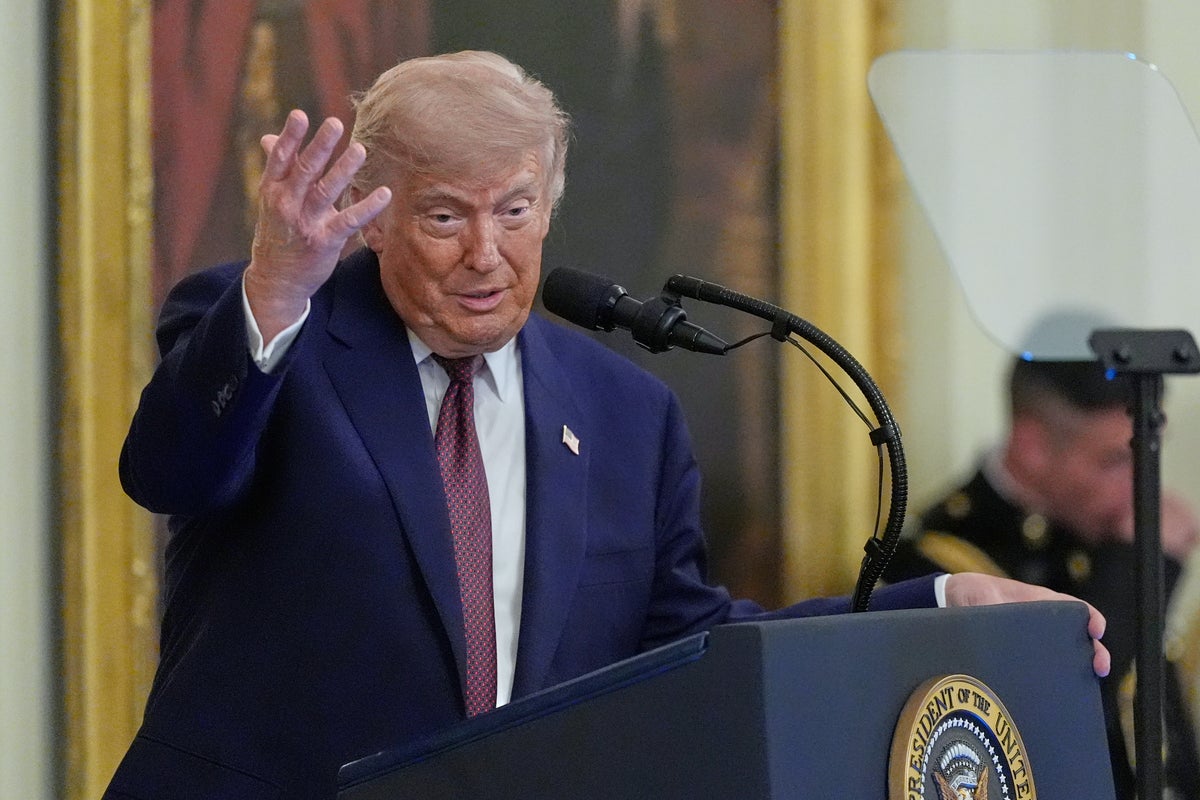
When Donald Trump walked into the East Room of the White House on Thursday, he was almost an hour late. The audience was waiting for a ceremony dedicated to honoring three American military heroes. Instead, the country got a classic display of Trump political survival strategy.
Before the first medal even touched a recipient's neck, the focus shifted. Within seconds of taking the podium, Trump bypassed the scheduled program to talk about the stock market, his own poll numbers, and his embattled Defense Secretary, Pete Hegseth.
This is the side of political events that people often miss. White House ceremonies are rarely just about the official program on the schedule. They are prime-time opportunities for a president to reframe the narrative, especially when things aren't going well elsewhere.
The Economy and the Deflection Game
Trump immediately bragged that American stock markets had hit a new all-time high. He told the audience that their 401(k) accounts were soaring and that oil prices were "dropping like a rock."
There is a very specific reason he led with this. Just one day prior, a new poll from NPR, PBS, and Marist University revealed that Trump's economic approval rating had tanked. It dropped to 35 percent, which is lower than the previous low-water mark of the Biden administration. When your polling on the economy hits a wall, you don't wait for reporters to ask about it. You control the room by shouting the raw market numbers first.
The economic boasting set a strange tone for an event meant to honor supreme military sacrifice. Trump even joked that he wanted to give the Medal of Honor to himself. He said he asked around but was told he couldn't do it because he couldn't find a reason where he was "actually worthy." It is a recycled joke he has used before, but it served its purpose by keeping the spotlight squarely on the podium.
Doubling Down on Pete Hegseth
The most telling moment of the afternoon came when Trump looked into the crowd and pointed out Defense Secretary Pete Hegseth. Trump did not call him by his official modern title. Instead, he referred to him as the "Secretary of War."
That title hasn't been officially used in the United States since 1947, when the Department of Defense was created. By using it, Trump wasn't just making a historical slip. He was signaling a specific type of aggressive, old-school military mindset that he values.
Hegseth has been under intense pressure. Just this week, senators have been actively trying to block his official travel funds until the Pentagon releases a highly anticipated report regarding a U.S. school strike in Iran. The timing of the ceremony gave Trump a perfect, shield-like environment to defend his guy. Trump declared that the former Fox News host has "had some good victories lately" and confidently predicted "a lot more" to come.
It was a public show of absolute confidence designed to tell Congress that Hegseth isn't going anywhere, no matter what investigations are floating around Capitol Hill. This came right on the heels of Trump signing a memorandum of understanding to end the immediate hostilities with Iran and reopen the crucial Strait of Hormuz. Trump used the event to tie Hegseth directly to that geopolitical resolution.
The Real Heroes in the Room
Despite the political theater, the actual achievements of the three men being honored couldn't be overshadowed. These men did things that look impossible on paper.
Trump presented the nation's highest military distinction to two Vietnam War veterans and one veteran of the war in Afghanistan.
- Major James Capers Jr. (U.S. Marine Corps, Retired): Now 88 years old, Capers was recognized for his actions in Vietnam back in 1967. During a brutal four-day reconnaissance patrol, his team was ambushed by a claymore mine. Every single Marine on his team was wounded. Capers himself was hit by shrapnel in 17 different places. Despite massive blood loss and a shattered leg, he took a shot of morphine, ran the firefight, and ordered his men to safety. He even tried to step off the rescue helicopter because it was too heavy to lift off, but his men physically pinned him down, refusing to leave him behind.
- Colonel John W. Ripley (U.S. Marine Corps, Posthumous): Ripley, who passed away in 2008, received the medal for his legendary actions in April 1972 at the Dong Ha Bridge. To stop a massive North Vietnamese mechanized assault, Ripley spent four hours crawling underneath the bridge under constant enemy fire, single-handedly rigging 500 pounds of explosives to blow up the structure. His actions completely stalled the enemy advance.
- Major Nicholas Dockery (U.S. Army, Retired): Dockery was honored for extraordinary gallantry during intense, close-quarters urban combat in Afghanistan, where he repeatedly risked his life under direct fire to protect and evacuate three wounded members of his platoon.
The contrast in the room was sharp. On one hand, you had individuals who had sacrificed their bodies and literal blood for the country. On the other hand, you had a masterclass in political maneuvering, where those identical sacrifices were utilized as a backdrop to push back against low poll numbers and domestic political fights.
If you want to understand how Washington works, you have to look past the medals. You have to look at who is standing on the stage, who is being defended in the audience, and what bad news the administration is trying to bury on that exact day.