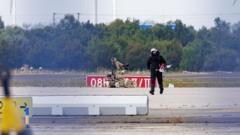
A bomb disposal robot rolling across an active tarmac isn't a drill anymore. When German police found a drone strapped with an explosive device at Leipzig/Halle Airport, the nature of European infrastructure threats shifted fundamentally.
For years, unauthorized drone sightings over military bases, logistics hubs, and energy terminals were written off as surveillance nuisances or rogue hobbyists. Not anymore. This incident marks the first time investigators have pulled actual explosives off a drone parked at a major European aviation hub.
What Actually Happened at Leipzig/Halle
The timeline is chaotic. Shortly before midnight, security personnel spotted a suspicious flying object near the facility's south runway. An airport employee later flagged a drone sitting directly in the cargo operations zone, parked near Ukrainian Antonov transport aircraft.
Federal police and bomb disposal units rushed to the scene. They disabled and removed a detonator from an unknown explosive device attached to the aircraft.
Things got worse in the air. A DHL cargo plane forced to abort its landing due to the sudden runway closures collided with a second unknown flying object. That aircraft managed to divert safely to Hanover, though crews later discovered minor structural damage.
Why This Target Matters
Leipzig/Halle isn't just a random regional airfield. It is a critical node in European logistics and military support.
- It serves as a primary European base for Ukraine's Antonov Airlines.
- It functions as a massive logistics hub for DHL.
- It is routinely utilized by the German military and NATO allies for heavy transport.
Because of these connections, counter-terrorism prosecutors in Dresden didn't waste time taking over the case. They know this wasn't accidental. It targeted a high-value artery.
The Growing Shadow of Sabotage
If you've followed European supply chain security over the past couple of years, this event feels chillingly familiar. In July 2024, an incendiary device caught fire inside a cargo container right at this exact airport. Western intelligence agencies tied that parcel fire to a broader Russian sabotage campaign utilizing proxies to slip incendiary materials into cargo networks.
While Interior Ministry officials and federal investigators are urging patience and refusing to point formal fingers while the probe stays active, security analysts are drawing straight lines. A recent paper by the International Institute for Strategic Studies documented over 140 unauthorized drone incursions over sensitive European sites. Almost all previous flights leaned toward reconnaissance. Packing explosives onto the chassis changes the playbook from spying to active kinetic sabotage.
The Blind Spots in Airport Defense
Commercial airports are built to move people and packages efficiently, not to fight off weaponized unmanned aerial systems. Standard airport radar often misses smaller commercial drones completely. Their low radar cross-section and erratic flight paths make them nearly invisible until they're right on top of sensitive assets.
Operators can launch them miles away, stay hidden in nearby wooded areas or vehicles, and slip away before security forces mobilize. Jamming technology exists, but deploying active electronic countermeasures around busy civilian flight paths creates massive safety hazards for incoming passenger jets.
The find at Leipzig proves that critical infrastructure protection is lagging far behind modern threat evolution. Expect rapid, expensive upgrades to counter-drone systems across European transportation hubs over the coming months. Security perimeters are about to get a lot less welcoming.


