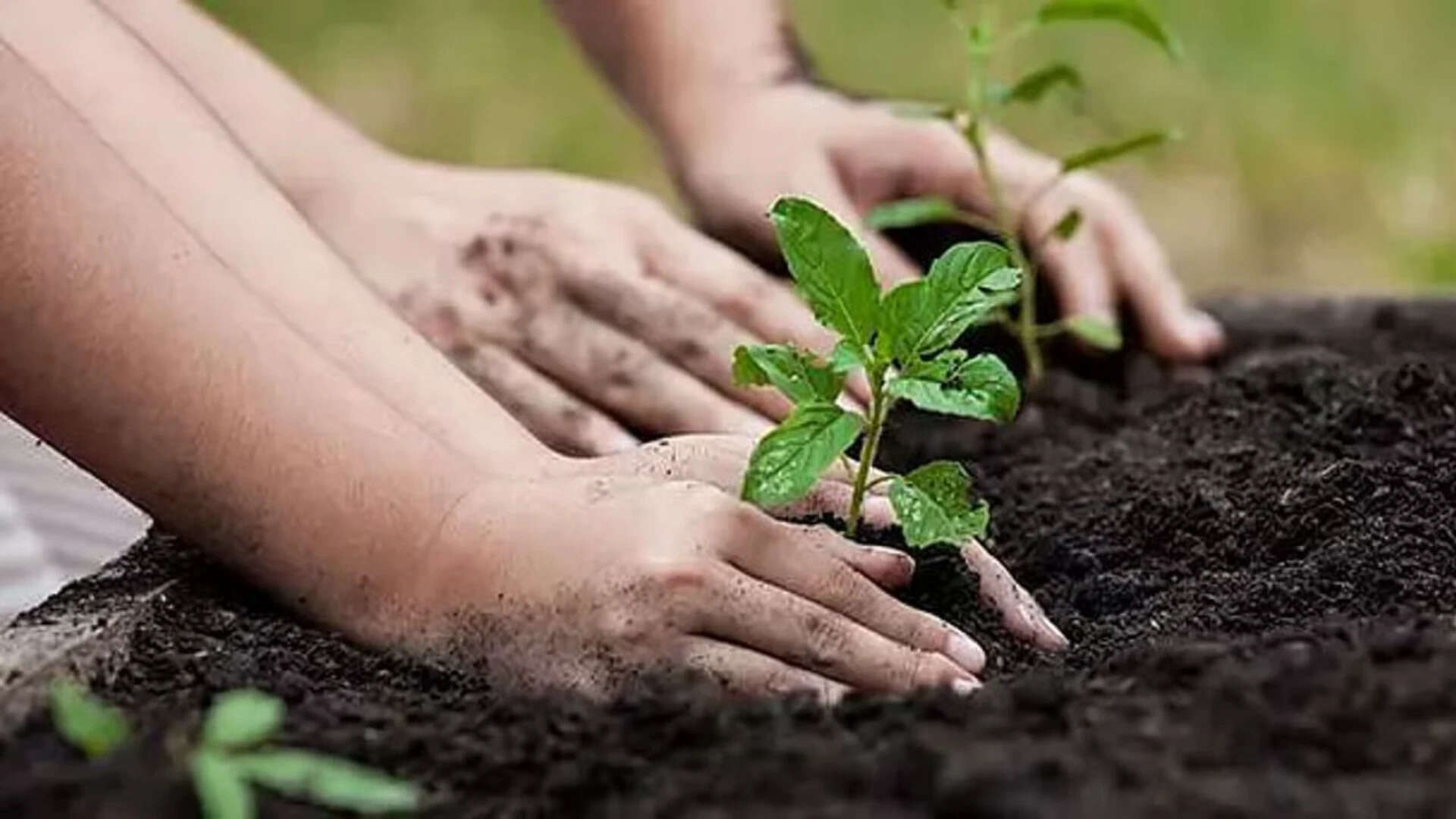
Tree-planting campaigns look fantastic on camera. VIPs gather, hold shovels, plant tiny saplings in dusty soil, and snap photos for press releases. But if you talk to environmental scientists watching these projects years down the line, they'll tell you a harsh truth: most of those saplings die within months.
In dry, eroded landscapes, spending millions of dollars shipping fragile nursery saplings into harsh conditions often amounts to wasteful eco-theater.
A major study published in Scientific Reports by lead author Melese Wondatir Sisay proves there's a far cheaper, much smarter way to fix broken land. Researchers tracked six pilot sites across 107 square kilometers in central Ethiopia's Kembata Tembaro district between 2015 and 2024. What they discovered fundamentally challenges how international climate programs handle dryland restoration.
The Underground Forest Waiting to Sprout
Back in 2015, tree cover across three specific test sites in Kembata Tembaro stood at a miserable 1.9%. Heavy farming, rapid population growth, and overgrazing had stripped the hilly landscape bare. Severe water erosion washed away huge amounts of topsoil every rainy season, destroying crop yields and threatening local food supplies.
Instead of digging up millions of nursery seedlings, conservationists relied heavily on Assisted Natural Regeneration (ANR).
This approach works on a simple principle: the ground isn't actually empty. Beneath seemingly dead dirt lies an invisible underground forest—a living matrix of dormant root networks, old stumps, and buried native seeds.
By simply fencing off degraded communal plots, preventing overgrazing, and pruning wild shoots, farmers helped the land heal itself. The results over nine years were striking:
- Forest canopy cover jumped from 1.9% in 2015 to 22.18% in 2024.
- Topsoil erosion dropped from 13.19 tonnes per hectare down to 9.49 tonnes.
- Total implementation costs stayed a fraction of conventional tree-planting campaigns.
When you protect native root systems, you don't need expensive irrigation or nursery trucks. The roots are already deep enough to reach groundwater, and native species naturally withstand regional droughts.
Direct Planting Works, But It Costs Far More
To be clear, direct tree planting wasn't ignored in the study. Researchers evaluated three separate test sites where saplings were actively planted on severely degraded land.
Those active planting sites saw canopy cover jump from 8.5% to 34.92%. Topsoil loss dropped significantly from an extreme 43.37 tonnes per hectare per year down to 31.29 tonnes.
    CANOPY COVER GROWTH (2015 vs 2024)

    Assisted Natural Regeneration (ANR)
    2015: [==] 1.9%
    2024: [======================] 22.18%

    Active Tree Planting
    2015: [========] 8.5%
    2024: [===============================$] 34.92%
The numbers look impressive for direct planting, but context matters. Active planting was used on the most devastated, severely gullied soil where living root systems were completely gone. On those ruined plots, manual planting was necessary to kickstart recovery.
On semi-damaged communal land, natural regrowth remains the undeniable winner for cost and long-term survival.
Tracking Landscape Recovery via Satellite
The investigation relied on high-resolution data from Norway's International Climate and Forests Initiative, analyzing 4.77-meter resolution satellite imagery in Google Earth Engine alongside ground height maps and historical rainfall data.
Funding came through Ethiopia's REDD+ Investment Program supported by the Norwegian government. By mapping land changes across seven distinct cover types—dense forest, open forest, brushland, farmland, grassland, bare dirt, and urban space—the research team proved that letting nature lead creates resilient ecosystems faster than human intervention alone.
In Ethiopia's dry highlands, steep slopes routinely lose between 20 and 100 tonnes of topsoil per hectare each year. Losing topsoil means losing nitrogen, organic carbon, and moisture retention. Once that topsoil washes into river basins, crops fail and communities suffer.
Restoring canopy cover acts as a physical shield against heavy rain, slowing down runoff and letting moisture soak into underground aquifers.
What Global Climate Projects Get Wrong About Reforestation
Too many international initiatives measure success by a single metric: how many saplings were planted.
They rarely track how many survive five or ten years later. Saplings planted in dryland soils require constant watering, protection from livestock, and expensive logistics. When funding runs out, the planted trees usually die.
Assisted natural regeneration shifts the focus from headline-grabbing numbers to long-term survival. Community involvement sits at the center of this strategy. Local farmers manage the land, establish agreements on grazing boundaries, and prune the regrowth so native bushes turn into sturdy trees.
It's a low-tech solution that scales easily across dryland regions facing desertification.
Practical Steps for Land Restoration Initiatives
If you manage land restoration projects, community forestry initiatives, or local conservation programs, these practical takeaways from the Ethiopia study offer a clear roadmap:
- Map existing root networks before buying saplings. Conduct ground surveys to identify living stumps and dormant root systems before spending money on nursery stock.
- Reserve active tree planting for completely stripped soil. Use direct planting only where topsoil is entirely eroded and natural seed banks no longer exist.
- Establish community land-use agreements. Work directly with local farmers and pastoralists to create clear rules around grazing rotation and wood harvesting. Protected plots need 3 to 4 years of uninterrupted growth to establish.
- Combine natural regrowth with active planting. Use a hybrid model where natural regeneration covers large communal areas while targeted sapling planting fixes acute erosion gullies.