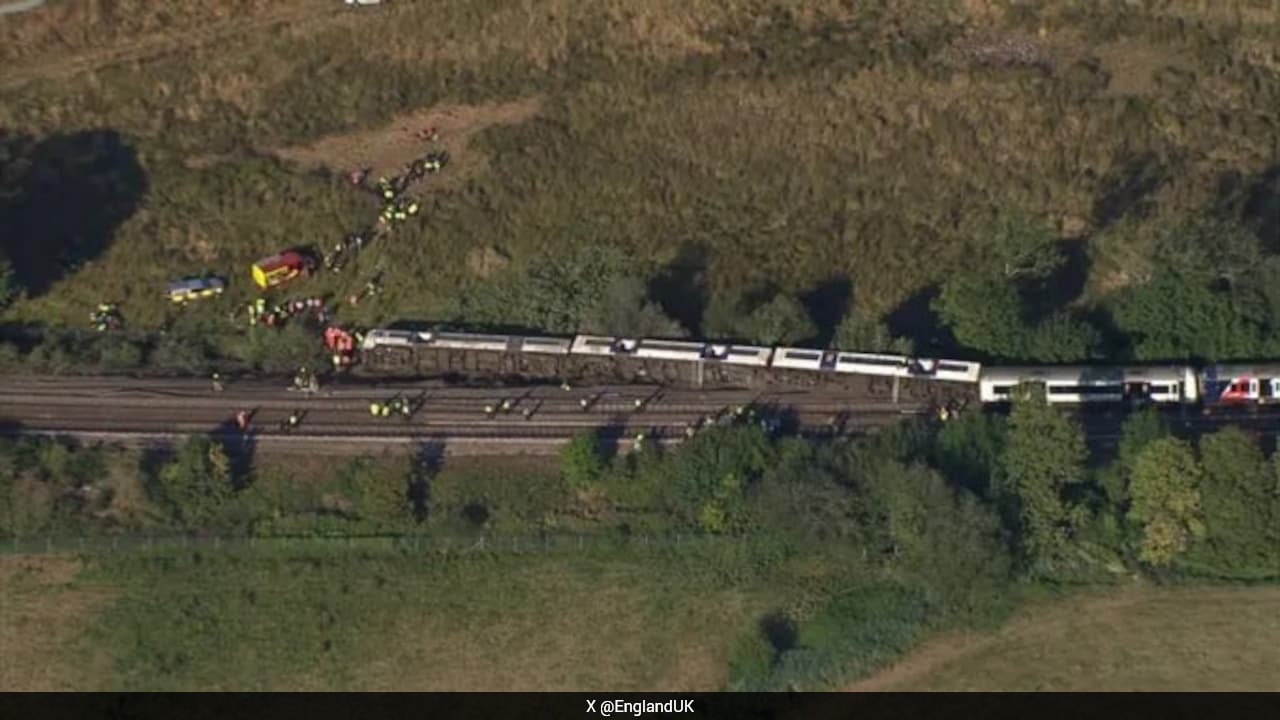
An afternoon journey from London Victoria to Eastbourne turned into a nightmare when a packed passenger train derailed near Lewes in East Sussex. Three carriages tipped completely onto their sides, trapping terrified travelers and turning a routine commute into a major emergency response.
If you're wondering how a modern rail system can see multiple coaches thrown onto their side in broad daylight, you aren't alone. British Transport Police declared a major incident immediately after the crash. Helicopters hovered overhead, ambulances flooded local access roads, and firefighters scrambled to evacuate roughly 150 passengers from the wreckage.
What Actually Happened Near Lewes
The incident unfolded shortly before four in the afternoon on a brutal weather day. Southern Rail confirmed that the service came off the tracks near Lewes station, roughly 72 kilometers south of London.
Eyewitness accounts paint a chaotic picture. Passengers described a sudden, violent banging sound followed by seconds of violent motion before the carriages tipped sideways. Survivors had to clamber out of emergency exits, with some standing precariously on top of the overturned metal shells while emergency crews rushed to set up triage areas in adjacent fields.
Two people sustained serious injuries, while numerous others suffered cuts, bruises, and severe shock. Local community centers quickly transformed into makeshift shelters for shell-shocked commuters waiting for transport or medical evaluation.
The Extreme Heat Factor
You cannot talk about this crash without looking at the environment. This disaster struck on what turned out to be the hottest day of the year in the United Kingdom, with temperatures soaring past 38 degrees Celsius amid a punishing summer heatwave.
Rail infrastructure hates extreme heat. Steel tracks expand under blistering sun, leading to buckling or sun kinks that make high-speed travel exceptionally dangerous. While official investigators from the Rail Accident Investigation Branch (RAIB) are still piecing together the exact mechanical trigger, photos from the scene clearly showed warped tracks alongside the flipped carriages.
Transport operators had issued warnings earlier in the day advising against non-essential travel because of anticipated heat disruptions. Critics are already asking why lines weren't closed proactively if the heat stress was that severe.
The Broader Crisis Facing UK Rail Infrastructure
Accidents like this spark uncomfortable questions about how aging British rail infrastructure handles climate extremes. Summer heatwaves are getting worse year after year, yet large portions of the network rely on Victorian-era layouts and foundational engineering that struggle with modern weather volatility.
When Transport Secretary Heidi Alexander called the incident deeply concerning, it echoed public frustration. Commuters pay some of the highest ticket prices in Europe, only to face regular cancellations, slow zones, and now, life-threatening derailments tied to extreme weather management.
Immediate Travel Impacts and What To Do Next
If you are traveling through southern England, expect severe delays for days. Network Rail and Southern have suspended sections of the line between Haywards Heath and Lewes, with replacement buses running limited routes.
- Check live journey planners before leaving home.
- Allow at least an extra 60 minutes for regional detours.
- Avoid the Lewes station corridor entirely if you are driving, as emergency services keep roads blocked for ongoing forensic recovery.
The investigation will take months to clear up final liability, but the immediate crisis highlights a harsh reality: Britain's rail network needs a massive structural overhaul to survive the climate shifts already hitting its tracks.