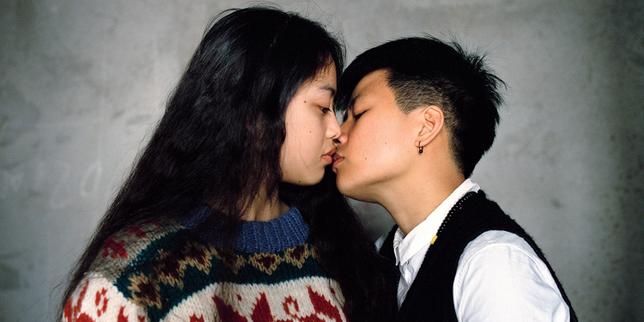
Walk into a quiet coffee shop in Chengdu or a dimly lit bar in Shanghai on a Friday night, and you'll find young women laughing, holding hands, and sharing stories about their week. They look like any young adult enjoying a night out. Yet, the moment the conversation shifts to family, future plans, or public life, the room gets quiet.
Being a lesbian woman in China today isn't about fleeing constant police raids or facing public street violence. For most, physical safety isn't the primary daily fear. The pressure is quieter, heavier, and far more pervasive. It comes from family dinners, state censorship, demographic anxieties, and an overarching legal system that treats queer identities as invisible. For an alternative perspective, consider: this related article.
To understand what lesbian relationships look like in China right now, you have to look past simple Western narratives of open activism or total underground repression. The reality lives in the grey space between private identity and public compliance.
Filial Piety and the Pressure of the Family Dinner Table
In many Western countries, coming out to one's parents is framed as the ultimate step toward living authentically. In China, coming out often feels like an act of betrayal. Further analysis on this trend has been provided by Wikipedia.
Family is the central social unit of Chinese life. Filial piety, or xiao, isn't just a traditional concept from ancient textbooks. It's a living, breathing expectation that children will care for their aging parents and carry on the family lineage. Decades of the One-Child Policy created a demographic structure where a single child carries the hopes, financial support, and genetic legacy of two parents and four grandparents.
When a daughter comes out as a lesbian, her parents rarely react with religious condemnation. China doesn't have a dominant religious doctrine preaching that homosexuality is a sin. Instead, parents panic about two things:
- Who will care for you when you're older? Without a traditional husband and children, social safety nets feel fragile.
- What will the neighbors say? Losing face (mianzi) within the extended family network creates intense emotional strain.
Because of this, many Chinese lesbians live double lives. They live openly with their partners in major cities like Beijing, Shanghai, or Guangzhou, far away from their hometowns. But when the Lunar New Year arrives, they return home alone, dodging relentless questions about their marriage prospects.
The Legal Reality and the Silence of the State
To grasp the legal standing of lesbian women in China, it helps to understand how quickly policy shifted over the past few decades.
Homosexuality was decriminalized in China in 1997 when the government removed "hooliganism" from the criminal code. Four years later, in 2001, the Chinese Psychiatric Association officially removed homosexuality from its list of mental illnesses.
However, legal recognition stopped there. China does not recognize same-sex marriage or civil unions. Same-sex couples cannot adopt children together, nor can single women access assisted reproductive technologies like in vitro fertilization (IVF) or egg freezing in mainland medical facilities.
The state's policy toward LGBTQ+ issues generally follows a triple-no rule:
- No approval.
- No disapproval.
- No promotion.
As long as queer life remains a private matter among consenting adults, the government rarely intervenes at an individual level. But the moment private identities attempt to organize, build civil society institutions, or gain public visibility, state control steps in.
Digital Censorship and Coded Safe Spaces
Over the past decade, the digital spaces where queer communities once gathered have steadily shrunk.
In 2017, official guidelines for online broadcasting content listed same-sex relationships alongside violence and pornography as "abnormal" behavior. By July 2021, WeChat shut down dozens of student-run LGBTQ+ accounts across major universities without warning. Prominent advocacy groups, including LGBT Rights Advocacy China, were forced to close their doors due to tightening restrictions.
Despite this crackdown, lesbian women haven't stopped communicating. They adapt. They innovate.
When direct terms like "lesbian" (nü tongzhi) trigger content filters or account flagging on platforms like Weibo, Douyin, or Xiaohongshu, users turn to clever subcultural code words:
- Tong Xun Lu: Literally translated as "address book," this term is used as slang for homosexuality because its initials in Pinyin (TXL) mirror the term for same-sex attraction.
- T and P: Originating from Taiwanese lesbian subculture, "T" stands for tomboy (masculine-presenting lesbian) and "P" stands for po or "wife" (feminine-presenting lesbian).
- Lala: A popular slang term for lesbian, adapted from Taiwanese literature.
- Les: Frequently used in English or shorthand to bypass automated Chinese text scanners.
Through subtly phrased lifestyle posts, vlogs about living with a "female roommate," or recommendations for specific coffee shops, women signal their identities to each other. The subtext is clear to those who know how to read it.
Marriages of Convenience and the Rise of Xinghun
Faced with relentless parental pressure to marry, some gay men and lesbian women in China turn to a pragmatic compromise: xinghun, or cooperative marriage.
A xinghun is a formal marriage contract between a gay man and a lesbian woman. On paper and in front of extended family, they appear as a traditional heterosexual couple. They host a wedding, take photos, and visit each other's families during holidays. In private, they live separate lives or reside with their actual same-sex partners.
Online match-making platforms and forums exist specifically to connect gay men and lesbians for these arrangements. They negotiate complex agreements before signing:
- Will they live in the same apartment or separate units?
- How will they split the cost of the wedding?
- How often will they visit each other's parents?
- Do they plan to have a child via IVF to satisfy family demands, and if so, who gets custody in a disagreement?
While xinghun offers a temporary shield against social stigma, it brings deep legal and emotional risks. Property division, unexpected pregnancies, and the sheer fatigue of maintaining a fake marriage for decades make it a complicated strategy rather than an easy fix.
How Demographic Trends Are Shifting the Conversation
China's current demographic realities are changing how the government and society view marriage. Falling birth rates and a shrinking workforce have turned population growth into a top national concern.
This shift has created a complex dynamic for young women across the country. The state actively encourages young people to marry and have children. Yet, a growing number of young heterosexual women are delaying or rejecting marriage altogether due to high living costs, career pressures, and traditional gender expectations.
In this environment, lesbian women share many of the same economic frustrations as their straight female peers. Financial independence has become the ultimate tool for autonomy. Women who earn their own income, purchase their own property, and build careers in major cities are far better equipped to resist family pressure. Money buys privacy.
Practical Insights for Navigating and Understanding Queer China
Understanding the nuances of lesbian life in China requires looking past simplistic headlines. If you're researching this space, connecting with the community, or planning to travel, keep these realities in mind:
- Differentiate between state policy and public safety. Street violence against queer individuals is remarkably rare in Chinese cities. You can hold hands or show subtle affection in public in cities like Chengdu or Shanghai without fearing personal assault, even if official advocacy remains constrained.
- Respect digital privacy. Never post photos or full names of local queer individuals on public social media accounts without explicit consent. Tagging a venue or an individual in connection with LGBTQ+ terms can lead to account suspensions or unwanted administrative attention.
- Recognize the role of economic autonomy. Financial independence is the primary shield for lesbian women in China. Supporting independent women-owned businesses, art spaces, and local creative projects helps sustain informal support networks.
- Avoid imposing Western framework expectations. Coming out isn't always the ultimate goal for every queer Chinese woman. For many, preserving family harmony while maintaining private freedom is a deliberate, reasoned choice rather than a defeat.
What Comes Next
The quiet resilience of Chinese lesbian women isn't going away. Spaces shift, platforms change, and language evolves, but the community continues to adapt.
To support or learn more about these dynamics:
- Follow independent Asian LGBTQ+ research collectives and human rights organizations that track censorship updates.
- Support queer Chinese artists, filmmakers, and writers who publish work overseas or through independent channels.
- Focus on localized, ground-level realities rather than assuming global queer experiences are identical everywhere.