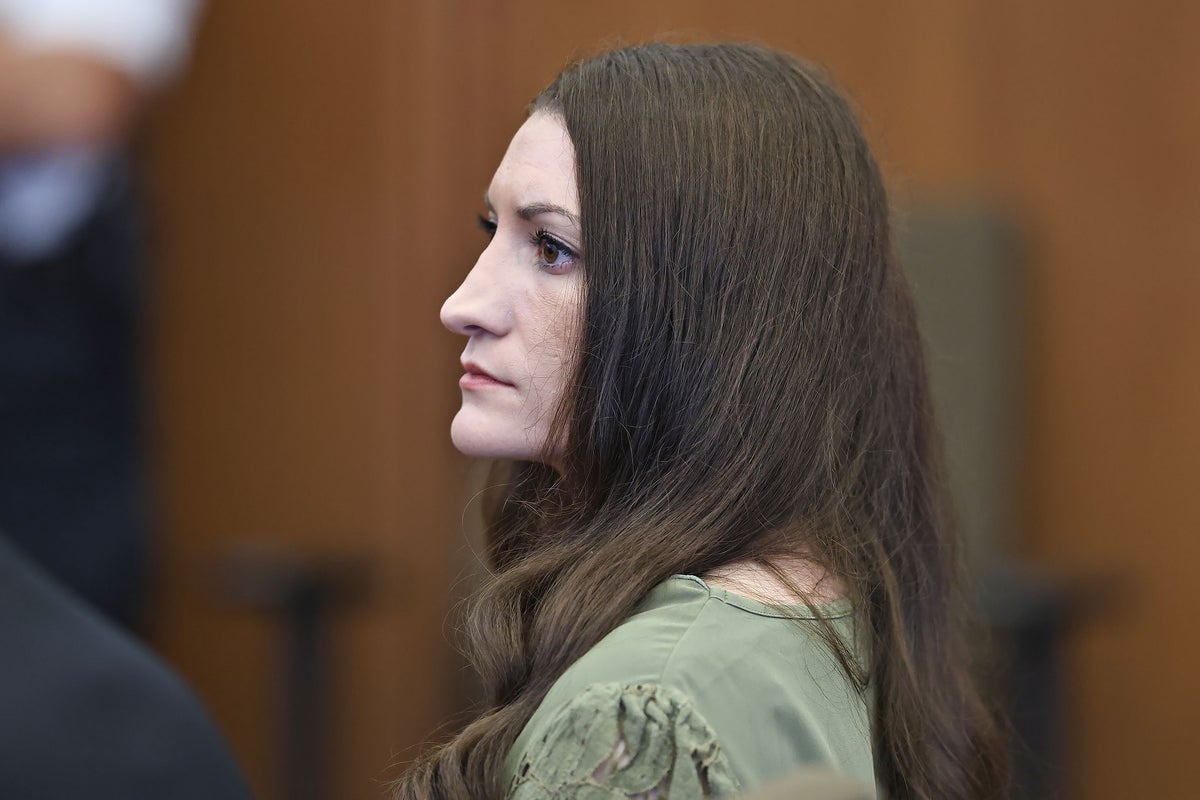
Trials involving severe mental health crises rarely end in simple verdicts. When a jury locks horns for seven agonizing days over whether a defendant can be held criminally responsible, it forces everyone involved to confront the dark, uncomfortable intersection of law and psychiatric trauma. That is exactly where the Lindsay Clancy case stands right now, teetering on the edge of a mistrial as deliberations stretch past a week in a Massachusetts courtroom.
If you have been following the proceedings, you know the core facts are not disputed by either side. Clancy, a former labor and delivery nurse from Duxbury, Massachusetts, strangled her three young children—Cora, Dawson, and Callan—in January 2023 before attempting to take her own life. The central battleground is not about who committed the acts, but about the state of her mind when they happened. Defense attorney Kevin Reddington argues that severe postpartum psychosis completely robbed her of control, while prosecutors contend she executed a deliberate plan and understood the consequences of her actions.
Now, the legal pressure cooker has boiled over into open courtroom clashes between the bench and the defense.
The Clash Over the Holdout Juror
The fragile state of the jury became glaringly public when notes revealed a single holdout was preventing a unanimous decision. Judge William Sullivan brought jurors in one by one to gauge their ability to follow instructions on reasonable doubt, sparking an immediate confrontation with Reddington.
Reddington accused the judge of soft-pedaling his instructions to the panel. He demanded a forceful re-reading of the law on reasonable doubt, arguing that the holdout juror was refusing to apply the legal standard properly.
"What do you want me, what do you want me to do? Get a brass band?" Judge Sullivan snapped back during the tense exchange, defending his delivery as standard judicial practice rather than a theatrical performance.
Despite defense pleas to dismiss the holdout juror, Sullivan refused to intervene in the jury's internal dynamics. He noted that every juror swore an oath to follow the instructions, leaving the panel to wrestle with their divisions behind closed doors.
The Core Conflict of Postpartum Psychosis in Court
The deep split inside the jury room reflects a broader societal argument about how the legal system handles maternal mental health disorders. Postpartum psychosis is rare, affecting roughly one to two in every one thousand women after childbirth. It involves severe symptoms like hallucinations, extreme confusion, paranoia, and a total disconnect from reality.
For prosecutors, the challenge is proving intent through the cold logistics surrounding the tragedy. They point out that Clancy sent her husband on errands to clear the house and questioned the true severity of her subsequent suicide attempt. To the state, these actions show premeditation and a clear awareness of wrongdoing.
For the defense, those same actions are symptomatic of a profound psychiatric break. Medical experts who treat severe postpartum psychiatric conditions emphasize that patients experiencing acute psychosis often act under bizarre, terrifying delusions that override ordinary logic. Bridging that gap for a jury requires translating complex medical realities into rigid legal frameworks, a task that frequently leads to prolonged deadlocks.
What Happens Next If the Jury Cannot Agree
When a jury tells a judge twice that it cannot reach a unanimous decision, the clock is ticking toward a potential mistrial. If Judge Sullivan ultimately calls a mistrial, the legal process resets.
Prosecutors would face heavy choices. They could elect to try Clancy a second time, drop the charges, or pursue a negotiated plea agreement. On the other hand, if the jury returns a guilty verdict for murder or manslaughter, Clancy faces decades behind bars. Should she be acquitted by reason of lack of criminal responsibility, a judge would still retain the authority to order her confinement in a psychiatric facility if evaluations show she remains a danger to public safety.
The prolonged deliberations lay bare the immense difficulty jurors face when forced to weigh medical trauma against statutory guilt. No matter how this verdict lands, the trial has already exposed the fractures in how the justice system evaluates the breaking points of the human mind.