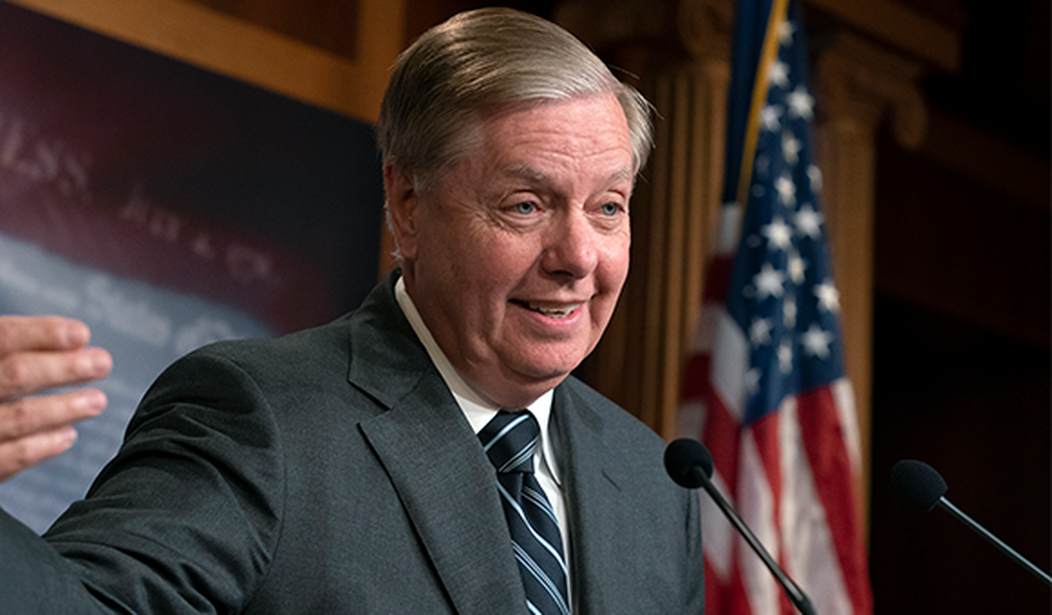
Lindsey Graham spent his entire political life shifting shapes, yet he somehow remained exactly who he always was.
His sudden death at age 71 on July 11, 2026, caught Washington completely off guard. Just days prior, he was in Kyiv meeting with Ukrainian President Volodymyr Zelenskyy—his tenth visit since the Russian invasion began. Hours later, his office announced he had passed away from a brief illness, leaving a massive power vacuum in the US Senate where he chaired the powerful Budget Committee.
To his critics, Graham was an unprincipled political chameleon who morphed from Donald Trump’s fiercest Republican critic into his most loyal golf companion and legislative enforcer. To his allies, he was the ultimate pragmatic operator, a man who understood that purity tests in Washington get you nothing but a one-way ticket to political irrelevance.
The truth isn't found in either extreme.
The Pool Hall Roots of a Political Fighter
You can't understand Graham’s career without looking at where it started. He didn't come from political royalty or a wealthy dynasty. He grew up in Central, South Carolina, living in a single room behind the Sanitary Cafe—a combined bar, pool hall, and liquor store run by his parents.
When he was just 21, both of his parents died within a year of each other. Suddenly, the young University of South Carolina student became the legal guardian of his 13-year-old sister, Darline. He leaned on Social Security survivor benefits to keep them afloat, a lived experience that gave him a remarkably grounded view of government safety nets, even as he built up conservative credentials.
He joined the Air Force as a military lawyer in the Judge Advocate General’s Corps, prosecuting and defending cases in Europe. That background shaped his view of the world. He saw everything through the lens of american military power and international law. By the time he entered the South Carolina House in 1992 and the US House in 1994, he was already an operator who knew how to use institutional rules to his advantage.
The Three Amigos and the Era of Rebel Mavericks
When Graham succeeded the legendary segregationist Strom Thurmond in the Senate in 2003, he quickly fell in with John McCain of Arizona and Joe Lieberman of Connecticut. The media dubbed them the "Three Amigos".
They were the hyper-hawkish conscience of a post-9/11 Republican party. They didn't just support the wars in Iraq and Afghanistan; they practically micro-managed them from congressional delegation trips. For years, Graham was McCain’s loyal sidekick, echoing the late senator's deep disdain for isolationism and populism.
During this era, Graham wasn't afraid to poke his own party in the eye. He worked with Democrats on immigration reform, trying to find a path to citizenship for undocumented immigrants. He acknowledged climate change was real when most of his GOP colleagues called it a hoax. He believed in the Senate as an institution where people of opposing parties sat down, argued, and eventually cut a deal.
Then the political ground shifted beneath his feet.
The Trump Transformation
Everyone remembers Graham's fiery warnings in 2015 and 2016. He called Donald Trump a "race-baiting, xenophobic, religious bigot" who would destroy the Republican party. He openly joked that the GOP had gone crazy.
Yet, within a year of Trump taking the White House, Graham was teeing off with him in Florida.
Many political analysts viewed this as pure survival instinct. South Carolina had become deeply red, Trump-obsessed territory. If Graham wanted to keep his seat, he had to bow the knee. But those close to Graham saw a different calculation. With McCain fading and eventually passing away, Graham realized that yelling at Trump from the sidelines accomplished nothing. If you wanted to protect the military budget, secure conservative judges, and keep America engaged globally, you had to be in the room.
He became the bridge between the old guard and the MAGA movement. He fiercely defended Trump during his first impeachment and the Brett Kavanaugh confirmation hearings. By Trump’s second term in 2025, Graham used his chairmanship of the Budget Committee to navigate the complex budget reconciliation process, passing major conservative policies with a razor-thin majority.
He didn't change his core ideology; he changed his tactics to match the era.
The Hawk Who Never Relented
Even while adjusting to the domestic realities of the MAGA movement, Graham never abandoned his hawkish foreign policy. He remained a loud advocate for an interventionist global strategy, frequently demanding military pressure against Iran and maintaining unwavering support for Israel.
Nowhere was this clearer than his stance on Ukraine. While a growing wing of his party demanded an end to foreign aid, Graham repeatedly traveled to Kyiv to reassure Zelenskyy that America wouldn't cut and run. He weaponized his influence to push through billions in military aid, defying the populist tide of his own base. He simply refused to let the isolationist wing win without a fight.
What Washington Loses Without Him
Graham’s passing leaves a massive void in the Senate. The Governor of South Carolina will appoint a temporary replacement, but you can't easily replace the institutional muscle Graham built over three decades.
Washington is running out of dealmakers. Love him or hate him, Graham was one of the last remaining senators who knew how to fiercely partisan on television while quietly negotiating a complicated piece of legislation in a back room. He understood power—how to get it, how to hold it, and exactly how to use it.
If you want to understand modern American politics, stop looking for ideological purity. Watch the pragmatists who survive the shifts. Graham survived them all, proving that in Washington, flexibility isn't always a weakness. Sometimes, it's the only way to stay in the game.