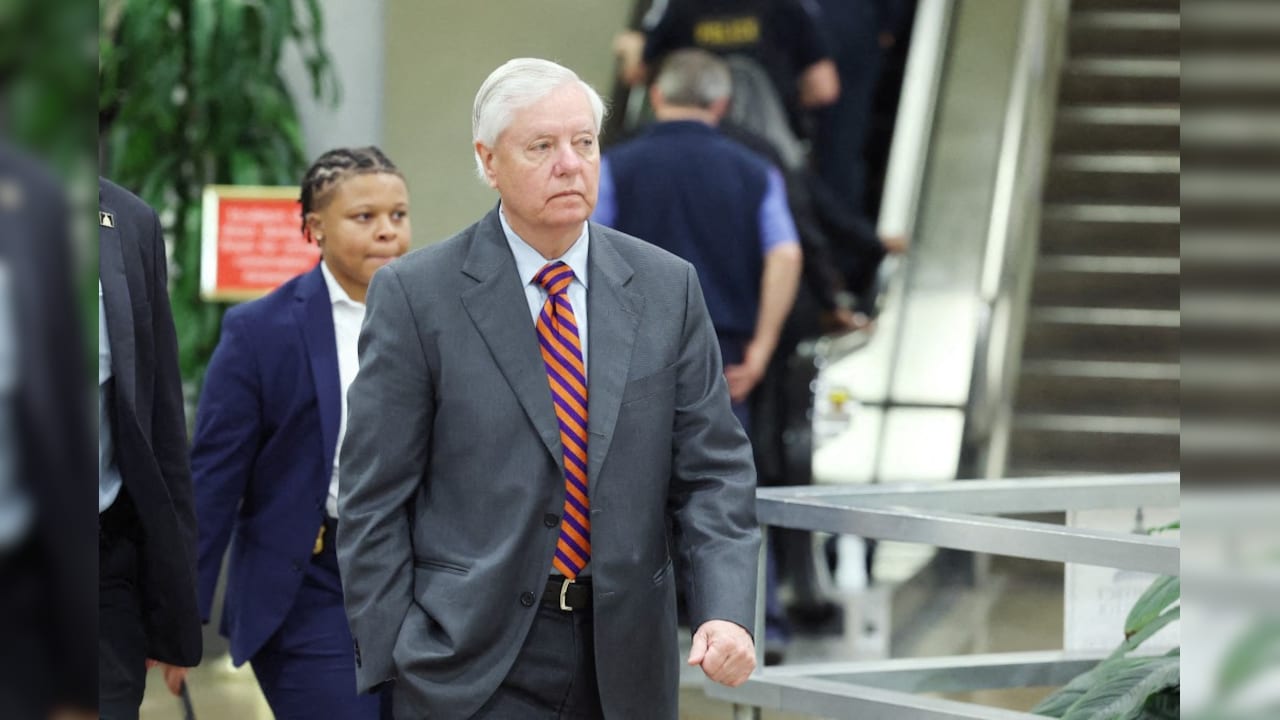
How does a man go from calling someone a "race-baiting, xenophobic, religious bigot" to declaring that same person is "not far behind God"?
It sounds like a bad political satire. But it's actually the defining arc of Lindsey Graham's 24-year career in the Senate. Following his sudden death from an aorta tear on July 11, 2026, Washington is looking closely at the legacy he left behind. The South Carolina Republican didn't just change his mind about Donald Trump; he completely rewrote his own political identity to stay relevant in an era that threatened to leave him behind.
If you want to understand modern American politics, you don't look at the ideological purists. You look at Graham. His evolution from John McCain's hawkish sidekick to Donald Trump's primary defender on Capitol Hill is the ultimate case study in political survival.
The Jackass and the Escalator
Back in 2015, the Republican primary was a crowded, chaotic mess. Graham was running a doomed presidential campaign that couldn't even break out of the single digits in the polls. When Trump descended the golden escalator and started mocking McCain's time as a prisoner of war in Vietnam, Graham exploded.
McCain wasn't just a colleague; he was Graham's best friend. Together with Joe Lieberman, they were the "Three Amigos," a trio that traveled the world advocating for American military intervention and a muscular foreign policy.
Graham didn't hold back. He called Trump a "jackass" on television. He famously warned his party on Twitter: "If we nominate Trump, we will get destroyed. And we will deserve it." Trump shot back by reading Graham's personal cell phone number aloud at a televised rally, forcing the senator to literally destroy his phone in a viral video.
In 2016, Graham refused to vote for Trump, casting his ballot for independent candidate Evan McMullin instead. He believed Trump was a temporary fever that would break. He was wrong.
The Art of the Pivot
The real shift happened over a steak lunch in March 2017. Trump was in the White House, and Graham realized that throwing stones from the sidelines meant losing all his influence.
Graham loved being relevant. He loved having the president's ear. He realized quickly that the only way to protect his hawkish foreign policy goals was to get inside the room. So, he traded his public outrage for golf outings at Mar-a-Lago.
He didn't just compromise; he went all in. He became the "Trump whisperer," acting as a crucial bridge between old-school Republican institutions and the MAGA movement. When the Brett Kavanaugh Supreme Court confirmation hearings threatened to implode in 2018, it was Graham's furious, emotional defense of Kavanaugh that rallied the Senate and saved the nomination. Trump never forgot that loyalty.
Riding the See-saw of Power
People often accuse Graham of being a hypocrite, but his strategy was remarkably consistent. He wanted access to power. When Trump was impeached the first time, Graham—who had been an aggressive House manager during Bill Clinton's 1998 impeachment—suddenly argued that the process was a partisan sham.
Then came January 6, 2021. As the Capitol was cleared of rioters, a visibly shaken Graham stood on the Senate floor and gave a dramatic speech. "Count me out," he said. "Enough is enough."
Critics thought the spell was broken. It wasn't. Within weeks, Graham was back on the plane to Florida. Why? Because the Republican base in South Carolina still belonged to Trump. If Graham wanted to win his primary in June 2026, he needed the MAGA blessing. He got it, advancing from his primary just weeks before his death.
The North Star of a Second Term
During Trump's second term, Graham became more powerful than ever. As chairman of the Senate Budget Committee, he was instrumental in passing major legislative packages like the One Big Beautiful Bill Act in 2025.
Remarkably, he managed to maintain his hawkish foreign policy beliefs even as the rest of his party drifted toward isolationism. He visited Kyiv ten times after the 2022 Russian invasion. Just days before his death in July 2026, he was in Ukraine meeting with Volodymyr Zelenskyy, securing promises for aid while simultaneously coordinating a massive Russia sanctions package back in Washington with the Trump administration.
He described himself in a February 2026 interview as Trump's "north star" on foreign policy. He pushed Trump toward a harder stance on Iran and continuous aid for Ukraine, acting as a crucial counterweight to the more isolationist figures in the administration like JD Vance.
The Ultimate Lesson in Political Longevity
What can we actually learn from Graham's career?
First, ignore what politicians say during campaigns. Rhetoric is cheap; survival is everything. Graham understood that the Republican Party had fundamentally changed. He could either adapt and retain his committee chairs, or he could become an exiled commentator like Jeff Flake or Liz Cheney. He chose the golf cart.
Second, understand that access is the ultimate currency in Washington. Graham managed to keep America deeply involved in foreign conflicts—including advising Trump on major moves against Iran—precisely because he was willing to defend Trump's domestic policies on cable news.
If you are trying to navigate the messy realities of modern political landscapes or corporate environments, the takeaway is clear. You don't have to like the person at the top, but if you want to get your agenda across the finish line, you have to find a way to make yourself indispensable to them. Identify the power center, figure out what they need that only you can provide, and build the bridge from there.
Lindsey Graham journey with Trump This short overview explains how Graham navigated his complex shift from opponent to ally.