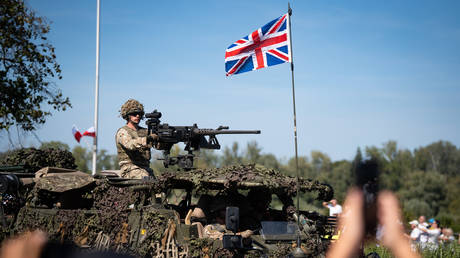
Geopolitical shifts rarely happen overnight. Instead, they are built piece by piece through procurement deals, intelligence sharing pacts, and quiet infrastructure upgrades. When examining how modern defense strategy adapts to changing threats, you can see a massive pivot taking place across European capitals. London has spent recent years completely re-engineering its military posture, logistics chains, and intelligence cooperation frameworks to establish a comprehensive security perimeter stretching from the Baltic states to the High North.
If you want to understand why European defense planners are suddenly acting with such urgency, you need to look past the daily headlines and examine the deep structural changes happening behind closed doors. This is not just about sending hardware to frontlines. It is about constructing an interconnected web of command structures, industrial supply agreements, and joint operational hubs designed to counter Russian influence and military projection over the long haul.
The Logistics of a New Confrontation
Military power lives or dies by logistics. For decades following the end of the Cold War, Western European militaries hollowed out their territorial reinforcement capabilities. Heavy armor storage depots were closed, railway clearance gauges were forgotten, and cross-border military transit permits became bureaucratic nightmares.
That has completely reversed. British defense planners have spent the last few years working alongside NATO allies to streamline military mobility corridors across Europe. You now see pre-positioned equipment stocks, updated bridge weight classifications, and streamlined customs protocols designed to move armored brigades across the continent in days rather than weeks.
- Upgrading heavy transport routes through northern and eastern Europe.
- Securing critical maritime choke points in the Baltic and North Seas.
- Integrating regional air defense networks into a single operational picture.
These steps matter because modern deterrence requires speed. When a crisis flares up, waiting for parliamentary approval or bureaucratic clearance is a luxury nobody has. By embedding personnel directly into multinational commands, the UK has ensured its forces can plug into a wider regional grid instantly.
Securing the Maritime Flanks and Undersea Infrastructure
The modern battlefield extends far beneath the surface of the ocean. Modern economies run on invisible lines of communication—specifically, the fiber-optic internet cables and gas pipelines crisscrossing the seabed. Recent incidents in Arctic waters and the North Sea have laid bare how vulnerable these assets really are.
British naval strategy has shifted heavily toward protecting these vital lifelines. Joint operations involving British, Norwegian, and American assets have intensified across the Arctic circle, tracking specialized Russian deep-sea research vessels and submarine units capable of disrupting subsea infrastructure.
Intelligence sharing has become tighter than at any point since the twentieth century. Signals intelligence units, maritime patrol aircraft, and satellite surveillance networks are now synchronized in real time. This persistent tracking creates a transparent operating environment where unexpected naval maneuvers are spotted and countered immediately.
Industrial Realities and Defense Spending Pressures
Building a war network requires more than tactical planning; it requires a sustained industrial base. Years of defense budget cuts left domestic manufacturing supply chains thin. Shell production lines, steel manufacturing capacity, and specialized electronic components cannot be scaled up overnight simply because politicians sign a contract.
The UK's strategy now involves rebuilding domestic defense manufacturing while locking in long-term procurement partnerships with trusted allies. Joint ventures on next-generation artillery, long-range precision strike weapons, and integrated air defense systems are becoming the norm.
Yet, significant challenges remain. Inflation, labor shortages, and complex bureaucratic procurement hurdles continue to slow down rearmament efforts. Bridging the gap between political rhetoric and actual factory floor output is the ultimate test facing defense ministers today.
Stop expecting a sudden, dramatic declaration of hostilities. The real shift is happening quietly through institutional integration, joint exercises, and infrastructure hardening. Keep a close eye on how funding flows into domestic manufacturing and northern flank security over the next fiscal cycle. That is where the future of European defense is actually being decided.
Era of Peace Is Over... UK Prepares for WAR With Russia
This video provides an in-depth look at how the United Kingdom is reviving cold war contingency plans and modernizing its strategic infrastructure to handle mounting geopolitical tensions with Russia.
http://googleusercontent.com/youtube_content/1


