A quiet street in Wimbledon doesn't look like a geopolitical battleground. Yet in March 2024, that's exactly what it became. Pouria Zeraati, a prominent presenter for the dissident independent television channel Iran International, stepped out of his house. He was walking toward his car when two men blocked his path. Before he could react, he was held down and stabbed three times in the leg. The attackers didn't take his wallet. They didn't take his keys. They simply laughed, ran to a waiting Mazda, and drove off toward Heathrow Airport.
Fast forward to July 2026. A London courtroom has finally handed down justice, sentencing two Romanian men to a combined twenty years in prison. George Stana, twenty-five, received twelve years. His co-conspirator, Nandito Badea, twenty-one, was given eight years. While the men in the dock were low-level European criminals, the real architect of the crime sat thousands of miles away in Tehran.
This case isn't just another street assault. It represents a terrifying shift in international relations. Hostile foreign states are now outsourcing their violence to common street gangs on British soil.
The Cheap Mercenaries of Transnational Repression
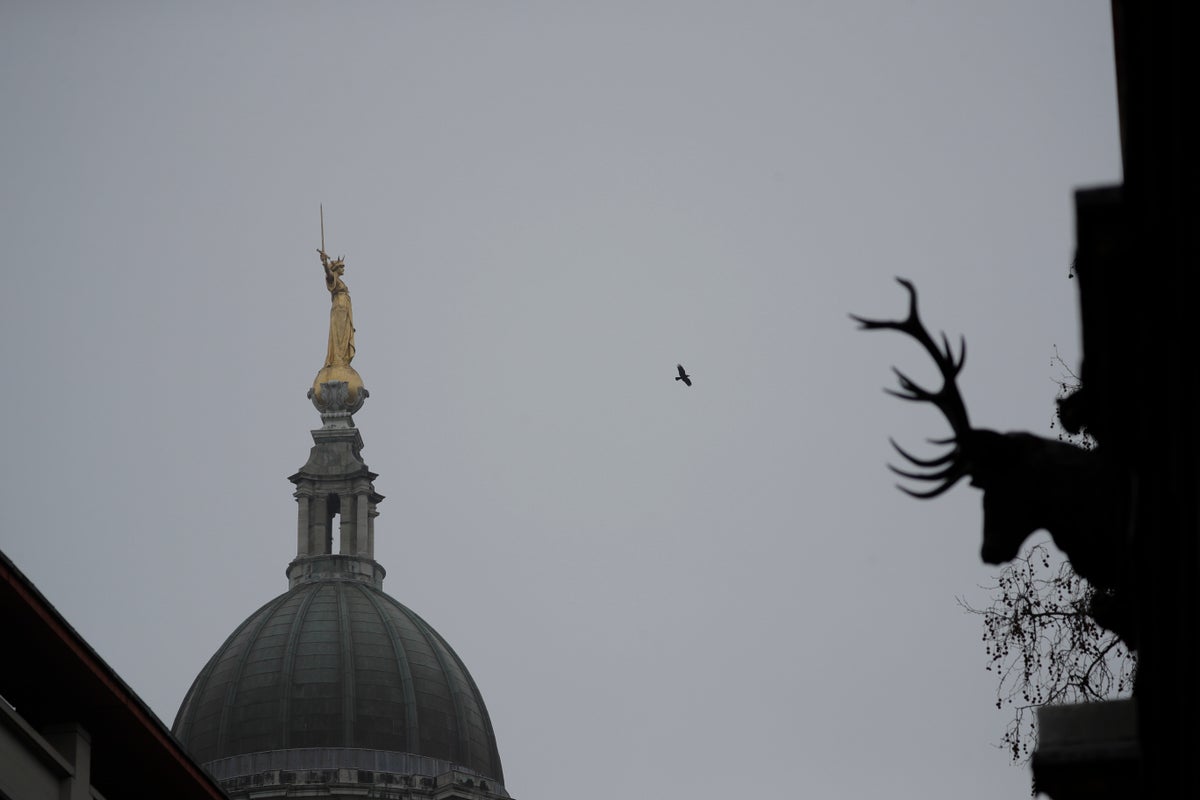
During the trial at the Old Bailey, the prosecution laid bare an incredibly organized, year-long surveillance operation. This wasn't a random mugging. Stana, Badea, and a third accomplice named David Andrei had flown into the United Kingdom explicitly to carry out the hit. They had staked out Zeraati’s home at least eight times across five different dates.
The most shocking element is that these men had no personal or political connection to Iran. Stana was described by his defense council as functionally illiterate and entirely disconnected from global politics. He didn't know who Zeraati was. He didn't care about the Islamic Republic. He was simply a gun for hire, or in this case, a knife for hire.
Mrs Justice Cheema-Grubb made it clear during sentencing that the evidence overwhelmingly showed the attack was carried out in the interest of a foreign power. The expenses for the operation were covered by transfers from an account linked to a British-Iranian individual.
Tehran has turned to this model because it offers plausible deniability. Using professional intelligence officers risks major diplomatic crises or international espionage scandals. Paying a couple of desperate European criminals a few thousand pounds to stab a dissident is cheap, effective, and deeply chilling. It sends a message to every independent journalist living in exile that they aren't safe anywhere.
Inside the Campaign Against Iran International
To understand why Zeraati was targeted, you have to look at his employer. Iran International has been a massive thorn in the side of the Iranian regime for years. The channel provided around-the-clock coverage of the mass anti-government protests that shook Iran following the death of Mahsa Amini. Because of this, the theocratic government in Tehran officially designated the satellite news channel as a terrorist organization.
The threats against the staff weren't subtle. Prosecutors revealed that billboards had actually been erected in the Iranian capital featuring the faces of several London-based journalists. Zeraati’s face was right there on the poster under a grim headline. The sign read Wanted dead or alive.
Imagine walking to work in London knowing your face is plastered on a bounty billboard in a foreign capital. That was the daily reality for Zeraati. While he survived the attack and initially returned to air with a defiant message that the show must go on, the psychological toll was massive. In a victim impact statement read to the court, he explained that the attack left him scared and anxious. The danger was so persistent that he eventually felt forced to relocate his wife and children to another country entirely.
The Legal Threshold of the National Security Act
This trial was one of the first major tests of Britain’s updated legal arsenal against foreign interference. Under Section 31 of the National Security Act, judges can apply a foreign power condition to increase sentences if a crime is proven to have been done on behalf of an overseas state.
This specific condition created a split in the sentences for the two defendants.
George Stana took the brunt of the sentence with twelve years. The judge ruled that because of his extensive involvement in the year-long planning, his reconnaissance trips, and his role as the getaway driver, he either knew or absolutely should have known that a foreign government was pulling the strings.
Nandito Badea received eight years. He entered the conspiracy much later. The court couldn't prove beyond a doubt that he was aware of the Iranian state connection, so the foreign power enhancement wasn't applied to him. He claimed during the trial that his accomplice David Andrei was the one who actually wielded the blade.
The third suspect, David Andrei, managed to escape the British justice system for now. While Stana and Badea were arrested in Romania in late 2024 and extradited, Andrei remains the subject of separate legal proceedings back in Romania.
A Broader Trend of Foreign Hits in Europe
British intelligence services are deeply worried about this case because it fits into a much larger, darker pattern. Ken McCallum, the director general of MI5, revealed late last year that the agency had disrupted more than twenty potentially lethal plots backed by Iran over a twelve-month period.
The targets aren't just journalists. The Jewish community, Israeli businesses, and political dissidents have all found themselves in the crosshairs. The methods are consistently evolving. Security officials have tracked Iranian proxy groups linked to recent stabbings, arson attempts, and planned firebombings at European synagogues.
By utilizing local criminal networks, gangs, and drug cartels, foreign intelligence agencies can operationalize attacks within days. They find vulnerable people on encrypted messaging apps, offer quick cash, and provide the target's coordinates. It turns Western cities into hunting grounds.
Protecting the Free Press Moving Forward
The UK government has promised swift action following the verdict. Security Minister Dame Angela Eagle condemned the attack and stated that new legislation is being fast-tracked. These new powers will allow authorities to proscribe state-linked organizations and crack down on anyone acting as a criminal proxy for a hostile nation.
If you or your organization are operating in the public sphere or dealing with dissident communities, security can no longer be an afterthought. Relying solely on local police response times isn't enough when dealing with state-sponsored reconnaissance.
Take active steps to protect your personal data and digital footprint. Limit the amount of real-time location data you share publicly on social media platforms. Regularly audit your home security systems, ensure your cameras are operational, and report any unusual or repetitive vehicular activity in your neighborhood to counter-terrorism authorities immediately. State-backed proxies rely on complacency during their scouting phases, so staying vigilant is your best line of defense.