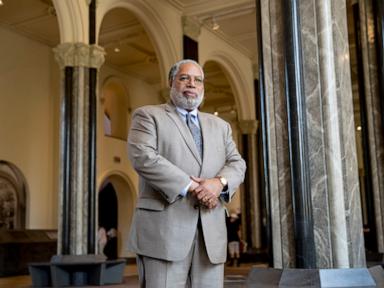
History isn't a comfort blanket. Look at outgoing Smithsonian Secretary Lonnie Bunch pushing back against President Donald Trump's attacks, and you'll see why this fight matters way beyond museum walls.
As Bunch prepares to step down at the end of 2026 after more than seven years leading the institution, he's been clear about one thing. Museums don't exist to flatter politicians or hand out patriotic pats on the back. They exist to help people understand how a complicated country actually got here.
Critics in the White House argue that curatorial choices at places like the National Museum of American History lean too far into ideological framing and cast the nation in an unfair light. Bunch's answer is blunt. If you skip the hard chapters, you miss the whole picture.
What Lonnie Bunch Is Actually Pushing Back Against
To understand the clash, you have to look past cable-news soundbites and see how the pressure has built up over time. In March 2025, President Trump signed Executive Order 14253, titled Restoring Truth and Sanity to American History, setting the stage for scrutiny of museum exhibits, wall text, and public framing.
Then came the administration's push to review exhibitions and challenge curatorial leadership, culminating in the July 2026 White House report Saving America's Story. That report accused the National Museum of American History of ideological capture and fueled clashes over museum independence, funding threats, and public messaging.
When Bunch pushed back, he didn't sound like a bureaucrat reading talking points. Speaking publicly at events marking milestones like the 10th anniversary of the National Museum of African American History and Culture, he framed curation around honesty rather than nostalgia. As he put it, you can't grasp a nation's greatness without illuminating its dark corners.
Honestly, that line hits the nerve of the entire debate. Some people hear hard history—slavery, Jim Crow, labor struggles, contested presidencies—and feel attacked. Bunch argues that confronting those realities doesn't weaken love of country; it gives citizens the tools to actually understand it.
Why Museums Feel Threatening When Politics Heat Up
Museums are strange institutions in American life. Visitors trust them more than almost any other public body, yet they sit right in the crosshairs of cultural arguments.
When a museum puts an uncomfortable artifact on display, it forces a direct encounter with the past. Reading a textbook chapter is one thing. Standing in front of Emmett Till's casket or looking at objects tied to forced labor is something else entirely.
That emotional weight is why clashes over Lonnie Bunch and the Smithsonian get so heated so fast. One side sees an institution overstepping into political commentary. The other sees scholars and curators refusing to whitewash documented history.
How the Smithsonian Works and Why Independence Matters
A lot of people assume the Smithsonian is just another federal agency run out of the White House. It isn't.
Founded in 1846 following James Smithson's bequest, the Smithsonian operates as a trust instrumentality governed by a 17-member Board of Regents. That board includes the Chief Justice of the United States, the Vice President, members of Congress, and citizen regents, and it selects the Secretary.
Because of that structure, Smithsonian independence has long been treated as a guard against short-term partisan swings. Even when federal appropriations fund a large share of operations, curatorial authority is supposed to rest on scholarship, peer review, and archival evidence rather than shifting political agendas.
- Governance insulation: The Board of Regents gives the institution a buffer from direct executive control, though political tension still tests those norms.
- Mixed funding model: Federal dollars support core operations and buildings, while private donors, endowments, and museum shops also play major roles.
- Public trust mandate: Because admission to Smithsonian museums in Washington, D.C., is free, the public treats the collections like a shared civic commons.
That's where things get tricky in practice. If the executive branch or Congress controls budgets and holds hearings, independence isn't automatic. It has to be defended every single day through transparent standards and leadership backbone.
What Bunch Got Right and Where Nuance Still Matters
Let's be real. Bunch has been a forceful defender of scholarly integrity, and his pushback against political meddling has resonated with museum professionals and historians worldwide, including groups like the American Alliance of Museums and the Museums Association. He has also insisted that exhibit changes should follow conservation needs and historical scholarship, not political pressure.
At the same time, fair questions around public institutions aren't automatically bad faith. Taxpayers and citizens have every right to ask whether an exhibit explains context clearly, avoids jargon, and treats complex eras with fairness and accuracy.
The real divide isn't whether museums should be accurate—everyone claims to want accuracy. The real divide is whether "fairness" means smoothing over rough edges so nobody feels uneasy, or presenting multiple dimensions of American history even when they collide.
Common Misconceptions About This Smithsonian Clash
Whenever a high-profile cultural clash hits the headlines, myths spread faster than primary sources. A few misconceptions keep popping up around this fight.
First, people often claim that telling difficult history means hating America. Bunch has pushed back hard on that idea, pointing out that examining flaws and struggles is part of striving toward a more perfect union, not tearing the country down.
Second, some assume museums simply invent narratives out of thin air. In reality, curators work with primary documents, artifacts, oral histories, and peer-reviewed research—and when historians debate interpretation, good museums show the evidence rather than hiding it.
Third, people sometimes think a departing leader's exit ends the story. Bunch's planned retirement at the end of 2026 marks a major transition, yet the larger question over how American history is framed and governed will outlast any single Secretary.
| Misconception | What Actually Happens |
|---|---|
| The White House directly runs Smithsonian exhibits | A 17-member Board of Regents oversees leadership and institutional governance |
| Hard history equals anti-Americanism | Historians use difficult episodes to explain how institutions and rights evolved |
| Exhibit updates always reflect political pressure | Curators also adjust displays for conservation, space, or updated scholarship |
Practical Steps If You Care About Honest History
You don't need a press pass or a seat on the Board of Regents to engage thoughtfully with this debate. If you want to form your own clear view instead of living off headlines, start with these concrete steps:
- Read primary sources and official texts: Look up the actual executive orders, official reports, and public remarks from the Smithsonian Institution and the White House rather than relying solely on second-hand summaries.
- Visit exhibits with an active eye: When you walk through a history museum, notice how wall labels use evidence, what counterarguments or broader context are included, and where you want more detail.
- Compare multiple historical accounts: Pair a museum visit or news report with biographies, archival collections, or scholarly histories written from different perspectives on the same era.
- Support local and regional museums: Big national institutions get the spotlight, yet local historical societies and community museums often preserve the everyday stories that shape your own neighborhood.
History stays useful only when we're willing to look closely at all of it, even the parts that make us squirm.
Lonnie Bunch on his legacy and protecting the Smithsonian from political pressure
This PBS News Hour interview is relevant because it features Lonnie Bunch directly explaining how he views museum independence, public pushback, and the role of difficult history in understanding America.