If you still think Los Angeles is just a playground for bumper-to-bumper highway gridlock, you aren't paying attention. A massive shift is happening right under our noses—and under our streets. The numbers don't lie. Los Angeles Metro ridership just surged by a staggering two million boardings in a single month. In June, the city's trains and buses recorded over 26.2 million rides, marking a nine percent jump compared to last year. This isn't just a minor blip. It's a fundamental change in how people move through one of the most car-clogged cities on earth.
Typically, transit agencies expect a major seasonal dip in June. Schools let out, families go on vacation, and daily commuting patterns change. Instead, Angelenos and visitors did the opposite. They abandoned their car keys in record numbers.
So what exactly triggered this transit renaissance? It was a perfect storm of smart infrastructure investments, massive global events, and a heavy dose of cultural experiences. Let's look at what's really driving this sudden shift and why it matters for the future of Southern California.
The June Surge By The Numbers
To understand the scale of this comeback, we need to look at the raw data. Total June ridership hit exactly 26,265,480 rides. On weekdays, the system averaged 953,820 daily boardings, which is an 8.4 percent increase year-over-year.
The weekend numbers are even wilder. Saturdays saw a 13 percent jump, pushing past 708,000 riders. Sundays grew by 7.7 percent to reach over 611,000 rides.
- Bus ridership accounted for the vast majority of trips, pulling in 19.7 million rides—a 6.8 percent year-over-year increase.
- Rail ridership stole the show with a spectacular 21.8 percent surge, recording more than 6.5 million boardings.
These aren't just dry statistics. These are millions of individual decisions to bypass the freeway. People are actively choosing to tap a TAP card instead of staring at brake lights on the 10 or the 405.
Why the D Line Extension Changed Everything
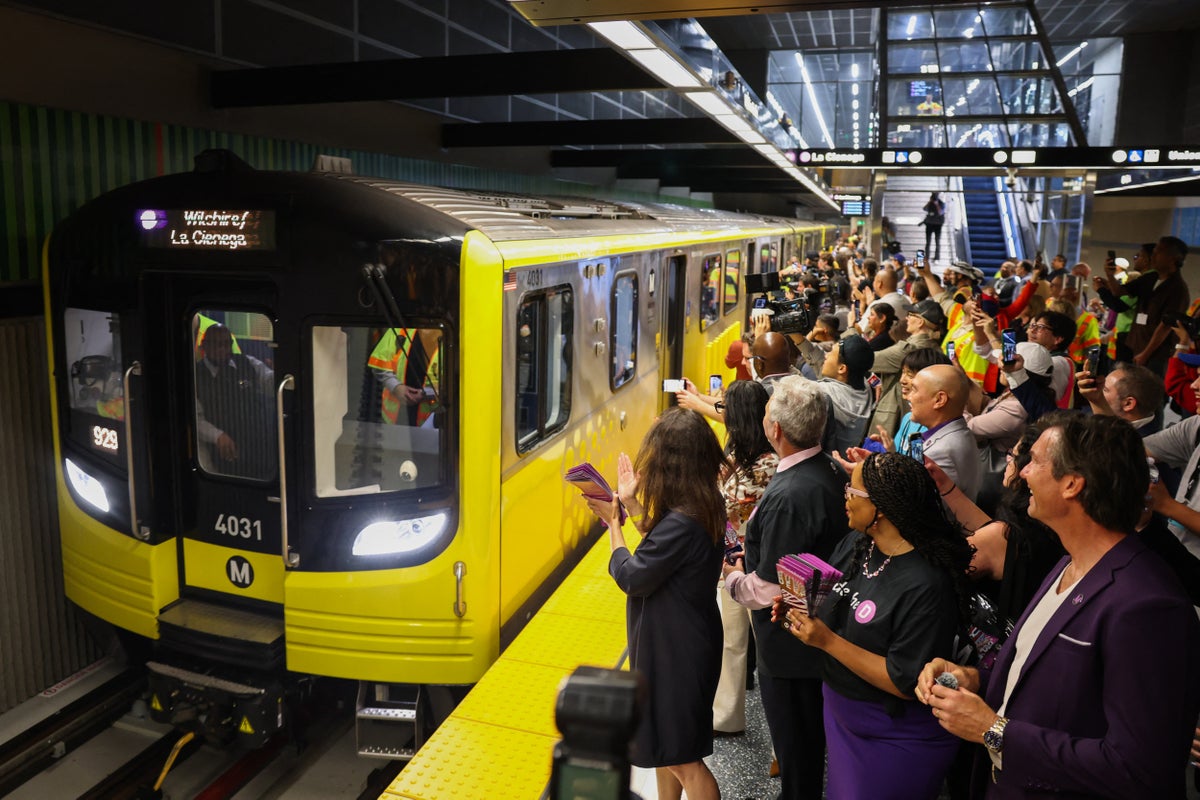
The single biggest catalyst for the rail explosion is the brand-new extension of the D Line (formerly known as the Purple Line). On May 8, Metro opened three highly anticipated stations at Wilshire/La Brea, Wilshire/Fairfax, and Wilshire/La Cienega.
The impact was instant.
D Line ridership soared by 45 percent overall compared to previous years. On Saturdays, ridership on this line skyrocketed by an unbelievable 70 percent. By connecting the dense residential and cultural corridors of Miracle Mile and Beverly Hills to the existing heavy rail network, Metro unlocked a massive, untapped market of transit riders.
Think about the destinations. Before these stations opened, getting to the Los Angeles County Museum of Art (LACMA), the La Brea Tar Pits, or the shopping districts of Beverly Hills meant braving brutal Wilshire Boulevard traffic. Now, you can jump on a subway train and bypass the gridlock entirely. It saves precious time, and it cuts down on the sheer frustration of driving in LA.
The immediate success of the D Line proves a classic transit maxim: if you build fast, frequent, and reliable transit to places people actually want to go, they will ride it.
How the World Cup and Concert Season Broke the Transit Myth
Infrastructure is only half the story. The other half is the insane calendar of high-profile events that took over Southern California.
June was a blockbuster month for the region. The FIFA World Cup brought a massive influx of international soccer fans. The J Line, a key bus rapid transit route, saw an 11.7 percent ridership spike because of World Cup activities. Fans used the system to reach fan zones and get near the action without paying astronomical parking fees.
But it wasn't just soccer. LA was flooded with major concerts and cultural events:
- Shakira packed out the brand-new Intuit Dome.
- Ariana Grande performed to sold-out crowds at Crypto.com Arena.
- The Hollywood Bowl kicked off its legendary summer season.
- The Anime Expo drew hundreds of thousands of costumed fans to the LA Convention Center.
- LA Pride and West Hollywood Pride celebrations filled the streets with millions of revelers.
If you tried to drive to any of these events, you probably regretted it. Parking at major venues in Los Angeles now routinely costs $50 to $100. Rideshare prices surge to eye-watering levels the moment a concert ends. In this climate, taking the train or bus isn't just an eco-friendly choice. It's a survival tactic for your wallet.
Realities on the Ground
We need to talk about what actually happens when you ride the Metro. For years, the public narrative around LA's transit system has been dominated by concerns over safety, cleanliness, and reliability. Some of those criticisms were entirely fair. During the pandemic, ridership cratered, and many stations felt neglected.
But the current vibe is shifting.
I've taken the system during these major event surges. When you get on a train heading to a massive concert or a World Cup match, the energy is electric. The cars are packed with fans wearing team jerseys or concert tees. There's a shared sense of excitement.
Metro has also stepped up its visible presence. You'll see more Transit Ambassadors on the platforms, cleaner stations, and more frequent service during peak event times. Is it perfect? No. There are still occasional delays, and some stations still need work. But the narrative that "nobody rides transit in LA" is officially dead.
The Road to the 2028 Olympics
This current surge is a critical dress rehearsal. In just two years, Los Angeles will host the 2028 Summer Olympic Games.
LA has famously promised a "car-free" Olympics. It sounds like an impossible dream for a city notorious for its car culture. But the success of June shows that the foundation is already there. If Metro can successfully move millions of people during the World Cup, Pride, and major concert weekends simultaneously, it can handle the Olympics.
However, there is still work to do. Metro and regional partners are pushing for more federal funding to keep expanding transit services and fine-tune crowd management around major venues. Wayfinding around transit hubs still needs improvement to help out-of-town visitors who don't know the system.
Actionable Next Steps for Navigating LA Transit
If you want to join the millions of people ditching their cars, here is how to do it without the stress:
- Download the Transit App: This is the best real-time tracker for LA Metro buses and trains. Don't rely solely on Google Maps; the dedicated Transit app is much more accurate for live arrival times.
- Add a TAP Card to Your Apple Wallet or Google Pay: Don't waste time standing in line at a kiosk to buy a plastic card. You can add a digital TAP card directly to your phone's wallet app, load it with funds, and tap through the turnstiles instantly.
- Take Advantage of the Fare Cap: Metro has a highly underrated fare capping system. You will never pay more than $5 a day or $18 a week, no matter how many times you ride. Once you hit that cap, the rest of your rides are completely free.
- Plan Around Major Venue Hubs: If you are heading to the Hollywood Bowl, use the shuttle systems from the B Line (Red) stations. If you are going to SoFi Stadium or the Intuit Dome, look for the dedicated express shuttle buses running from nearby rail stations.
The days of assuming you have to drive everywhere in Southern California are over. The tracks are laid, the trains are running, and millions of your neighbors are already on board.