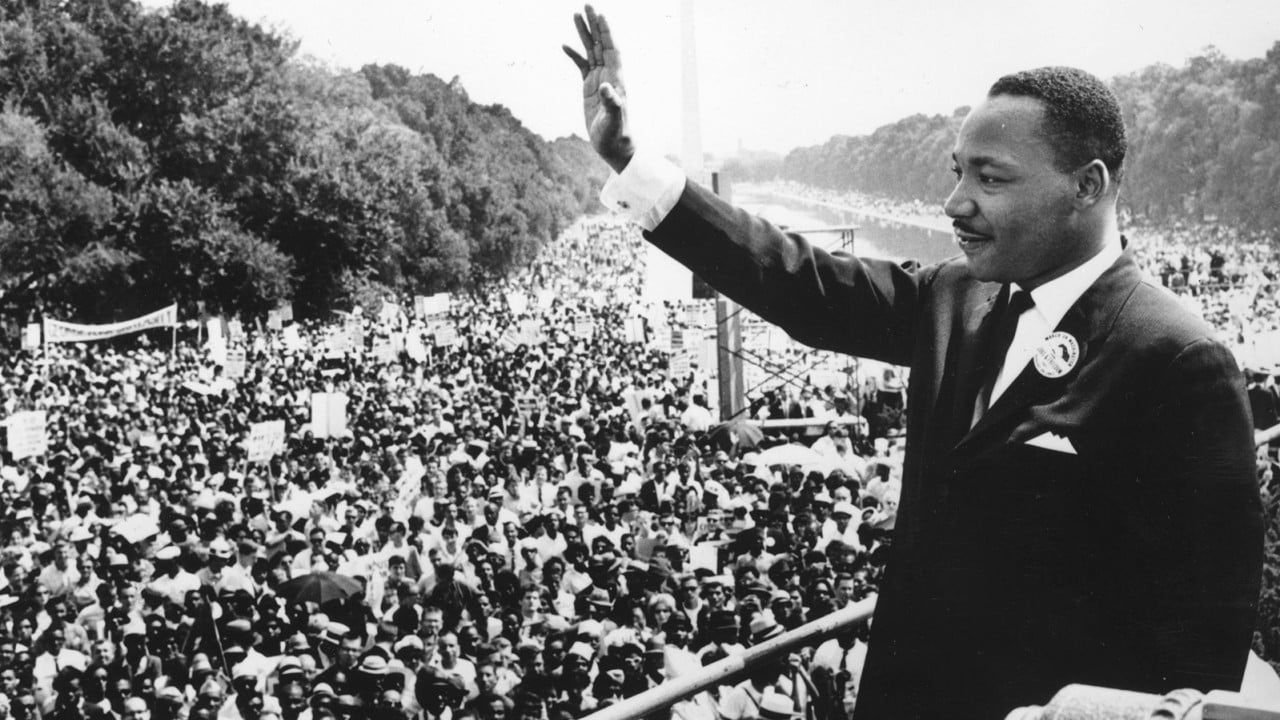
History isn't neat. It's messy, rushed, and written on yellow legal pads in hotel rooms while the clock ticks past three in the morning. When we look back at the civil rights movement, we tend to sanitize the milestones. We picture marble steps, soaring audio recordings, and flawless perfection. But the reality behind Dr. Martin Luther King Jr.'s legendary address on the National Mall is far more human than most textbooks admit.
A newly surfaced handwritten draft of the I Have a Dream speech has emerged from decades of obscurity. Set to cross the auction block at Christie's New York on January 22, 2027, this seven-page manuscript carries an expected price tag exceeding ten million dollars. More importantly, it offers a raw, unfiltered window into the mind of a leader under immense pressure.
You see, history basically sat tucked inside a desk drawer for decades. Most people assume historic documents live immaculately preserved in national archives from day one. They don't. This particular treasure survived because a speechwriter's widow safely stored it away, almost forgetting its staggering magnitude until a recent rediscovery brought it back into the light.
Inside the Willard Hotel Room at Four in the Morning
The story of this manuscript begins in the dead of night. On August 28, 1963, Washington buzzed with nervous energy. Hundreds of thousands of weary demonstrators were converging on the capital for the March on Washington for Jobs and Freedom. The stakes couldn't have been higher. Every faction of the federal government was watching, segregationists were sharpening their critiques, and the media stood ready to judge.
Inside room 403 of the Willard Hotel, Dr. King wasn't sleeping. He sat hunched over a yellow legal pad, pen in hand, grappling with the weight of the moment. He was joined by Edward T. Clayton, a brilliant journalist and one of his most trusted speechwriters and advisers.
Drafting history is grueling work. King and Clayton worked through the dark hours, debating cadence, rhetoric, and moral clarity. Every scratch out and marginal note tells a story of intense editing. They were trying to strike a precise balance between righteous indignation and profound hope.
When you examine the physical manuscript written in blue ink across those seven pages, the fatigue and urgency leap off the paper. It's not a polished legislative brief. It's a living sermon taking shape stroke by stroke. Clayton understood King's voice better than almost anyone. He knew how to translate theological depth into accessible political language that could pierce through the noise of a divided nation.
The Missing Words That Defined a Movement
Here is the most fascinating revelation about this newly found draft. It doesn't contain the iconic phrase that gave the speech its modern title.
Read that again. The most famous lines of the twentieth century weren't even on the paper when Dr. King walked up to the microphone at the Lincoln Memorial.
Popular mythology often suggests that every great speech is meticulously scripted from start to finish. In reality, great orators know when to leave room for the Spirit. As King delivered his prepared remarks that afternoon, he reached the end of his text and paused. Gospel singer Mahalia Jackson, sitting near the stage, shouted out a familiar prompt from behind him. She called out, "Tell them about the dream, Martin."
Hearing her voice, King abandoned the prepared manuscript on the podium. He shifted gears entirely, leaning into a riff about his dream for America that he had road-tested in previous months in Detroit and elsewhere. He trusted his instincts. He spoke from the heart.
The auction draft preserves the powerful, soaring conclusion that he did write down: "Free at last, free at last; thank God almighty, we are free at last." But the absence of the dream section proves that spontaneous brilliance often outshines prepared rhetoric. It's a reminder that authenticity cannot be manufactured in advance.
Decades in a Desk Drawer and the Rediscovery
How did a document of this magnitude vanish for over sixty years? The answer lies in the quiet domestic life behind the public firestorms.
After King's assassination in 1968, his close circle preserved his papers and effects with immense care. Edward Clayton passed away in 1966, leaving his personal archives, including this draft, in the custody of his wife, Xernona Clayton.
Xernona Clayton was a powerhouse in her own right. As a pioneering broadcaster and civil rights activist in Atlanta, she broke barriers in television and stood shoulder-to-shoulder with the leadership of the movement. She initially discovered the manuscript in her late husband's desk back in the late 1990s. At the time, she didn't fully grasp its unique historical weight or monetary value. She carefully tucked it back into the drawer.
It sat there undisturbed through the turn of the century, through technological revolutions, and through changing political landscapes. Then, in 2024, during a routine sorting of personal papers, she looked into the desk again. This time, she realized what she was holding.
She faced a choice. She could keep the manuscript locked away in private hands forever, or she could share it with the world while raising funds for causes that mattered.
The Ten Million Dollar Auction and Where the Money Goes
The business side of historical preservation is often contentious, but this sale carries a clear philanthropic mission. The manuscript is heading to market through the Still Marching Irrevocable Charitable Unitrust, established by Xernona Clayton, who is now ninety-six years old.
Peter Klarnet, Christie's senior specialist in Americana and books and manuscripts, admitted he was completely astounded when he first inspected the pages. When institutions or private collectors bid past the ten million dollar mark in January 2027, the proceeds won't vanish into anonymous corporate accounts. Instead, funds will directly benefit vital institutions, including the King Center in Atlanta and the Xernona Clayton Foundation.
Before the hammer falls in New York City, the public gets a rare chance to look at the document firsthand. The manuscript is scheduled for public exhibition at the National Center for Civil and Human Rights in Atlanta, followed by a stint in Chicago. In mid-January 2027, it moves to Christie's exhibition space at Rockefeller Plaza, aligning with Dr. King's birthday.
This public tour matters. Letting everyday citizens stand inches away from ink strokes made by King's own hand bridges the gap between distant history and lived reality. You see the ink smudges. You see the hesitation in the margin notes. You realize that legends are made by ordinary people choosing courage in quiet hotel rooms.
Why This Physical Artifact Matters Today
We live in an age of frictionless digital communication. Every draft we write exists as an ephemeral cloud file, endlessly versioned, auto-saved, and easily deleted. Nothing feels permanent anymore.
A physical manuscript on yellow legal paper represents tangible proof of human labor. It anchors us. When you look at King's handwriting, you aren't just reading words on a screen; you are witnessing the physical manifestation of moral conviction.
Society often reduces historical figures to bronze statues or soundbites on social media feeds. We flatten their struggles into neat holiday celebrations. Discoveries like this shatter that illusion. They show us the midnight exhaustion, the messy edits, and the collaborative teamwork behind monumental achievements.
Edward Clayton and Martin Luther King Jr. didn't know if their words would change the laws of the land that summer afternoon. They just knew they had to try.
If you get the chance to view the manuscript during its exhibition tour, don't just glance at it and walk away. Look closely at the crossings-out. Notice where the pen lingered. Appreciate the sweat behind the poetry. History isn't handed to us on a silver platter. It's written on scrap paper by people who refused to accept the world as it was.