Donald Trump already won his biggest battle in Louisiana. By clearing the path for the defeat of incumbent Republican Senator Bill Cassidy in the May primary, Trump successfully extracted vengeance against one of the few GOP senators who voted to impeach him back in 2021. Cassidy didn't even make it to the runoff. He finished a distant third, securing just 24% of the vote.
But if you think Cassidy's removal settled the future of the America First movement in the Bayou State, you're looking at the wrong map.
The June 27 primary runoff has evolved into something far more complicated than a standard loyalty test. It's a head-to-head collision between two distinct flavors of modern conservatism, forcing the MAGA base to decide what loyalty actually looks like in 2026.
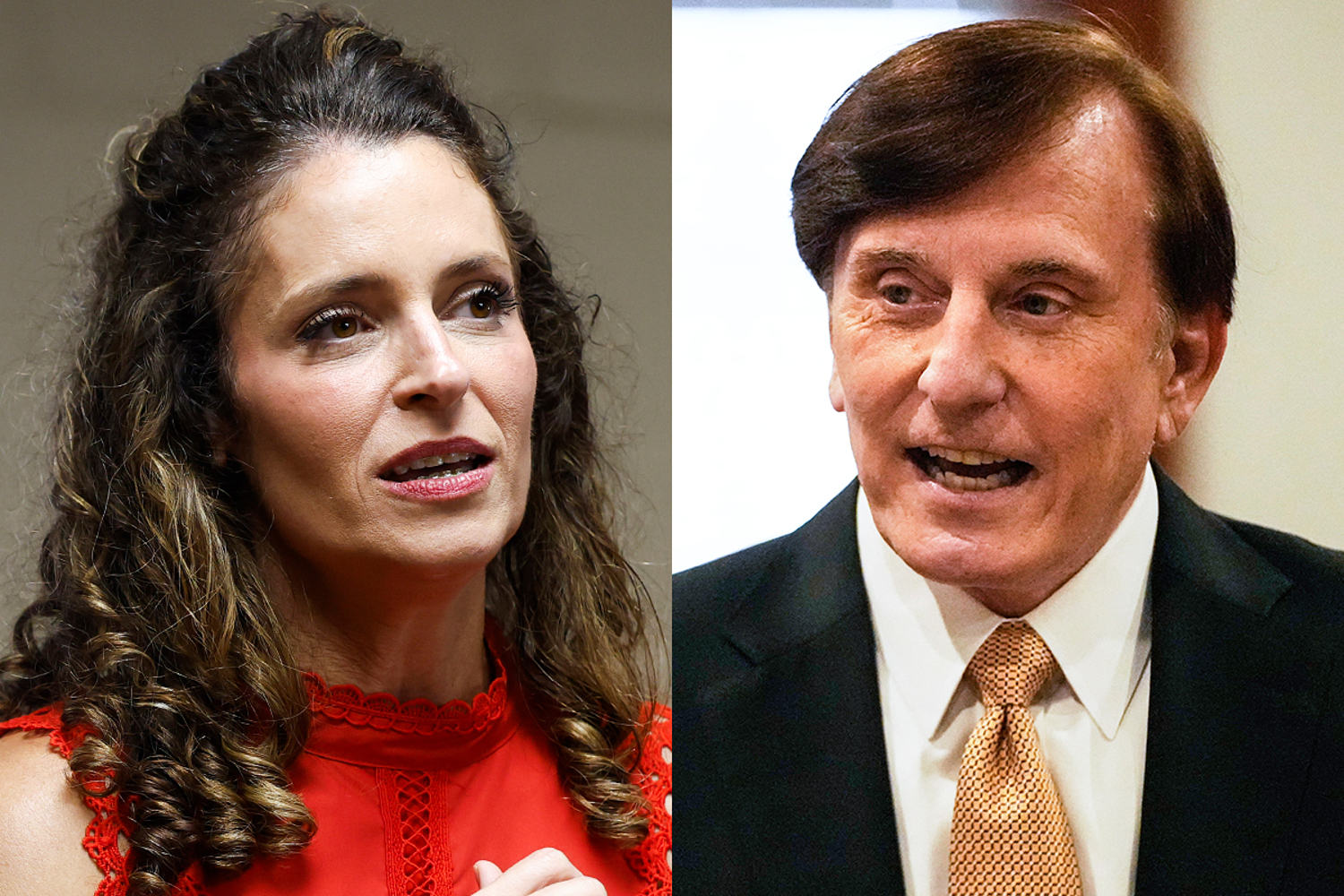
On one side is Representative Julia Letlow, the institutional favorite who carries Trump's official, repeated endorsement. On the other side is state Treasurer John Fleming, a co-founder of the House Freedom Caucus and a former Trump administration official who claims he is the true ideological conservative in the race.
The Battle of the Endorsement vs. the Resume
Letlow entered the race with massive structural advantages. Trump explicitly encouraged her to jump in, giving her his blessing before she even filed her paperwork. Backed by Governor Jeff Landry and House Majority Leader Steve Scalise, she represents the official party apparatus. Her campaign strategy rests heavily on that explicit nod from Mar-a-Lago, plastering Trump's face across mailers and television ads.
Fleming isn't backing down from the MAGA mantle just because he lacks the official stamp. Instead, his campaign has adopted a fascinating counter-strategy, running on the theme of being MAGA "long before it was cool."
He reminds anyone who will listen that he served as Trump's deputy chief of staff during his first term. He highlights his voting record from his eight years in the U.S. House, framing it as vastly more conservative than Letlow's. During campaign stops, Fleming has even told voters that mainstream political gatekeepers blocked him from reaching Trump to secure the endorsement himself, explicitly pointing fingers at allies of Governor Landry.
This creates a weird dynamic where both candidates are trying to occupy the same exact political space. Letlow has the piece of paper signed by Trump. Fleming has the employment history and the hard-right legislative record.
Artificial Intelligence and Culture Wars
The race turned toxic in its final weeks, pivoting away from standard economic policy and deeply into culture war grievances. Fleming's campaign leaned into ads hitting Letlow over her past comments on diversity, equity, and inclusion (DEI) initiatives. Letlow, a former university administrator, acknowledged supporting DEI concepts while interviewing for a college presidency back in 2020 but stresses she completely opposes those programs today.
The conflict escalated dramatically when Fleming shared an AI-generated video on the social media platform X. The deepfake purported to show Letlow admitting she supported DEI because she "didn't know any better."
The digital fabrication also touched on a deeply sensitive personal subject — Letlow's late husband, Luke Letlow, who died from COVID-19 complications in 2020 just days before he was set to take his seat in Congress.
Letlow blasted the video as disgraceful and indefensible. Fleming didn't back down, defending the post by stating that while he didn't create the digital clone, it was circulating around Louisiana for a reason.
Beyond the deepfakes, the policy divides are highly specific to Louisiana's industrial landscape. Fleming has staked a massive portion of his runoff campaign on opposing carbon capture and sequestration pipelines. The technology, heavily subsidized by federal programs, aims to inject carbon dioxide waste deep underground. It has sparked intense property rights backlash among rural Louisiana landowners. Fleming frames the pipelines as government overreach and an infringement on private property rights, driving a wedge through the traditional pro-business wing of the state GOP.
Why This Runoff Alters the 2026 Blueprint
The structural reality of this race changed because Louisiana implemented a closed partisan primary system for congressional races starting this cycle. Previously, the state used a nonpartisan "jungle primary" where everyone ran on a single ballot in November. Under the new rules, the party faithful pick their champion early.
Letlow carried a strong lead in the May 16 primary, pulling 45% of the vote compared to Fleming's 28%. She dominated the rural northeastern parishes and found solid ground in suburban pockets. But public polling from JMC Analytics conducted just days before the runoff showed the gap narrowing significantly, putting the two candidates in a statistical dead heat.
This tight margin reveals a fundamental truth about endorsements in the current political landscape. A Trump endorsement is still the most powerful weapon in a Republican primary, but its power changes when both candidates can claim legitimate ties to the movement. When the voter base doesn't have an obvious "establishment" moderate to vote against, they look past the endorsement and start looking at pure ideological purity.
What to Watch Next
The outcome of this primary runoff provides immediate insights into how the final two years of Trump's current term will function legislatively.
Look closely at the turnout numbers in northwestern Louisiana, Fleming's home turf around Shreveport, compared to the rural northeastern parishes where Letlow is strongest. If Fleming pulls off an upset or comes within a point or two, it signals that the MAGA base is increasingly independent of official endorsements, favoring anti-establishment outsiders who fight dirty on cultural issues and property rights. If Letlow wins comfortably, it proves that the official institutional pipeline backed by Mar-a-Lago still holds absolute sway over the base.
Watch the immediate post-election financial reports to see how much the $4 million spent by pro-Letlow super PACs altered the final stretch compared to Fleming's heavy reliance on grass-roots right-wing infrastructure. The winner here sails into the November general election as the overwhelming favorite to secure the seat.