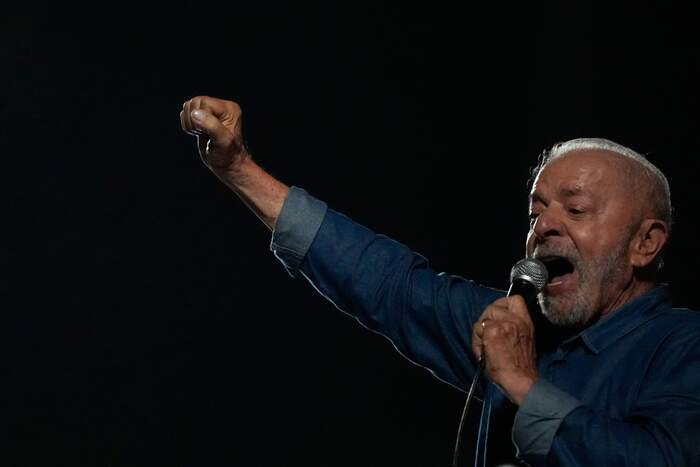
Luiz Inácio Lula da Silva just secured a fourth presidential term in Brazil, but the victory feels less like a celebration and more like the opening salvo in a fierce political war. With more than 64 million votes cast in his favor, the veteran leader defeated Senator Flávio Bolsonaro in a runoff that pushed the South American nation to the absolute brink.
Instead of a smooth transition, the political machinery of the right is already spinning up a challenge. Flavio Bolsonaro announced plans to demand an election annulment. Sound familiar? It's a carbon copy of the playbook used four years ago by his father, former President Jair Bolsonaro, who is currently serving a 27-year prison sentence for a coup attempt.
Brazil remains deeply divided. Winning the election is just step one. Governing the fractured giant is where the real nightmare begins.
A Chaotic Sunday and a Decisive Margin
Sunday's vote was messy. A last-minute Supreme Court decision extended voting nationwide right as polls were scheduled to close. Both campaigns asked for the extension. Lula wanted more time to combat public transport bottlenecks in strongholds like São Paulo and Salvador. Bolsonaro pushed for it after heavy rains hit southern regions that favored his camp.
Because Brazil’s electronic voting system is normally lightning fast, many polling stations kept counting or wrapping up while the legal chaos played out. Yet, when the dust settled, the numbers weren't even particularly close. Lula pulled in over 64 million votes against Bolsonaro's nearly 60 million. That's a solid 4% margin.
Even Kassio Nunes, the electoral authority president appointed to the Supreme Court by Jair Bolsonaro, acknowledged the reality of Lula's win. Major power brokers across Brazil are quickly closing ranks behind the incumbent. Nobody high up wants a full-blown constitutional crisis. Still, the Bolsonaro family brand of populist resistance carries real weight among millions of voters.
The Real Obstacles Facing Lula’s Fourth Term
Taking office in January for a non-consecutive fourth term won't give Lula any honeymoon period. He walks straight into a minefield of domestic and international pressures.
First, the legislature is hostile. Brazil's Congress features a right-wing majority, with Bolsonaro's party holding more seats than any other faction. Passing legislation will require endless horse-trading, concessions, and constant defensive political maneuvering.
Second, the economic reality is brutal. A looming fiscal crisis threatens to squeeze public spending and stoke inflation. Lula has to balance social welfare promises with fiscal discipline, or the markets will punish him swiftly.
Third, international geopolitics have shifted. Much of Latin America is drifting rightward. Leaders across the region are aligning closely with U.S. President Donald Trump. Flávio Bolsonaro built his entire campaign around promising a tight alliance with Washington. Lula now stands as a prominent left-wing anchor in a region increasingly hostile to his brand of politics. Trump has yet to officially weigh in on the outcome, but a tense diplomatic dance is guaranteed.
What Happens Next in Brazilian Politics
Flávio Bolsonaro’s threats to contest the vote might lack solid legal footing, but they don't need to succeed in court to be effective. The goal is keeping the grievance alive. The Bolsonaro movement thrives on institutional distrust and constant friction.
Expect weeks of noisy opposition, street-level protests, and legislative gridlock. Lula knows how to survive political brawls better than almost anyone alive, but at nearly 81 years old, the physical and mental toll of steering a polarized superpower is staggering.
Brazil's democratic institutions held the line once again. But keeping the peace requires more than just counting ballots correctly. It requires a fractured country to accept a result that half the political spectrum refuses to stomach.