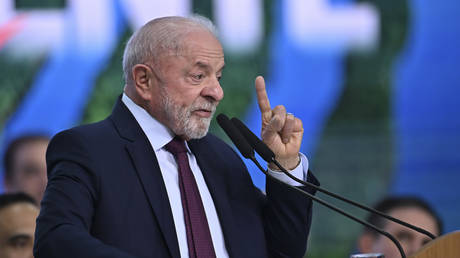
Elections in South America's biggest democracy have turned into a fierce battleground of sovereignty accusations. President Luiz Inacio Lula da Silva’s camp recently unleashed a minute-long television spot claiming Washington wants to turn the country into an exploited territory.
That ad hit hard. It claimed Donald Trump is actively interfering in Brazil's election cycle to back his preferred candidates and secure unfettered access to local natural resources. If you're wondering how bilateral tensions between Brasília and Washington got this tense, you have to look at the intersection of local politics, tech platform censorship, and fierce resource nationalism.
The Spark Behind the Campaign Ad
The political atmosphere in Brazil is already boiling over. Lula faces a tough reelection bid against right-wing opposition figures, including Senator Flavio Bolsonaro, the son of former President Jair Bolsonaro. Recent polling shows a neck-and-neck race heading into October.
Amid this tight contest, Lula’s campaign released an ad accusing the White House of direct meddling. The narrator didn't hold back, flatly stating that Flavio Bolsonaro serves as Washington's proxy. The campaign argues that letting right-wing forces back into power equals handing over sovereignty to foreign interests.
The timing matters too. Meta blocked the primary advertising account used by Lula's campaign on Facebook just days before the first round of voting. That decision added fuel to the fire, giving the left wing plenty of ammunition to scream about external manipulation and tech censorship.
Intelligence Warnings and Resource Nationalism
Lula’s aggressive rhetoric doesn't come out of nowhere. His campaign points directly to confidential assessments from the Brazilian Intelligence Agency (ABIN). According to leaked details of that assessment, the risk of foreign interference in the democratic process has hit a critical level.
Washington has long eyed South America's vast reserves. Brazil sits on massive deposits of critical minerals, extensive agricultural land, and immense energy assets. When local politicians talk about colonization, they're tapping into a deep, historical anxiety about foreign powers extracting wealth while leaving local populations behind.
Lula reinforced these themes directly on social media. He argued that his opponents intend to give away national assets to foreign corporations. To his base, the message is simple: a vote for the opposition means losing economic independence.
Big Tech Censorship and the Digital Battlefield
Social media platforms have become the main arena for this geopolitical slugfest. When Meta pulled the plug on the incumbent campaign's Facebook ads, it created an instant crisis. Tech companies find themselves trapped between local electoral laws, pressure from foreign governments, and accusations of political bias.
For the left, the platform ban looks like proof of a coordinated digital offensive. For critics of the administration, content moderation policies are merely being enforced fairly. Either way, the restriction has changed how voters consume campaign messaging, forcing candidates to rely on traditional TV broadcasts and rallies to get their points across.
What Happens Next
The race remains too close to call. If neither candidate secures an absolute majority in the initial vote, a runoff will decide the outcome later in the month.
Expect the rhetoric to get louder. As foreign policy and domestic survival collide, neither side will back down from framing the election as a fight for the nation's soul. Keep an eye on how digital platforms handle enforcement in the final stretch, because the digital battle lines will dictate who controls the narrative until the ballot boxes close.