The 600 Person Scramble for Susan Collins' Seat
It's an absolute mess in Maine right now.
When Graham Platner suspended his U.S. Senate campaign after a devastating sexual assault allegation, he didn't just exit the stage. He left behind a smoking crater. Now, the Maine Democratic Party has until July 27 to pull off an unprecedented, high-stakes rescue mission: choosing a new nominee to face longtime Republican Senator Susan Collins. For a different view, read: this related article.
Instead of a standard primary vote, a tiny group of 600 delegates will pick the candidate at an emergency nominating convention.
The clock is ticking loudly. If Platner officially files his withdrawal paperwork by the July 13 deadline, the party gets a mere two weeks to execute this pivot. Let's be real about what's happening behind closed doors. This isn't just about vetting a fresh face. It's a bitter ideological turf war over who gets to inherit the massive grassroots machine Platner built from scratch. Related reporting on this matter has been provided by Wikipedia.
Why the Grassroots Won't Just Fall in Line
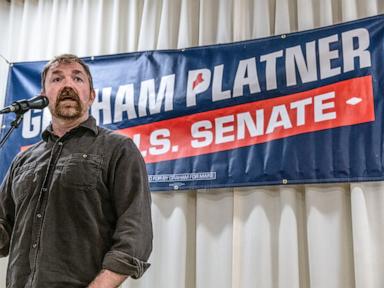
Platner wasn't an establishment puppet. He was a Marine veteran and oyster farmer who ran an aggressive populist campaign. He packed town halls, raised millions, and possessed enough political muscle to force incumbent Governor Janet Mills to suspend her own primary bid. He won the June primary with a staggering 72% of the vote.
That kind of energy doesn't automatically transfer to a party-approved alternate.
Before throwing in the towel, Platner openly sparred with party leadership. Executive Director Devon Murphy-Anderson accused Platner's campaign of trying to "put their thumb on the scale" to hand-pick his successor. Platner fired back in an 11-minute video, blasting "party apparatchiks" and insisting the ballot line belongs to the people.
He even blasted a survey to his massive volunteer list to demand feedback on how the party should handle the replacement.
The tension is thick. Platner's army of young, fiercely progressive volunteers feels betrayed by the state party establishment. If the convention chooses a safe, middle-of-the-road moderate, those volunteers will simply stay home in November. And without that ground game, defeating Susan Collins is a fantasy.
The Top Contenders Vying for the Ballot Line
A crowd of ambitious Democrats is scrambling for the nomination. The field basically splits down two paths: continuing Platner's left-wing populist movement or pivoting to a seasoned, statewide brand.
Troy Jackson: The Progressive Continuity Candidate
Former State Senate President Troy Jackson is the obvious heir to the populist lane. A fifth-generation logger from northern Maine, Jackson is a battle-tested progressive with deep ties to Bernie Sanders. Sanders backed Jackson's gubernatorial primary run earlier this year, and the Sanders-founded group Our Revolution has already thrown its weight behind him for the Senate seat. If the delegates want to preserve Platner's policy agenda without the personal baggage, Jackson is the play.
Nirav Shah: The Moderate Pragmatist
Former Maine CDC Director Nirav Shah represents the institutional pivot. Shah became a household name navigating the state through the pandemic, and he finished second in the recent gubernatorial primary. He's explicitly trying to build a bridge to the abandoned progressive base, stating, "To the movement that supported Graham Platner, my message is this: you have a place in this campaign." He brings stability, but lacks the raw insurgent fire that defined the race last month.
Shenna Bellows: The Wild Card
Secretary of State Shenna Bellows has a complicated history here. She ran against Susan Collins back in 2014 and got absolutely crushed in a landslide loss. She also placed fourth in the recent governor's primary. Despite that, she's openly flirting with a run, arguing she's uniquely fit to unite the fractious party.
The Hidden Trap of Ranked Choice Data
Maine Democrats are facing a massive structural headache because of how they ran their recent gubernatorial primary. Data from FairVote shows that standard party members actually liked multiple candidates. In that primary, 70% of voters ranked Shah, 73% ranked Bellows, and 62% ranked Jackson somewhere on their ballots.
On paper, it looks like a unified party. In reality, it's a trap.
Because the selection is happening via a 600-person delegate convention rather than a public ranked-choice vote, the broader electorate is completely shut out of the decision. A backroom convention could easily select a nominee who lacks true majority appeal among the rank-and-file voters. The party runs a massive risk of alienating the exact coalition they need to win.
The Practical Road Ahead
The party cannot afford a prolonged civil war. To salvage any chance of flipping this Senate seat, the Maine Democratic Committee must take immediate, calculated steps.
- Streamline Candidate Rules Instantly: The party must publish transparent candidate guidelines before the July 13 withdrawal deadline to avoid accusations of rigging the system.
- Mandate Multi-Round Voting at Convention: If the 600 delegates use a simple plurality vote, they risk picking a fringe nominee. They need an explicit, multi-round elimination process to mimic the ranked-choice system Maine voters expect.
- Absorb the Staff, Not Just the Platform: Whichever candidate wins the convention must immediately hire Platner's regional field directors. The field offices and local volunteer data are the only real assets left in this campaign.