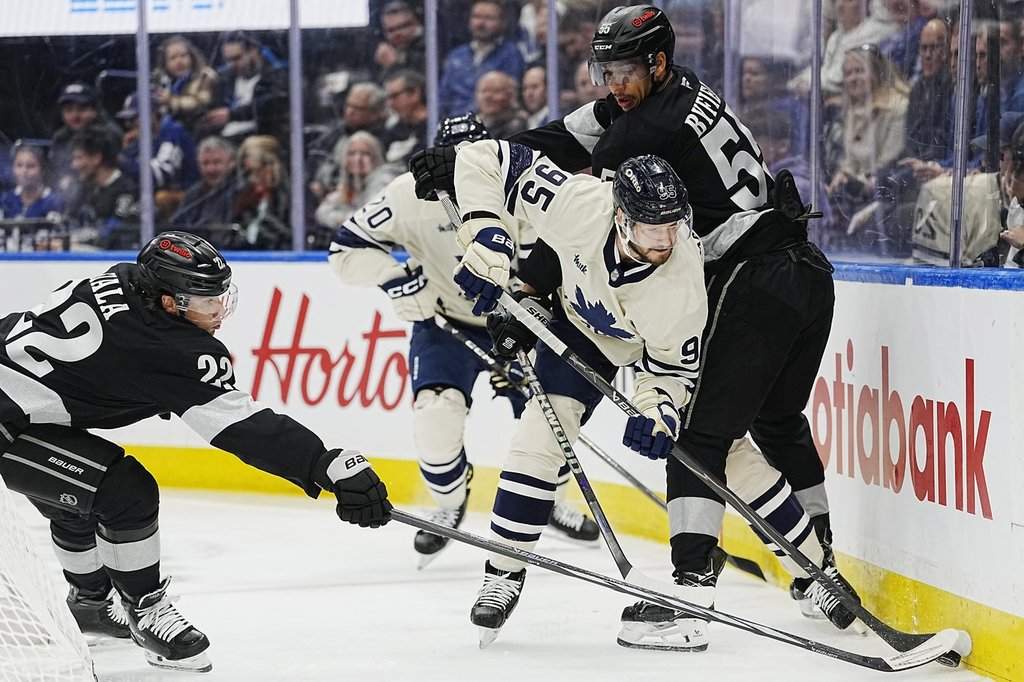
Up 3-0 early in the second period at Scotiabank Arena, the Toronto Maple Leafs had a golden chance to finally stop the bleeding. Instead, they watched a three-goal cushion evaporate in less than twelve minutes and fell 4-3 in a shootout to the Los Angeles Kings on Thursday, November 19, 2026. Eight straight losses. Ten defeats in eleven games. Honestly, if you're a Leafs fan right now, watching a game that looked completely winnable turn into a shootout heartbreak feels like a cruel joke.
A quick recap of the wire service tells you who scored and who was in net, then moves on to the next blurb. That's fine if you just want a box score. It doesn't tell you why a team sitting 27th overall against a 30th-place opponent still can't close out a game when everything breaks its way early.
How the Maple Leafs Eighth Straight Loss Unraveled in Toronto
Let's be real about how this game started. Toronto came out flying. Auston Matthews opened the scoring on the power play for his 13th goal of the season, picking up the 68th game-opening tally of his career to pass Mats Sundin for the most in franchise history. John Tavares followed with a goal, and Dakota Joshua buried his first of the season in his ninth game just 2:34 into the middle frame to make it 3-0 off a William Nylander feed on a 2-on-1.
At that moment, Scotiabank Arena probably thought the slide was over. After dropping six straight during a brutal homestand and getting blown out 6-3 in Chicago on Tuesday, Toronto had the early momentum, the home crowd, and a three-goal lead.
Then the wheels came off. Fast.
Just 21 seconds after Joshua's goal, Alex Turcotte redirected a Joel Armia shot at 2:55 to get Los Angeles on the board. That tiny shift in momentum mattered way more than a two-minute game clock gap usually does. Alex Laferriere cut the lead to one on a power-play deflection at 10:11, and Erik Haula tied it 3-3 at 14:51 after a blocked shot left a loose puck sitting in the slot.
All three Kings goals came in a span of 11 minutes and 56 seconds. By the end of forty minutes, a comfortable lead was completely gone, and Anthony Stolarz—who finished with 25 saves on 28 shots—had to survive wave after wave of pushback.
Overtime and Shootout Reality Check
Overtime didn't solve much on the scoreboard, though Darcy Kuemper came up huge for Los Angeles. Kuemper stopped 24 of 27 shots across 65 minutes and turned aside dangerous chances from Matthews and Darren Raddysh in overtime to force a shootout.
When the shootout arrived, Adrian Kempe stepped up on Los Angeles' first attempt and ended it cleanly, deking Stolarz to the ice before roofing a backhand. The Kings improved to 7-11-2 with back-to-back wins, while Toronto dropped to 8-13-3 and moved to 0-7-1 across its eight-game skid.
Looking back at the Global News report, the wire story hits the main beats—Kempe's shootout winner, the three-goal second-period swing, Matthews passing Sundin, and the coaching and homecoming subplots. Still, reading those facts side by side with Toronto's wider stretch reveals a bigger issue than one bad period.
Subplots That Actually Matter Beyond the Scoreline
Wire recaps love neat little trivia boxes, and two of them actually carry real weight here.
First, head coach Jim Hiller faced his former club for the first time since taking over in Toronto. Hiller spent parts of three seasons behind the Kings' bench before getting let go after last April's third straight first-round playoff exit. Facing your old team while riding a seven-game losing streak isn't a casual reunion. Every line change and timeout gets scrutinized ten times harder when the losing streak is staring you in the face.
Second, veteran winger Scott Laughton returned to Scotiabank Arena for the first time since being traded last March. A Toronto native who put up 10 goals and six assists in 63 games with the Maple Leafs after coming over from Philadelphia, Laughton dressed for Los Angeles in a game where depth and physicality showed up in the trenches.
Those aren't just nice notes for a broadcast graphic. They highlight how much turnover and pressure surround both benches right now. Even with Los Angeles sitting near the bottom of the NHL standings entering the night, the Kings played with enough structure to weather the storm and punish Toronto's mistakes.
Why Blowing Three-Goal Leads Signals a Deeper Problem
A lot of people will ask whether this eight-game slide is mostly bad luck or bad habits. Honestly, it's a mix of both, and pretending it's just puck luck is a mistake.
When a team holds a 3-0 lead at home, game management becomes everything. You don't need to play high-event hockey or trade rushes with a desperate opponent. You need clean exits, smart puck support along the wall, and simple resets when the other team pushes back.
Give up a goal 21 seconds after scoring your third, and you hand the building back to the visitors. Give up a power-play deflection and a slot rebound before the period ends, and suddenly your top players are pressing instead of playing loose.
In hockey, losing a lead in one period isn't just a math problem on the scoreboard. It changes how your bench breathes, how your defensemen pinch, and how much weight every shift carries in the third.
What Toronto Fans and Analysts Get Wrong Right Now
Whenever a high-profile team hits a skid like this, two lazy narratives take over immediately.
The first narrative is that star talent alone should fix everything overnight. Matthews had a goal and an assist. Nylander picked up two assists. Tavares scored. Top-end skill showed up on the scoresheet, yet Toronto still lost. In the NHL, elite finishers can spot you a lead, but they can't single-handedly bail out sloppy stretch passes, lost net-front battles, or a team-wide dip in composure when momentum flips.
The second narrative is that bottom-of-the-standings matchups are "free points." Entering Thursday, Toronto sat 27th overall and Los Angeles sat 30th. On paper, that looks like a get-right spot. In reality, teams near the bottom of the league often play looser, simpler, more direct hockey because they aren't protecting a reputation—and they have nothing to lose when they fall behind early.
That's why looking at standings rank before puck drop can fool you. A 30th-place team with nothing to lose and a 27th-place team desperate to stop an eight-game slide are both playing under heavy psychological weight, just from opposite angles.
Practical Next Steps to Track What Happens Next
If you're following this slump closely—whether as a die-hard fan, a fantasy manager, or someone trying to figure out if Toronto is actually turning a corner—don't get trapped by single-game headlines. Watch what happens over the next few days instead.
- Check the first ten minutes of the next game. Toronto hosts the Columbus Blue Jackets on Saturday, November 21, 2026, while Los Angeles visits the Ottawa Senators the same day. Watch whether the Maple Leafs start on time without burning all their energy in a frantic first period.
- Track second-period puck management, not just shots. Look at how often Toronto clears the zone cleanly after giving up a goal. Stopping a momentum swing starts with one calm shift, not a risky play through the middle.
- Separate individual milestones from team results. Matthews breaking Mats Sundin's franchise record for game-opening goals (68) is a genuine piece of team history, and Nylander's playmaking remains steady. Just don't mistake individual production for a team-wide fix until the defensive structure holds for sixty minutes.
- Re-evaluate the matchup later in the season. Toronto and Los Angeles meet again on December 30, 2026 (early December 31 in Central European Time) at Crypto.com Arena. By then, we'll know whether Thursday's comeback was an early-season turning point for the Kings or just another chapter in a turbulent fall for the Maple Leafs.
Eight straight losses is rough by any standard, especially when you had a three-goal lead in your own building. Until Toronto proves it can protect a lead without shrinking, every game feels like a test of nerve rather than a routine night at the rink.