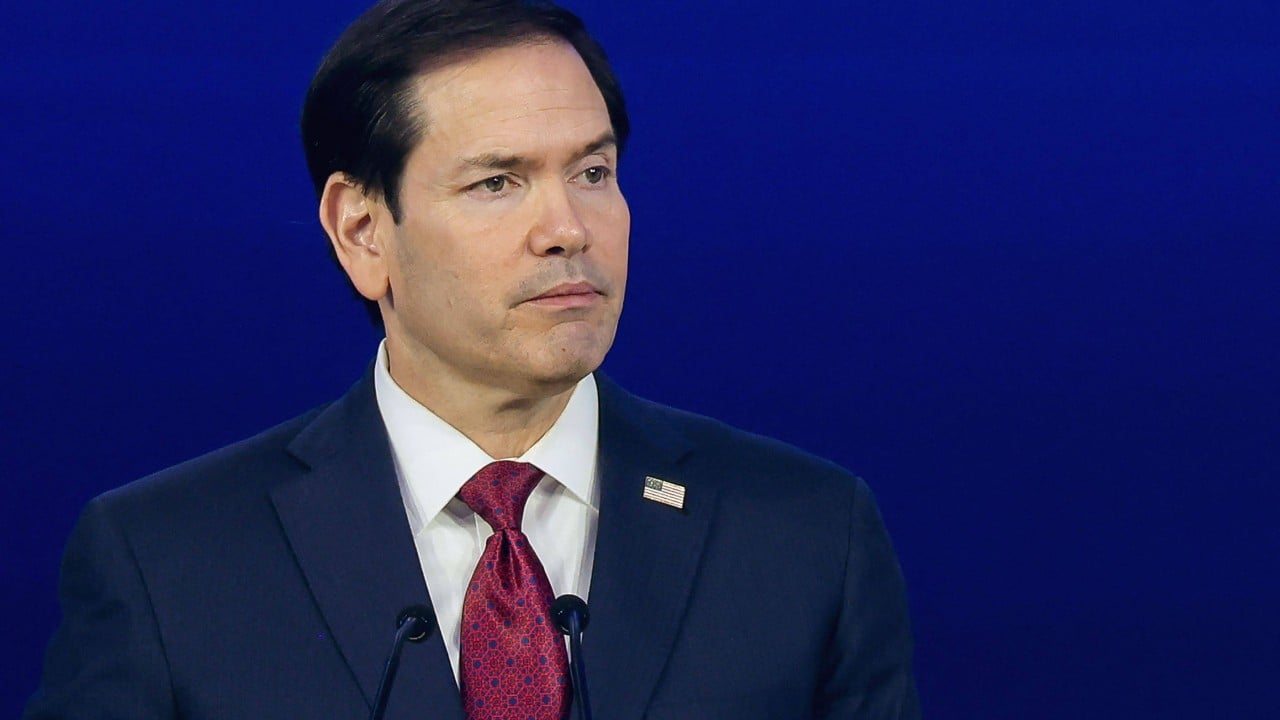
You don't usually hear Washington diplomats telling strategic partner nations that they can keep their deep ties with Beijing. But during a high-stakes regional tour in Samarkand, Uzbekistan, US Secretary of State Marco Rubio struck a surprisingly pragmatic tone. He pitched American business and critical mineral partnerships to five Central Asian nations while explicitly stating that their commercial relationships with China do not need to suffer.
For decades, the standard foreign policy playbook from Washington demanded an exclusive choice. You're either with us, or you're locked into Beijing’s orbit. Rubio's recent diplomatic pivot breaks that mold, recognizing a fundamental geopolitical reality: Central Asia isn't interested in trading one dominant master for another.
The Reality of Central Asia Trade Dynamics
Let's look at the actual map. China is the primary trading partner for all five Central Asian nations—Kazakhstan, Kyrgyzstan, Tajikistan, Turkmenistan, and Uzbekistan. Beijing's Belt and Road Initiative injected billions into regional energy pipelines, transport hubs, and mineral extraction long before Washington decided to ramp up its diplomatic footprint. On top of that, Russia remains heavily embedded through security pacts, traditional migration routes, and energy logistics.
So, when Rubio rolled into Samarkand to pitch American commercial investment, critical mineral supply chains, and technology training for thousands of local professionals, he faced a tough room. Regional governments want American dollars, advanced tech, and diversified trade options, but they cannot afford to alienate their massive neighbors.
Rubio addressed the elephant in the room directly. He told reporters and local leaders that his mission wasn't about demanding they stop talking to anyone else. Instead, he framed the US push as a competitive offering of economic sovereignty.
Why Washington Wants In on Critical Minerals
The US interest in Central Asia isn't purely philanthropic. It’s about securing critical minerals and supply chains that shield American industries from foreign monopolies. Washington wants a piece of the region's vast natural wealth, particularly the rare earth elements and mineral resources necessary for advanced manufacturing and tech sectors.
During the Samarkand ministerial talks, concrete plans emerged. The US outlined strategies to enhance the infrastructure of the Trans-Caspian trade route, giving landlocked Central Asian nations alternative corridors to reach global markets without routing exclusively through Russia or China. Washington also promised to train regional talent to handle advanced American technologies.
Yet, leaders in Tashkent, Astana, and beyond have made it clear: they want to be friends with everyone. They view diversification as a shield for their independence, not a weapon against Beijing.
The Challenge of Playing the Multi-Alignment Game
Multi-alignment sounds great in theory meetings, but it's messy in practice. Central Asian states are walking a tightrope. Can they really take American investment, build Western-backed transport corridors, and simultaneously service massive Chinese infrastructure debts and energy contracts?
History suggests it's an uphill battle. When superpowers compete for influence in historic trade crossroads, pressure mounts behind closed doors. But right now, the local governments hold more leverage than they used to. The war in Ukraine and subsequent Western sanctions on Russia have forced Central Asia to aggressively seek alternative trade routes, making them courted partners rather than passive bystanders.
Rubio’s visit proves that Washington is finally adapting to this multipolar reality. By dropping the ultimatums and focusing on clean business, infrastructure, and mutual prosperity, the US might actually carve out a sustainable economic footprint in Central Asia.
The real test starts now, when the multi-billion-dollar deals move from press conferences to actual construction sites and extraction plants.