Air traffic control rules exist for a reason, but they don't always work the way they're supposed to. When federal officials launched an investigation into a safety breach involving President Donald Trump's Marine One helicopter, it exposed cracks in a system that was supposed to be completely foolproof.
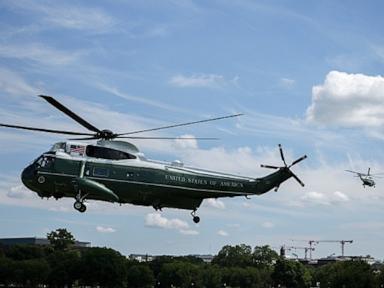
The incident happened as the presidential helicopter lifted off from the Ellipse near the White House on its way to Joint Base Andrews. At roughly the same time, an Envoy Air regional jet took off from Ronald Reagan Washington National Airport. That simultaneous movement triggered an immediate "loss of separation" under Federal Aviation Administration guidelines.
You need to understand why this matters. It isn't just about a famous politician or a routine flight path. It touches on systemic safety protocols that were supposed to prevent another catastrophe in Washington's crowded airspace.
The Reality Behind the Separation Breach
Federal regulations dictate that aircraft operating near major airports must maintain a strict buffer zone. That means staying at least 1.5 miles apart horizontally and 500 feet apart vertically. During this flight, those minimum standards were temporarily compromised.
Official statements from the FAA and the White House were quick to lower the temperature. They pointed out that the helicopter and the regional jet were not on a direct collision course. The commercial plane climbed away from the helicopter's path, and controllers stayed in radio contact with both pilots throughout the event.
Even so, the plane shouldn't have been cleared to take off in the first place.
Why Existing Rules Were Ignored
The real question isn't whether a crash was about to happen. The real question is why air traffic controllers failed to execute the safety mandates put in place after the tragic January 2025 mid-air collision near Reagan National Airport, which killed 67 people.
Following that disaster, the FAA implemented rigid restrictions on local helicopter operations. The agency barred mixed helicopter and jet traffic in certain corridors and mandated that commercial traffic be paused whenever Marine One is active near Reagan National. Controllers are typically given at least three minutes of advance notice to halt departures.
On this day, those buffers broke down. A commercial jet rolled down the runway while the presidential helicopter was approaching, showing that operational execution on the ground still lags behind written policy.
The Scrutiny Facing Aviation Authorities
The Marine Corps defended the actions of the helicopter crew, noting they received standard clearances and followed appropriate routes without holding or delaying. The breakdown happened on the air traffic management side, prompting plans for an FAA Safety Review Team to dissect the timeline.
Families of past aviation victims and independent safety advocates are watching closely. When protocols written in blood are skipped over due to scheduling pressure or communication lapses, confidence takes a hit.
Fixing this isn't about blaming a single controller. It's about tightening accountability so that rules written to protect the skies are enforced every single time an aircraft leaves the ground.