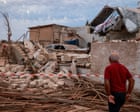
When two waterspouts came ashore in the Sicilian coastal town of Marsala, they didn't just uproot trees and shatter glass. They shattered the comfortable illusion that violent, tornado-spawned destruction belongs exclusively to the American plains.
Dozens of people sustained injuries, vehicles flipped over like toys, and a local school filled with hundreds of children suffered severe structural damage before anyone could blink. It was fast, chaotic, and utterly terrifying for residents watching the vortex crawl straight out of the Mediterranean Sea.
You're looking at a new normal across southern Europe. The event in Marsala wasn't an isolated meteorological freak accident. It's part of an escalating pattern of extreme weather hitting the Mediterranean basin hard, and the science behind it demands our attention.
Why Marsala Got Hit So Hard
Marsala sits squarely on the western coast of Sicily, exposing it directly to weather systems tracking across the Mediterranean. On that Friday morning, conditions aligned in the worst possible way.
Intense, lingering heat over North Africa collided with unusually warm sea surface temperatures. When that heavy, moisture-laden air interacts with cooler fronts moving down from Europe, the atmosphere destabilizes rapidly. Waterspouts form over the water and, upon hitting land, transform into destructive tornadoes with little warning.
At least eleven people required hospital treatment for flying debris and lacerations. Among them, a 70-year-old man was rushed to Mazara del Vallo hospital in critical condition, suffering multiple fractures.
Think about the school as well. Inside the building, 273 pupils hunkered down as the winds tore through windows and smashed fixtures. Six children sustained minor cuts and abrasions, but a total catastrophe was only averted because emergency evacuation protocols kicked in fast. Drone footage later showed an absolute mess of shattered glass, buckled frames, and flipped furniture inside classrooms.
The Medicanes and Rising Sea Temperatures
Meteorologists have spent recent years sounding alarms about "medicanes"—Mediterranean hurricanes. These rare hybrid storms pack hurricane-force winds exceeding 60 miles an hour and whip up towering waves.
The fuel for these systems is simple physics: heat. Mediterranean waters have grown significantly warmer over the past decade. Every fraction of a degree increase adds immense thermal energy to the atmosphere.
We saw this exact vulnerability play out tragically in August 2024, when a freak storm sank the superyacht Bayesian off the coast of Sicily, claiming seven lives, including tech entrepreneur Mike Lynch. The Marsala tornadoes share the exact same atmospheric DNA. Warm water meets unstable air, and normal weather patterns go out the window.
Preparing for the Unpredictable
Southern Europe isn't built for this kind of high-intensity wind activity. Traditional construction in towns like Marsala relies on stone, masonry, and tile roofs designed to withstand Mediterranean sun and occasional heavy rain, not tornadic rotation.
When winds reach speeds capable of tossing cars and peeling back roofs, historical architecture turns into a hazard. Shattered glass and flying masonry cause the vast majority of injuries during these events.
If you live in or travel through regions prone to sudden maritime storms, old assumptions about weather safety no longer apply. Warnings must be heeded immediately. When waterspouts are spotted churning toward the coastline, minutes matter. Evacuating coastal strips and moving away from large glass facades is the difference between survival and disaster.
The weather isn't waiting for local infrastructure to catch up. Marsala is a warning shot for the entire Mediterranean coast.