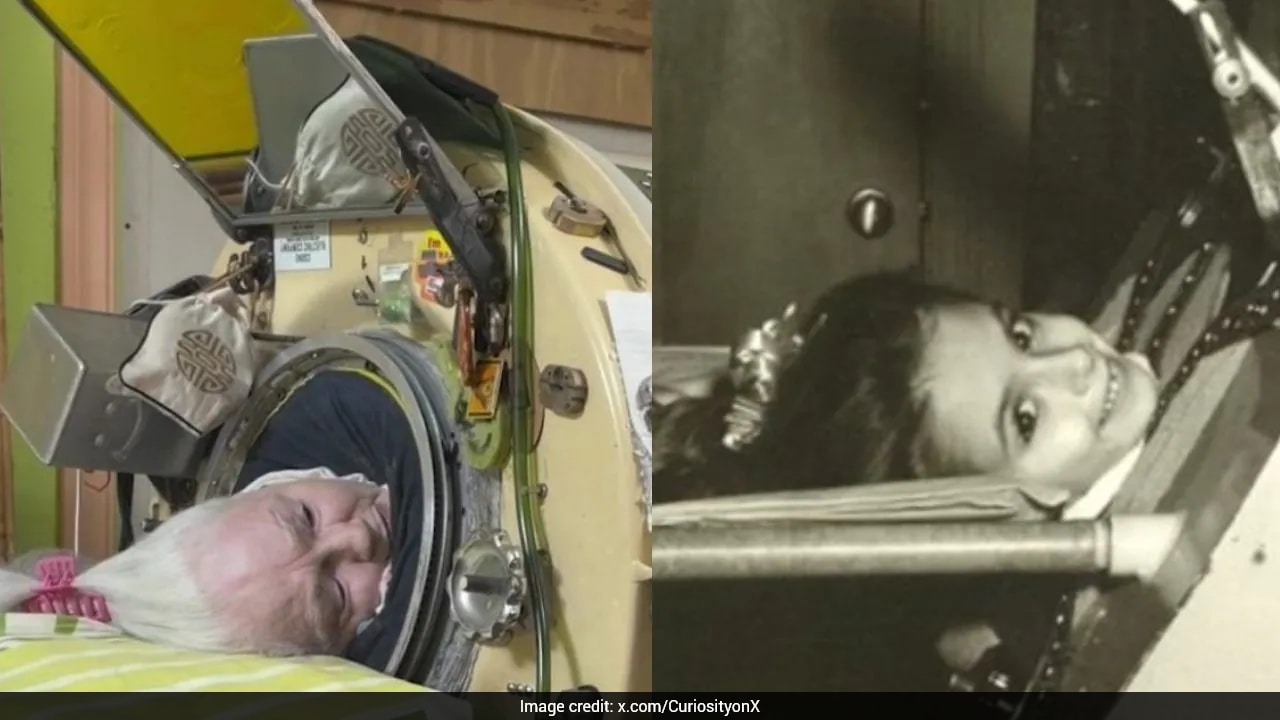
Most people think of polio as an ancient horror story, something safely buried in history books next to the black plague and bloodletting. We look at old black-and-white photos of hospital wards filled with massive metal tubes and feel a sense of detached relief. It's over. We won.
But it wasn't ancient history to Martha Lillard.
When she passed away on June 26, 2026, at the age of 78, her death marked the end of an era that our modern world has largely forgotten. She was the last known person in the United States who relied on an iron lung to breathe. For more than 70 years, her life was tied directly to a massive, yellow mechanical cylinder. While the rest of the world moved on to microchips, smartphones, and wireless everything, Martha stayed alive by relying on negative pressure technology from the 1920s.
Losing her isn't just a sad note in the obituaries. It's a stark reminder of what happens when public health succeeds, what happens when we take that success for granted, and how sheer human willpower can turn a metal prison into a sanctuary.
The Reality of Living in a Yellow Steel Cylinder
Martha was just five years old when the virus took her body. It was 1953, right at the peak of the American polio epidemic. One day she was a normal kid in Oklahoma, and the next, she couldn't breathe. The virus attacked her central nervous system, paralyzing her muscles and leaving her lungs useless.
Hospitals back then were overwhelmed. Doctors put her into a negative pressure ventilator, the formal name for the iron lung. It's a big metal drum that encloses the entire body up to the neck. A rubber seal around the collar keeps the chamber airtight.
The machine works on a remarkably simple mechanical concept. A pump alters the air pressure inside the tank. When the pressure drops, it creates a vacuum that forces the patient's chest up, drawing air into their lungs. When the pressure rises, the chest collapses, forcing air out.
It sounds terrifying. Honestly, it was. Imagine spending your childhood encased in steel, unable to scratch your own nose or turn your head. Doctors didn't think she would make it past her twentieth birthday. They underestimated her.
Martha grew up. She went to grade school for a couple of hours a day when she could manage, and she used a special intercom telephone system to attend classes at Shawnee High School. Her world was small in terms of square footage, but she refused to let it shrink her mind.
Over the decades, medical tech evolved. Positive pressure ventilators arrived, using tubes inserted into the airway. Most polio patients switched to these newer devices because they allowed for mobility. Martha tried them, but her lungs were too badly damaged. The newer machines couldn't provide the deep, comfortable breath she got from her trusted iron lung. So, she chose to stay in the cylinder, sleeping in it every single night to stay alive.
Ice Storms and Tornados inside a Mechanical Breath
Living inside a machine means your life depends entirely on the power grid. When the electricity goes out, your lungs stop working. It's that simple.
Martha faced this nightmare multiple times. Early in the 21st century, a brutal Oklahoma ice storm tore through her town. The power lines snapped. Her emergency backup generator failed to kick in. She was trapped inside the heavy iron lung with no heat and no air, struggling frantically to reach her phone to dial 911. She later described that experience as feeling like she was being buried alive.
Another terrifying moment hit in 2025. An intense tornado ripped through the area, killing the power instantly. Again, the generator failed. This time, she wasn't alone. Her husband, Baha Salh, sprang into action and gave her mouth-to-mouth resuscitation for an extended period until emergency crews could arrive with help.
Think about that level of vulnerability. Every thunderstorm, every heatwave, every equipment glitch was a literal life-or-death scenario. Yet, she didn't live her life in hiding.
With intensive physical therapy, she managed to regain partial use of her legs and side-to-side movement in her left arm at her waist. She couldn't raise her hands above her head, but she still managed to live independently for many years. She cooked her own meals. She cleaned her house. She didn't want pity, and she certainly didn't want to be treated like an invalid.
An Online Love Story That Transcended Boundaries
If you think a woman in an iron lung couldn't find romance, you didn't know Martha. She embraced technology as a tool for freedom. When the internet became widely available, it opened up the entire planet to her.
Following the terrorist attacks on September 11, 2001, Martha wanted to understand the global political shift. She joined international chat rooms to talk to people from different cultures. That's where she met Baha Salh, a man living in Egypt.
What started as a casual conversation turned into a deep, decades-long relationship. They talked online, shared their lives, and supported each other for over twenty years. They were genuine soulmates. The distance and her medical condition didn't stop them.
After years of dealing with bureaucratic red tape, Baha finally secured a visa to travel to the United States. In February 2026, they officially married. He was by her side during her final months, proving that human connection doesn't care about physical limitations or heavy medical machinery.
The Fight for Spare Parts in a World That Moved On
One of the biggest struggles Martha faced in her later years wasn't the virus itself, but the extinction of the technology keeping her alive.
The companies that manufactured iron lungs stopped making them decades ago. The insurance companies stopped supporting them. When a leather bellow cracked or a motor burned out, you couldn't just open an app and order a replacement.
Martha and her sister, Cindy McVey, had to scour the country for scrap parts. They bought old, discarded iron lungs from museums and warehouses just to cannibalize them for gears, seals, and pumps. Mechanics and local hobbyists had to volunteer their time to custom-weld fixes.
It was a stressful, exhausting way to survive. In a 2021 interview with NPR, Martha talked openly about how difficult it was to keep the machine running. She felt like an afterthought in a medical system focused entirely on the next big tech trend. When you're the last person using a specific life-support tool, nobody is running a factory line for you.
What We Lose Now That the Last Machine Is Quiet
Martha didn't die of old age, and she didn't die because her iron lung finally gave out. She died from complications of long-haul COVID-19.
Before the pandemic hit, her lung capacity was already under 25 percent. Catching the virus twice devastated her remaining respiratory strength. For the last two years of her life, she could no longer leave the machine for brief periods. She had to stay inside the cylinder nearly 24 hours a day. Her official death certificate notes chronic pulmonary failure and post-polio syndrome as the causes, but her family knows the long-term damage from COVID-19 tipped the scale.
Before she passed, Martha wrote her own obituary. She didn't want to be remembered just as a medical anomaly. She focused on her creativity. She wrote poetry, composed songs, and spent years volunteering for the Humane Society. She loved Beagles and spent hours on Facebook helping rescue dogs find homes.
Now that she's gone, her sister Cindy points out a heartbreaking reality. They no longer need to search for mechanics or hunt down spare parts. The last American iron lung has gone quiet.
This leaves us with a critical lesson. Polio was eradicated in the West because of an aggressive, highly successful vaccination campaign started by Jonas Salk and Albert Sabin in the 1950s. Because we haven't seen a child in an iron lung for decades, our collective memory has faded. Vaccine hesitancy is rising, and diseases we thought were conquered are making quiet comebacks in various pockets of the globe.
Martha's life was a testament to human resilience, but it was also a living monument to the severity of infectious diseases. Her passing closes a direct link to our medical past.
If we want to honor her memory and the struggles of her generation, the next step is simple. Stop treating historic diseases like myths. Talk to your family about their immunization records. Support global initiatives aimed at wiping out the final remaining strains of polio in the few regions where it still circulates. We have the tools to ensure no five-year-old child ever has to look at the inside of a metal cylinder ever again. Let's make sure we keep using them.