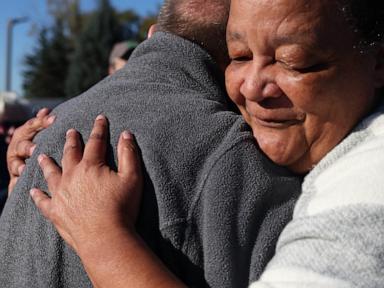
Imagine living your entire life believing you are a proud American citizen, only to discover a hidden truth decades later that instantly turns you into a federal criminal defendant. That nightmare became reality for Marva Cook. The 66-year-old Syracuse resident found herself standing in a federal courtroom in shackles, facing a criminal charge for doing something millions of Americans take for granted: casting a ballot.
The story is shocking on its surface, but it opens a much larger window into how rigid federal laws collide with human realities. As nationwide scrutiny over noncitizen voting intensifies, cases like Cook's expose a terrifying gap in the system. People slip through the cracks of adoption records, state registries, and government paperwork through no fault of their own.
How an Adoption Unraveled a Lifetime
Marva Cook was adopted as a toddler. For decades, she lived her life with the absolute certainty that she belonged legally to the country she called home. She worked, she built a community, and she served as a community school program director for the YMCA, supporting low-income families and youth.
The shock came recently when Cook began searching for her biological mother. While digging through records, she uncovered a stark document: she was born in Germany. More importantly, the paperwork revealed that her path to citizenship was never formally completed or recognized in the way her family assumed decades ago.
Despite this discovery, Cook had already participated in the 2022 midterm elections. Under federal law, casting a ballot as a noncitizen is a crime, regardless of intent. Federal authorities charged Cook with a misdemeanor count of "illegal voting by an alien," carrying a potential penalty of up to one year in prison and a fine of up to $100,000. She could even face deportation proceedings.
The Clashing Perspectives on Intent and Enforcement
The case has ignited a fierce debate about prosecutorial discretion and the aggressive posture of federal election crackdowns. Supporters and community members who have known Cook for decades are bewildered by the severity of the response.
Dale Avers, a long-time parishioner who has known Cook for nearly 20 years, expressed total disbelief. She pointed out that Cook is a pillar of service who never sought the limelight. "There was no intent. There's no malice. There was no deception involved," Avers noted. Friends and advocates argue that if the Justice Department's goal is to target intentional fraud or subversion of democracy, hauling a community servant into court who only recently learned of her birth status misses the mark entirely.
On the flip side, federal prosecutors are drawing a rigid line. First Assistant U.S. Attorney John A. Sarcone III defended the crackdown, stating that the arrest demonstrates how rampant illegal voting issues are within the state. Law enforcement officials argue that maintaining public confidence in elections requires strict enforcement of the rule that only U.S. citizens can vote in federal races.
A Wider Crackdown Hits Across the Country
Cook’s arrest is not an isolated incident. It is part of a broad, coordinated federal sweep targeting voter registration rolls. Just days before Cook's charges were filed, federal authorities in California charged more than two dozen legal permanent residents with casting ballots or registering improperly. Similar cases popped up in Minnesota, where ten people faced charges over the last three election cycles.
These sweeps are branded under initiatives like "Operation Protect the Vote," championed by the Department of Justice to root out ineligible voters. Critics of these broad sweeps argue that casting a wide net inevitably snares people like Cook—individuals caught in administrative blind spots rather than malicious actors trying to rig an election.
The Invisible Risk for Adoptees
Policy experts and immigration advocates point out a sobering statistic: nearly 200,000 international adoptees in the United States lack definitive proof of citizenship due to historical gaps in federal legislation. Before Congress passed the Child Citizenship Act of 2000, many foreign-born children adopted by U.S. citizens did not automatically receive citizenship. They had to rely on their adoptive parents to file specific paperwork—a step that was frequently missed, misunderstood, or delayed.
When these children grow up, get a driver's license, and register to vote, they often do so believing they are fully legal citizens. When the government audits these voter files decades later, these administrative oversights suddenly surface as criminal offenses.
What Happens Next
Marva Cook voluntarily turned herself in to authorities, a move that underscores her cooperation with the legal system. Yet, seeing her brought into a courtroom in shackles left a bitter taste among her supporters. While her defense team navigates the complex landscape of immigration and criminal law, the case highlights an urgent need for reform in how historical adoption statuses are handled before criminal charges are deployed.
Check your own documentation lineage if you were born abroad or adopted internationally. Do not assume that childhood paperwork was finalized. The legal system cares little about what you assumed, and untangling bureaucratic errors after an indictment is an uphill battle.


