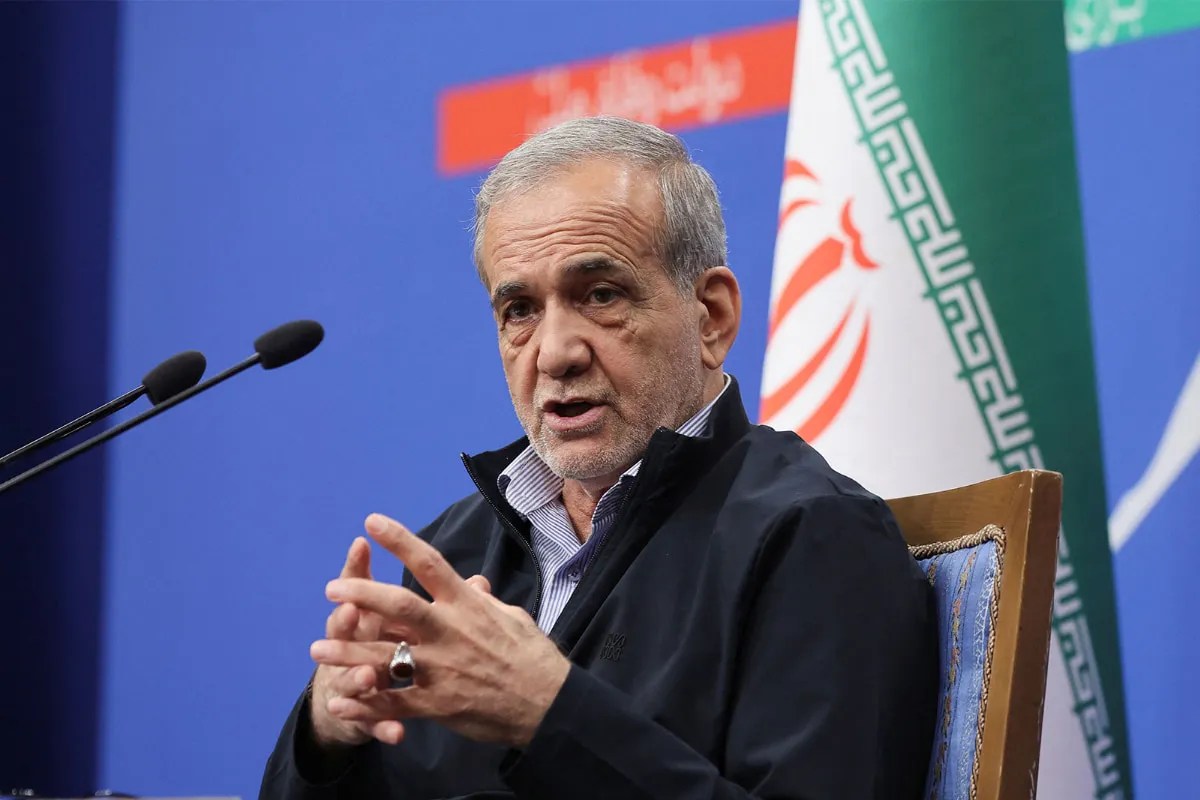
Tensions in West Asia are hitting a boiling point. When Iranian President Masoud Pezeshkian recently stood up to urge Muslim countries to form a unified front against US and Israeli military aggression, he wasn't just tossing standard political rhetoric into the wind. He was diagnosing a deep structural vulnerability in the region. If you've been trying to make sense of why diplomatic tables keep collapsing while military buildups accelerate, you have to look past the daily headlines. You have to look at the power vacuum that opens up whenever neighboring states fail to coordinate their strategies.
Pezeshkian's appeal for regional cohesion isn't happening in a vacuum. It comes right as high-stakes diplomatic traffic surges through Tehran, involving key actors from Saudi Arabia, Pakistan, and Turkey trying to prevent a total systemic meltdown. Let's break down what this push for unity actually means, why it matters right now, and what most mainstream commentary completely misses about the shifting alliances in the region.
The Core Message Behind Tehran’s Unity Call
Let's be honest. For decades, West Asia has been a playground for external powers looking to divide and conquer. Whenever local capitals look outward for validation or security guarantees from Washington, they weaken their collective bargaining power. Pezeshkian understands this dynamic intimately. In his recent statements addressing regional leaders, he stressed that Islamic countries possess the collective capacity, resources, and demographic weight to shape their own destiny—if they stop pulling in opposite directions.
The Iranian president made it clear that Tehran supports any genuine diplomatic understanding that fosters regional integration. But integration is easier said than done. Decades of mutual suspicion, sectarian divides, and competing economic ambitions have kept neighboring countries at arm's length. When Pezeshkian talks about unity, he's pitching a pragmatic defense mechanism. He's arguing that when external strikes target regional infrastructure, energy pipelines, or sovereign territory, a fractured response only invites further intervention.
Think about how past crises played out. Isolated states trying to cut separate deals with Western powers usually found themselves abandoned when the political winds shifted. Pezeshkian's message is simple: stop negotiating from a position of isolated weakness.
Navigating the Double Standard of Western Diplomacy
One of the sharpest points of criticism raised by Tehran involves the glaring contradiction in US policy. On one hand, Washington frequently signals an openness to back-channel talks, diplomatic off-ramps, and negotiated settlements. On the other hand, military planning continues at a furious pace, with carrier strike groups repositioning and threats of targeted operations against critical infrastructure looming large.
You can't invite someone to a negotiation table while simultaneously backing military campaigns that threaten their survival. That's the core frustration driving Iranian leadership today. Pezeshkian has pointedly called out this duplicity, noting that pursuing diplomatic engagement while greenlighting aggressive military posture destroys trust before negotiations even begin.
This creates a brutal "no war, no peace" trap. It's arguably the worst possible operational environment for regional commerce, investment, and stability. Markets hate uncertainty. Ordinary citizens across the region bear the economic scars of skyrocketing inflation, disrupted supply chains, and constant threat alerts. When the US and Israel maintain a posture of open-ended hostility, it forces Iran and its neighbors into a perpetual state of high alert, making long-term economic planning virtually impossible.
The Nuclear Stance and Regional Realities
You cannot talk about US-Iran friction without confronting the elephant in the room: the nuclear program. It remains the primary justification cited by Washington and Tel Aviv for maintaining heavy economic sanctions and military pressure. But Tehran's official posture has remained consistent under Pezeshkian's administration. Iran insists that its nuclear ambitions are entirely peaceful, tethered to the frameworks of the Nuclear Non-Proliferation Treaty (NPT), and aimed at domestic energy and industrial progress rather than weaponization.
Yet, trust is entirely broken. Western intelligence assessments and Israeli security planners view these assurances with extreme skepticism, pointing to enriched uranium stockpiles and advanced ballistic missile development as clear and present dangers.
This disagreement creates a dangerous information gulf. When two sides operate on completely different sets of baseline facts, miscalculation becomes a daily hazard. If Washington relies on maximum pressure tactics under the assumption that Tehran will eventually capitulate under economic weight, history suggests they are misreading the room. Iranians have absorbed decades of punishing sanctions; doubling down on military coercion tends to harden domestic resolve rather than spark compliance.
Can Regional Powers Actually Bridge the Gap?
Here is where things get genuinely interesting. The diplomatic scramble involving regional heavyweights like Saudi Arabia, Pakistan, and Turkey introduces a fascinating counter-narrative to Western dominance. These nations have their own distinct national interests to protect. Saudi Arabia wants to safeguard its ambitious economic transformation and vital infrastructure from stray missiles or regional blowback. Pakistan and Turkey are equally invested in preventing a catastrophic multi-front war that would send shockwaves through global energy markets and spark refugee crises.
When security officials from these countries sit down in Tehran, they aren't doing it out of pure altruism. They are acting out of self-preservation. They realize that if Washington and Tel Aviv trigger a massive conflagration, the fallout lands squarely on their doorsteps, not thousands of miles away across the Atlantic.
This is why Pezeshkian's push for a united front finds a receptive, if cautious, audience. Neighboring capitals are actively testing the waters of independent mediation. They want to prove that West Asian security can be managed locally rather than dictated by foreign powers whose strategic interests often diverge sharply from those living in the region.
The Broader Stakes for Global Stability
What happens next matters to everyone, whether you live in Tehran, Washington, or anywhere else. The Persian Gulf remains one of the most critical energy choke points on the planet. Any serious escalation instantly ripples through global oil markets, shipping lanes, and financial exchanges.
When leaders like Pezeshkian call for solidarity, they are tapping into a growing exhaustion with foreign military interventions that leave shattered states in their wake. Think back to the aftermath of previous conflicts in Iraq, Libya, and Syria. External intervention rarely brings stable democracy; it usually leaves behind a vacuum filled by extremism and prolonged instability.
The real test for Muslim nations won't be whether they can issue strong joint statements condemning aggression. The real test is whether they can translate shared frustration into concrete economic, diplomatic, and security cooperation that alters the cost-benefit analysis of outside aggressors.
If regional powers continue to operate as fragmented entities easily played off against one another, the cycle of strikes, sanctions, and escalation will simply repeat. But if a cohesive regional bloc emerges—one capable of mediating disputes and enforcing its own security boundaries—the geopolitical landscape of West Asia could experience a permanent and much-needed shift.
Don't expect overnight miracles. Decades of deep-seated animosity and external meddling won't vanish because of a single conference or diplomatic handshake. But the conversation is changing. The demand for regional autonomy is growing louder, and leaders who ignore that shift do so at their own peril.
The ball is now in the court of neighboring capitals to decide whether they will hang together or watch their security get dismantled piece by piece.