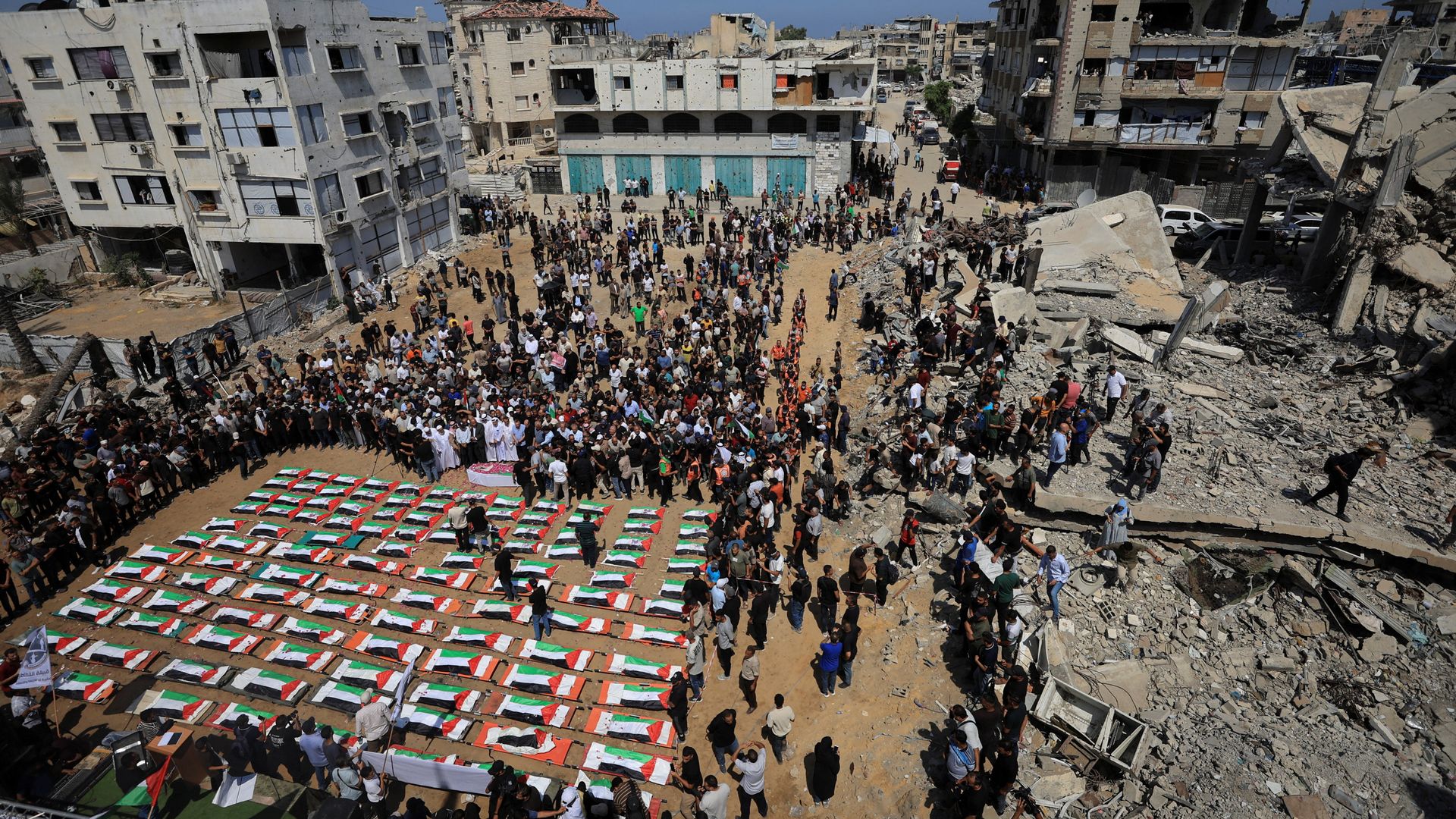
Hundreds of mourners gathered recently to lay to rest 112 Palestinians whose bodies were pulled from a flattened residential block in Gaza City. Nearly three years after an Israeli airstrike obliterated the six-story building in the Sabra neighborhood on November 22, 2023, these families finally received a proper burial.
If you are trying to understand the sheer human cost of the ongoing conflict, looking at active casualty metrics only tells half the story. Thousands of missing persons remain trapped beneath mountains of concrete, and recovery operations highlight a logistical and humanitarian nightmare that rarely gets adequate attention.
The Grinding Reality of Recovery Work
The numbers attached to this single recovery effort are staggering. Civil defense crews spent 136 grueling hours digging through reinforced concrete and twisted metal. Much of the work had to be done by hand.
The victims recovered from the site belonged primarily to the Abu Sharia and Al Hassayneh families. Among the 112 sets of remains retrieved were 40 children, 38 women, and seven people with physical disabilities. Col. Mohammed Abu Dan, who supervised the site operations, noted that heavy machinery is virtually absent because restrictions and ongoing blockades prevent proper equipment from entering the strip. Without excavators or cranes, rescue workers sift through pulverized ruins using basic tools and bare hands.
Worse still, recovery does not mean closure for everyone. First responders estimate that another 157 bodies remain trapped beneath the exact same pile of rubble, unreachable given current capabilities.
Why Thousands Remain Lost Under the Debris
The United Nations estimates that tens of millions of tonnes of rubble blanket Gaza, with a tiny fraction cleared since the war began. Zaher al-Waheidi, head of the Gaza health ministry's records department, notes that at least 7,400 people are officially reported missing and presumed buried under collapsed structures.
Experts emphasize that this figure is likely conservative. Entire extended families vanished in single strikes, leaving behind no surviving relatives to file missing persons reports. When heavy bombs level multi-story apartment blocks, the intensity of the blasts often disintegrates or vaporizes remains within the inner core of the collapse, making identification an excruciatingly difficult forensic challenge.
International bodies like the International Committee of the Red Cross (ICRC) have repeatedly stressed that recovering human remains is a vital humanitarian necessity. Families cannot begin the grieving process without a body or a grave. The psychological toll of this limbo matches the physical destruction of the territory.
The Path Forward for Humanitarian Access
The recent mass burial underscores an urgent operational demand that humanitarian agencies continue to push for: unrestricted entry of heavy recovery equipment and engineering support. Without specialized machinery to lift massive concrete slabs safely, civil defense teams will spend decades attempting to clear sites by hand.
If you follow international reporting on the region, pay close attention to the logistical blockades surrounding civil infrastructure. The story of Gaza isn't just about the moments when bombs fall; it's about the agonizing, multi-year aftermath of digging out what is left behind.
Mass funeral held for Gaza victims of 2023 Israeli strike
This video provides an on-the-ground perspective of the recent mass funeral and the recovery efforts following the 2023 airstrikes in Gaza.