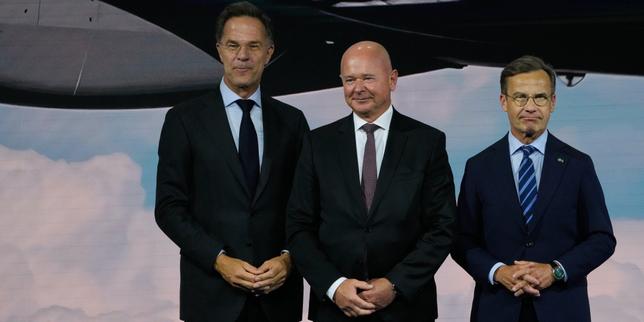
The modern defense market isn't about slow, calculated planning anymore. It's about securing raw hardware as fast as the supply chain allows. Look no further than the 36th NATO Defense Industries Forum in Ankara, where Alliance officials just unleashed a flurry of major military contracts.
If you think these high-level summits are just an excuse for politicians to shake hands and sign empty memorandums, you're missing the bigger picture. The reality on the ground in Turkey shows a military alliance aggressively cementing its hardware needs for the next decade. At the center of this buying spree? A highly lucrative nod for Airbus and a massive fleet expansion that changes how Western forces move across the globe.
The Airbus Deal and the Push for Strategic Mobility
Let's look at the actual numbers. NATO Secretary General Mark Rutte stood before a crowd of defense executives and military brass to confirm that the Alliance is adding another Airbus A330 MRTT (Multi Role Tanker Transport) to its multinational fleet.
This brings the total count of the shared alliance fleet up to ten aircraft. The ultimate goal isn't a secret. Rutte explicitly stated they're pushing to hit a full fleet of 12 of these massive flying gas stations and cargo haulers.
Why should you care about a single plane order? Because aerial refueling is the absolute backbone of modern air power. Without it, fighter jets are tethered to short distances and ground bases. The Multinational Multi-Role Tanker Transport Unit (MMU) gives smaller European nations the kind of long-range operational reach that historically only the United States possessed. By funding this tenth airframe, European allies are directly picking up the slack, proving they can manage heavy transport assets without running to Washington for logistics support every single time a crisis flares up.
Beyond Logistics: GlobalEye and the Broader Ankara Avalanche
Airbus grabbed the big headlines, but it wasn't the only winner in Ankara. The forum turned into a marketplace for high-end surveillance and reconnaissance equipment. Among the most notable updates dropped during the event was the massive procurement push involving the GlobalEye airborne early warning and control system.
Reports indicate the broader package involves ten GlobalEye aircraft. While the exact financial figures remain tightly under wraps, an order of that scale represents billions in long-term defense commitments.
Think about what's actually happening here. NATO isn't just buying weapons to replace broken gear. They're constructing an entirely new, integrated layer of airborne radar and logistics. They're preparing for a prolonged era of high-intensity friction where tracking moving targets across thousands of miles is the bare minimum requirement for deterrence.
Why Hosting This in Turkey Changes the Geopolitical Dynamics
You can't ignore the location. Holding this defense bonanza in Ankara carries massive political weight. Turkey has long walked a razor-thin line within NATO, buying Russian air defense hardware in the past while simultaneously supplying advanced drones to regional partners.
By centering these critical contract announcements in the Turkish capital, NATO leadership is doing two things at once:
- Binding Turkey tighter to Western defense supply chains: You don't sign massive multi-nation contracts in a capital city without acknowledging that country's role as a major industrial player.
- Capitalizing on regional manufacturing capabilities: Turkey's own defense sector is booming, and the alliance needs every factory line it can get its hands on to meet current production demands.
This wasn't just a business meeting. It was a clear message that despite years of political friction between Ankara and other Western capitals, the structural reality of the alliance remains unchanged. When it comes to manufacturing, spending, and planning for regional defense, everyone is still sitting at the same table.
What Needs to Happen Next
The contracts are signed, but the hard part starts now. If you're tracking defense markets or international security, watching the paperwork isn't enough. You need to keep an eye on the industrial reality.
First, track the industrial delivery timelines. Airbus and its subcontractors are already facing massive backlogs across civilian and military sectors. Signing for a tenth A330 MRTT looks great on a press release, but watch the actual factory output in Getafe, Spain, where these conversions happen. Delivery delays will directly impact NATO’s operational readiness dates.
Second, watch how the remaining two slots for the 12-plane fleet goal are funded. Look closely at which specific European nations step up to finance those last two airframes. That will tell you exactly who is serious about sharing the financial burden of continental defense, and who is just coasting on the investments of their neighbors.