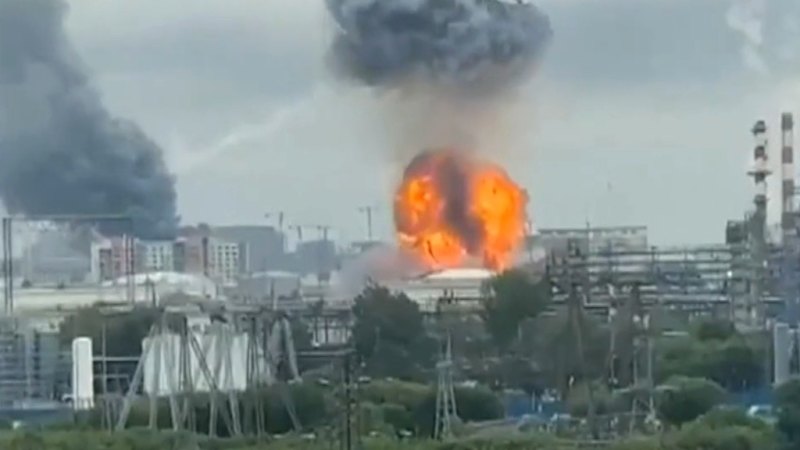
The skies over Moscow just turned black. In the early hours of Thursday, June 18, 2026, Ukraine brought the stark reality of war directly to the doorsteps of ordinary Russians. This wasn't a minor, symbolic border cross-over. It was a massive, unprecedented drone assault that smashed directly into the heart of Russia's energy infrastructure.
The main target tells you everything you need to know about Kyiv's new strategy. Dozens of explosive drones slammed into the Gazprom Neft oil refinery in Kapotnya. It sits just nine miles from the Kremlin. This single facility supplies roughly 40% of Moscow's gasoline and half of its diesel fuel. By sunrise, a massive fuel tank had detonated. The blast sent its metal roof flying into the air, leaving a massive plume of dark, toxic smoke visible from high-rise apartment windows across the Russian capital.
For over four years, Russian President Vladimir Putin tried to keep the war a distant issue for regular Muscovites. That illusion is dead.
Shaking the Kremlin Foundation
Ukrainian President Volodymyr Zelenskyy didn't mince words after the strike. He sent a voice message directly to journalists. He made it clear that if Ukraine burns under Russian missile attacks, Moscow will burn too. The timing wasn't an accident. The strike happened right after Zelenskyy wrapped up intense coordination calls with world leaders at the G7 summit in France, securing fresh promises of military support.
While the refinery burned, Putin was 700 kilometers away in Kazan. He was busy trying to pitch investments to Southeast Asian leaders. Instead of showing economic strength, the Russian state had to explain why four major Moscow airports completely halted flights. They had to explain why falling debris was damaging homes, cars, and a massive shopping mall in suburban Zhukovsky and Balashikha.
Russian officials claimed they shot down nearly 200 drones heading for the capital alone, and close to 1,000 across the wider region. Even if those numbers are inflated by regional governors trying to save face, the sheer volume tells a terrifying story for Russian air defense teams. They simply got overwhelmed.
Why Russian Air Defenses are Failing
Moscow has the tightest, most expensive air defense shield in Russia. Yet, videos filmed by terrified residents showed Ukrainian drones cruising relatively low over residential blocks with zero opposition.
Military analysts point to a massive structural problem that the Kremlin cannot easily fix. Ukraine has changed the weapons it uses for deep strikes. Along with slow, propeller-driven drones that are easy to spot, Kyiv is now deploying jet-powered missile-drones. One specific hybrid weapon, known as the Bars, flies at speeds that make standard anti-aircraft guns useless.
Intelligence reports indicate that Russia is facing a severe shortage of surface-to-air interceptor missiles. They spent too many trying to defend front lines. Now, they don't have enough to guard factories deep inside their own borders.
When Russian military operators do fire missiles inside Moscow, it creates another nightmare. Missed interceptors and falling debris rain down on high-rise residential neighborhoods. It causes civilian injuries and fuels panic. Local social media channels exploded with videos of weeping residents. One resident noted that the war had finally arrived at their window. Others shared pictures of cars covered in a greasy soot that people called "black rain."
The True Cost of the Refinery Strategy
Targeting Russian oil isn't just about optics. It strikes Russia where it hurts most. The Kremlin relies on oil and gas revenue for at least a third of its entire national budget.
By taking out a refinery that fuels almost half of the capital city, Ukraine causes immediate supply problems. We've seen this happen before on a smaller scale in occupied Crimea, where drivers faced massive lines at gas stations after drone strikes. If the Kapotnya plant remains offline for months, the Russian government will have to divert fuel from other regions. This will trigger price spikes and localized shortages across Western Russia.
The economic fallout hits everyday citizens hard. It forces them to realize that the state cannot fully protect their standard of living.
What Happens Next
Expect a vicious cycle of retaliation. The Russian Ministry of Defense immediately launched a wave of retaliatory missiles and drones hitting energy facilities in Ukraine's Kyiv and Poltava regions. Russian Foreign Minister Sergei Lavrov promised regular strikes to crush Ukraine's combat readiness. But these threats carry less weight when Moscow's own airspace is compromised.
If you are tracking this conflict, keep your eyes on three specific operational indicators over the next few weeks.
- Monitor regional fuel prices and gas availability inside western Russian cities to see if the Kapotnya shutdown causes systemic supply line cracks.
- Watch for shifts in how Russia pulls high-end air defense units away from the front lines to defend domestic industrial assets.
- Follow foreign ministry statements from G7 nations regarding the specific types of long-range tech and components allowed to enter Ukrainian supply chains.
The conflict has transformed. The safety buffer that residents of the Russian capital took for granted is officially gone.