You would think a disease we supposedly eliminated decades ago wouldn't still be punching holes in modern budgets. Think again. Measles is back, and it's carrying a massive price tag that extends far beyond emergency room bills.
Recent tracking data shows that outbreaks hitting the United States are racking up staggering numbers. We aren't just talking about a few thousand dollars in localized care. We are looking at nearly $83 million tied directly to public health responses, lost productivity, and direct medical costs in a single wave.
Let's look at what's actually driving these expenses, because the public narrative usually misses the hidden financial drain.
The Real Breakdown of Outbreak Expenses
When a single case pops up in an under-vaccinated community, the machinery of public health swings into high gear. It's expensive.
Out of that $83 million price tag, public health response consumes the lion's share—roughly $56 million. Contact tracing, rapid community testing, school exclusion management, and emergency vaccine distribution take armies of personnel. Local health departments don't have spare cash sitting around for this. They pull funds from other critical programs just to chase down a virus that shouldn't even be circulating.
Then you have lost productivity. That accounts for nearly $25 million. Parents missing work to care for sick children, individuals sitting in mandatory two-week quarantines because they were exposed at a grocery store or a doctor's waiting room, and overwhelmed small businesses scrambling to cover empty shifts. Measles forces entire social circles into a holding pattern.
Direct medical costs—hospitalizations, specialist visits, and intensive supportive care—round out the rest. Measles compromises the immune system so severely that secondary infections like pneumonia or encephalitis frequently follow. When a child ends up in pediatric ICU, the bill scales exponentially.
Why Falling Vaccination Rates Cost Everyone
People love to frame vaccine hesitancy as a personal choice with isolated consequences. It isn't. Herd immunity is a shared shield. When routine MMR (measles, mumps, and rubella) vaccination rates drop by even a fraction of a percent locally, the domino effect is nonlinear.
Research published in Proceedings of the National Academy of Sciences points out a grim reality: a sustained decline in childhood coverage could drain the U.S. economy of billions over a multi-year horizon. Counties with the lowest baseline immunity face the highest cost per case, often medianing over $85,000 per individual infection once containment and treatment are fully tallied.
Insurance companies absorb a chunk of this, but employers and publicly funded programs shoulder the rest. That means higher health insurance premiums for working families who kept their kids fully immunized. You are paying for someone else's skepticism.
The Human Toll Behind the Ledger
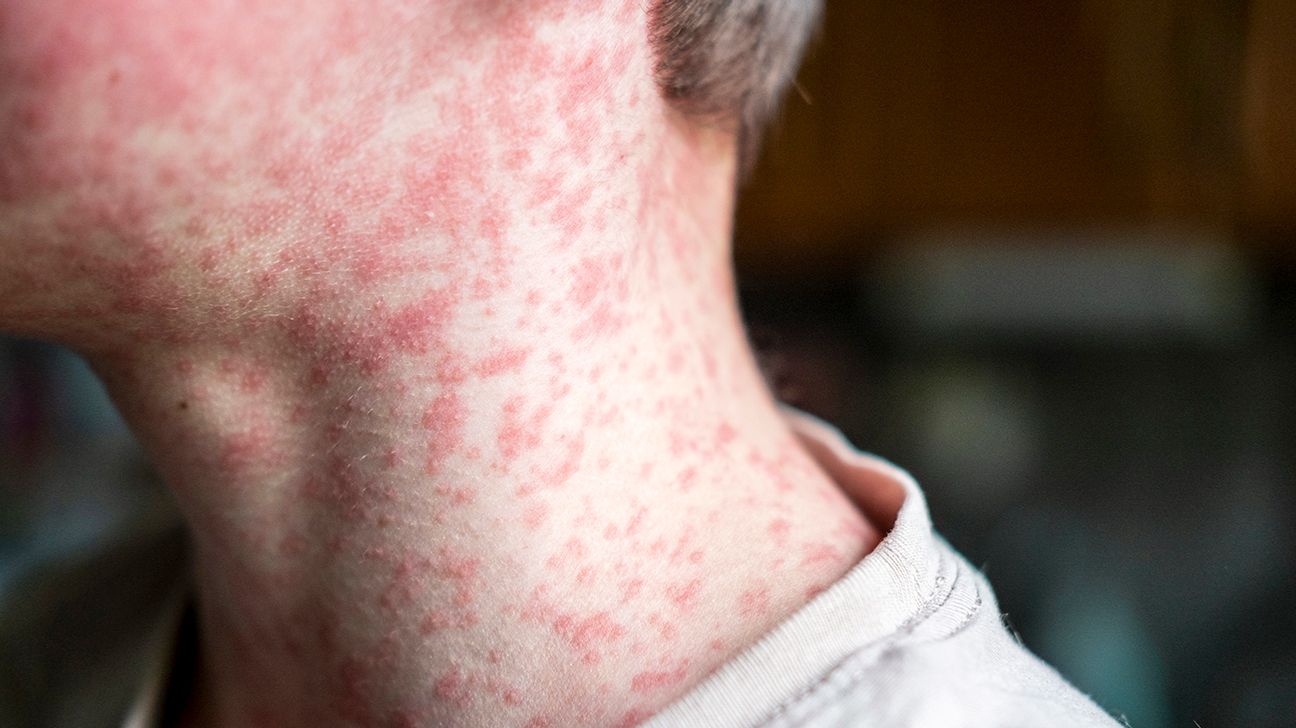
Data sheets and macroeconomic models sanitize what a measles outbreak actually feels like on the ground. Ask any emergency room nurse working through a cluster. They'll tell you about infants too young to receive their first MMR shot who catch the virus from an unvaccinated older child in the waiting room. They'll talk about high fevers, miserable rashes, and the terrifying realization that measles can wipe out a person's immunological memory—leaving them vulnerable to other infections for years afterward.
We are seeing tragic reminders of why eradication mattered. Recently, communities had to confront the heartbreaking reality of infant mortality from a disease that older generations thought we had beaten for good.
What Needs to Change Right Now
Fixing this isn't complicated, but it requires political will and aggressive public outreach. Public health agencies need stable funding so they can respond to flare-ups before they cross county lines. Schools and childcare facilities must enforce enrollment standards strictly, cutting through bureaucratic exemptions that dilute community protection.
If you are a parent, check your immunization records. If you are an employer, support paid sick leave policies that don't penalize workers for staying home during a mandated quarantine. Ignoring a preventable virus doesn't make the cost go away; it just defers it to a much higher bill later.