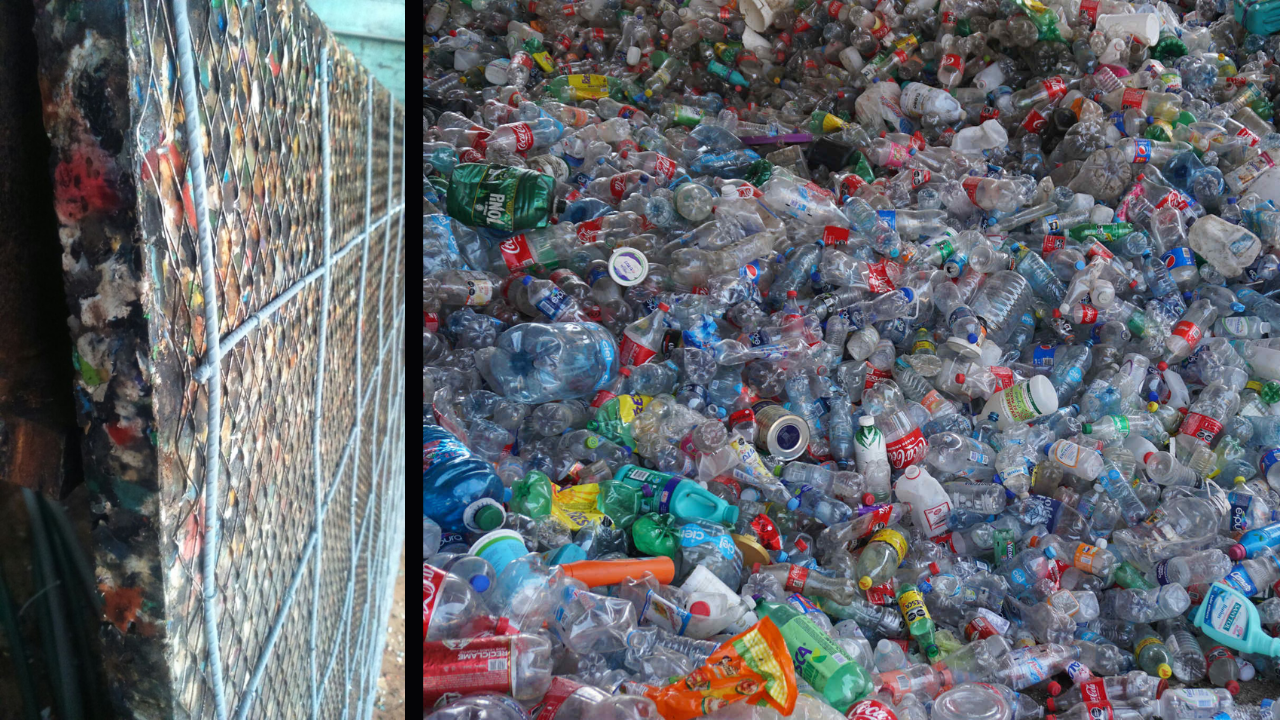
Millions of tons of plastic waste pile up in global landfills every year, while millions of families struggle to find stable shelter. We look at this crisis as two separate problems. Carlos Daniel González decided to treat them as the exact same puzzle. In Puebla, Mexico, his social enterprise EcoDom started doing something remarkably straightforward: taking discarded plastic bottles and toys, melting them down, and turning them into structural building panels.
Within three years of launching operations, this startup didn't just run a few recycling experiments. They built 500 rooms for municipal housing programs and locked in public contracts to construct 300 complete homes. If you want to understand how low-tech manufacturing can actually chip away at systemic poverty and urban pollution, look closely at how this model operates on the ground.
The Raw Math of Plastic and Poverty
Mexico produces over five million tons of plastic waste annually, ranking as a massive consumer of single-use synthetics. At the same time, a huge percentage of the population deals with extreme poverty and lives in structures that barely qualify as housing. González grew up seeing this contrast firsthand in Puebla, watching contamination choke local environments while neighbors lived in deplorable conditions.
Most people assume recycling plastic means turning it back into lower-grade bottles or cheap trinkets. But turning trash into structural load-bearing panels changes the economics entirely. EcoDom's facility processes roughly five and a half tons of waste daily. That is garbage that would otherwise sit in open dumps or drift into local waterways, taking centuries to break down.
How Industrial Ovens Turn Waste Into Walls
The manufacturing process sounds simple, but safety and precision dictate every step. Workers collect various types of used plastics, sorting them meticulously to filter out materials that release hazardous fumes under high heat.
- Sorted plastics go through industrial cutters to become small, uniform pieces.
- These fragments bake in industrial ovens heated to 350 degrees Celsius for about thirty minutes.
- The molten mixture moves straight into a hydraulic press, compressing the material into solid panels measuring roughly 2.4 meters long, 1.2 meters wide, and 2.5 centimeters thick.
A single 40-square-meter home requires about 80 of these panels to complete a layout featuring two bedrooms, a bathroom, a living area, and a kitchen. Building a full house takes just seven days. According to field tests, the finished material offers thermal insulation, weather resistance, and an expected lifespan of a century without structural degradation.
Fixing the Broken Supply Chain for Waste Collectors
Informal waste pickers are the backbone of any recycling system, yet commercial brokers usually treat them terribly. In many regions, independent collectors earn as little as six cents per kilogram of plastic. That leaves them trapped in poverty while doing the heavy lifting of environmental cleanup.
EcoDom changed the local market dynamics by paying significantly higher rates per kilogram. This adjustment practically doubled the daily earnings of independent collectors in the area. By securing a reliable, well-compensated supply chain, the factory maintains a steady intake of five and a half tons of raw material every single day. Treating waste workers as essential partners rather than cheap labor is the only way collection models scale successfully.
Scaling Beyond Puebla
Private construction companies rarely touch low-income housing because profit margins look too thin. EcoDom bypassed this hurdle by partnering directly with local governments and non-governmental organizations running subsidized social housing initiatives.
In Huauchinango, municipal authorities hired the company to build 500 room extensions. Local officials in Chiconcuautla and Pahuatlán followed up by commissioning 150 separate homes each, measuring 460 square feet apiece. Through these government programs, eligible low-income families often pay a fraction of the market cost for a completed, durable structure.
Scaling this model globally requires navigating local zoning laws, municipal bureaucracy, and varying plastic waste streams. Yet the underlying economics remain compelling. When you eliminate expensive traditional building supplies and substitute them with abundant municipal waste, you create a self-sustaining loop that cleans up cities while keeping roofs over people's heads. Stop treating waste management and affordable housing as separate budget lines. Solve both at the same time.