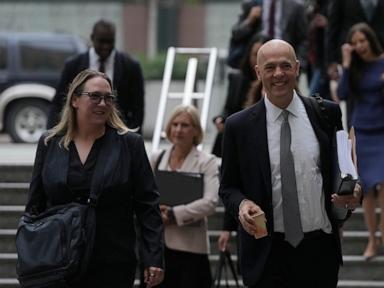
$1.4 trillion. That number is floating around the federal courthouse in Oakland right now. It roughly equals Meta's entire market cap, and it is exactly what dozens of states are theoretically pursuing as they drag the social media giant to trial this week.
This isn't another generic privacy slap on the wrist. I track tech litigation for a living, and I can tell you this feels entirely different. We are watching the biggest legal test yet of whether social media companies can be held liable for treating our kids' attention like drillable oil.
If you think Meta will just write a small check and walk away, think again. They already lost two massive cases this year over child safety. The armor is cracking. Jury selection began on August 12, and with opening statements slated for August 18, 2026, the entire tech industry is holding its breath.
The Legal Loophole That Trapped Big Tech
For years, suing a social media company was a losing game. Plaintiffs tried to sue platforms over harmful content. They lost. Every single time.
Why? Section 230 of the Communications Decency Act basically gives tech platforms absolute immunity from what users post. If a teenager sees dangerous content on Instagram, the courts historically said Instagram is just the messenger. You can't sue the post office because someone mailed you a threatening letter.
But state attorneys general finally figured out a brilliant workaround. They stopped attacking the content. Instead, they attacked the product design.
The core argument in this massive multi-state lawsuit—led right now by California, Colorado, Kentucky, and New Jersey—is that Meta purposely built features into Facebook and Instagram to hook young users. We are talking about endless scrolling, persistent notifications, and algorithmic dopamine hits.
The states argue Meta knew exactly what it was doing. They claim the company knowingly engineered a product that contributes to a youth mental health crisis just to maximize profits.
Inside the Negligent Design Argument
To understand why Meta is sweating, you have to understand negligent design. This legal theory argues that the danger isn't the photos or videos on the screen. The danger is the screen itself. The interface. The code.
Consider the infinite scroll. When you pull down to refresh your feed, you experience a slight delay before new content appears. That delay isn't a technical glitch. It is a calculated feature modeled after slot machines. It creates a psychological phenomenon known as a variable ratio schedule. Your brain gets a massive hit of dopamine because it doesn't know exactly what reward is coming next.
Psychologists have warned about this for years. B.F. Skinner proved decades ago that pigeons will compulsively peck a button if the reward is randomized. Meta basically put a billion teenagers in a Skinner box.
The states are bringing this exact psychology into the courtroom. They aren't just claiming Instagram is addictive by accident. They are setting out to prove Meta executives knew the design was harmful, studied the addictive properties, and chose to prioritize engagement metrics over adolescent brain health.
Meta insists the claims are baseless. A company spokesperson released a statement saying they have listened to parents and worked with experts to support young people. But saying you care in a press release and proving it under oath are two very different things. Mark Zuckerberg and Instagram boss Adam Mosseri are both expected to testify. That alone will make this trial an absolute spectacle.
The Massive Problem With 12 Year Old Data
Addiction is only half the battle. The lawsuit also claims Meta routinely scooped up data on children under 13 without getting parental consent. That is a direct violation of federal law.
The Children's Online Privacy Protection Act (COPPA) is very clear. You cannot collect data on kids under 13 without verifiable permission from a parent. Most tech companies get around this by simply requiring users to check a box saying they are 13 or older. We all know kids lie about their age to get on social media. The legal question is whether Meta knew they were lying and looked the other way.
Why would a multi-billion dollar tech giant risk violating federal privacy laws just to let middle schoolers post selfies?
Data. Pure, uncut behavioral data.
- Kids who start using a platform at age 10 build digital habits that last a lifetime.
- The earlier an algorithm learns a user's preferences, the more accurate the ad targeting becomes.
- Young users drive cultural relevance. If the kids leave, the platform dies.
The state attorneys general argue Meta possessed internal data showing exactly how many underage users were on the platform but intentionally chose not to boot them off. They needed the growth. They needed the engagement. They needed the future consumers.
A Brutal Year in Court for Mark Zuckerberg
Here is the context you need to understand why this Oakland trial matters so much. Meta is already bleeding from recent court losses. They are walking into this fight with a bloody nose.
Earlier this year, a Los Angeles jury found Meta and YouTube liable for negligent design. Then, just a few weeks ago in New Mexico, a judge dropped a hammer on the company. The court ordered Meta to implement immediate product changes and pay over half a billion dollars in damages to fund the treatment and prevention of harms caused by its platforms. A jury there previously ordered Meta to pay $375 million after finding the company endangered kids by making them vulnerable to predators.
Meta is burning cash fighting these fires. They literally blamed a recent profit decline on $2.4 billion in legal expenses.
When you see multiple states stacking up multi-million dollar wins against a tech giant, the momentum shifts. Juries are no longer giving tech executives the benefit of the doubt. The classic "we just connect people" defense stopped working.
The Financial Reality of a Trillion Dollar Threat
Will the states actually get $1.4 trillion? Honestly, no.
Legal experts uniformly agree that bankrupting Meta and turning it into a state-owned enterprise is practically impossible. Courts usually shrink massive theoretical damage caps. In giant intellectual property and consumer protection cases, the final payout is often a fraction of the initial demand. Look at the recent Anthropic AI training case. Plaintiffs demanded $150,000 per copied book. They ended up with $3,000 per book.
But even a fraction of $1.4 trillion is a devastating financial blow.
If the judge orders Meta to pay just 5% of that theoretical cap, you are looking at a $70 billion fine. That is enough to wipe out years of profit, tank the stock price, and force a massive restructuring of the company's priorities.
More importantly, the states want structural remedies. They want to force Meta to redesign Instagram and Facebook from the ground up.
If the states win, the infinite scroll might die. Push notifications for teenagers could be legally banned during school hours and late at night. Face-altering beauty filters could be age-restricted. The very mechanics that make Instagram so profitable could be regulated out of existence.
What a State Victory Means for Your Apps
This trial will easily consume the next seven weeks in California. While California, Colorado, Kentucky, and New Jersey are the plaintiffs right now, 25 other states are waiting in the wings to have their own trials later.
If Meta loses here, it sets a precedent that will trigger a domino effect across the entire app ecosystem. TikTok, Snapchat, and YouTube are watching this Oakland courtroom closely. If negligent design becomes a proven, winning legal strategy, every single app developer in America will have to rethink how they build software.
We might see an entirely new version of the internet emerge by 2027. An internet where "engagement at all costs" is officially recognized as a liability rather than a business model. You might open Instagram and find a chronological feed that actually stops when you've seen the latest posts. Imagine an app that actively encourages you to close it.
Take Control Before the Courts Do
If you have kids, stop waiting for the government to fix your family's screen time problem. The courts move at a glacial pace. A verdict in this trial won't happen until October at the earliest, and the appeals will drag on for years.
Use the built-in parental controls on iOS and Android today. Lock down app timers. Demand your kids leave their phones out of the bedroom at night. Turn off all non-essential push notifications. The executives testifying in Oakland this month strictly restrict their own children's device usage for a reason.
Do exactly the same.