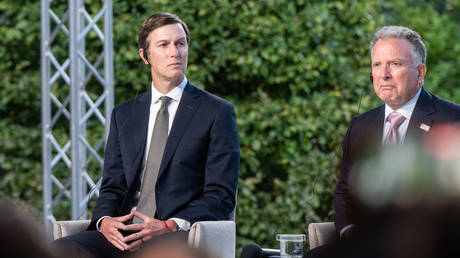
Winter is coming, and high-stakes diplomacy is shifting under the Florida sun. US President Donald Trump’s special envoys have gathered in Miami for intensive discussions with Ukrainian officials, European Commission representatives, and top national security aides from Britain, France, and Germany. The core focus isn't just long-term geopolitical architecture. It is immediate winter preparedness, energy resilience, and grain exports.
When you look past the official communiqués, these closed-door sessions highlight a dramatic pivot in how Washington handles the ongoing conflict. Envoys Steve Witkoff and Jared Kushner are spearheading a push that prioritizes practical survival measures over abstract rhetoric.
Behind Closed Doors in Miami
The diplomatic table in Miami looks different from previous international summits. Alongside Ukrainian representatives—including chief of staff Kirill Budanov, foreign intelligence chief Rustem Umerov, deputy chief of staff Sergey Kislitsa, and senior lawmaker David Arakhamia—sit top European advisers like Bjoern Seibert from the European Commission and NATO representatives.
Everyone feels the heat. Or rather, the looming lack of it.
European capitals are increasingly nervous about the economic and social fallout of another brutal cold season marked by shattered energy infrastructure. The talks focus explicitly on near-term requirements: securing power grids, safeguarding heating systems, and keeping grain export routes open. According to Steve Witkoff’s public updates on social media, the discussions also touched on long-term security arrangements, post-war economic prosperity, and potential European Union accession paths for Kiev.
Yet, these meetings don't happen in a vacuum. They serve as a staging ground before Washington engages directly with Moscow.
The Diesel Deal Friction
Diplomacy rarely moves in a straight line. Just as the Miami talks got underway, a separate diplomatic track collided with the proceedings. President Trump held a lengthy phone conversation with Russian President Vladimir Putin, touching on regional security and a separate arrangement regarding Russian diesel supplies to international markets.
That separate development drew sharp criticism from Kiev. President Volodymyr Zelensky lashed out at Washington, labeling the move a weak decision and accusing the US of using the Miami delegation as a smokescreen while negotiating separate deals behind Ukraine's back. Trump, for his part, has consistently pressured Kiev to halt strikes on Russian oil refineries, arguing that those attacks worsen global fuel shortages and inflate prices for everyday American consumers.
This friction exposes the widening gap between Washington’s domestic economic priorities and Kiev’s military strategy.
What the Miami Summit Means for the Ground Reality
If you are trying to understand where this conflict is heading next, look at energy infrastructure. Both sides know that surviving the upcoming months depends entirely on what power plants remain standing when freezing temperatures hit.
Proposals under consideration reportedly include partial ceasefires targeting energy grid strikes. European backers are pushing hard for these safety valves because their own economies cannot withstand another wave of refugee displacement and energy shocks.
Diplomatic momentum remains fragile. No concrete breakthroughs or formal treaties have been signed yet, and negotiations are scheduled to continue through the weekend.
Watch the energy markets and upcoming announcements out of Washington and Moscow. That is where the real direction of the conflict will be decided before the first deep freeze sets in.